In the grand tapestry of football history, few teams have left a mark as deep and as enduring as the Grande Torino. They were more than a club — they were an idea, a movement, and, tragically, a legend forged not only through triumph, but through heartbreak.
A Team Reborn: Post-War Ambition
Torino FC had tasted success before — winning their first Scudetto in 1928 — but it was in the 1940s, under the presidency of Ferruccio Novo, that the club’s destiny changed forever. Novo was not your typical football president – visionary and methodical, he approached the game with a modern sensibility. He studied the systems used in England and brought a scientific, professional approach to Torino.
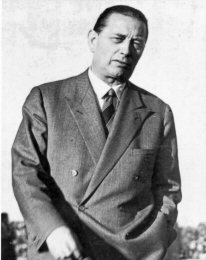
He appointed a backroom staff that included tactical specialists, fitness trainers, and scouts. Most crucially, he built a team not just of stars, but of perfectly complementary talents. Between 1942 and 1949, he assembled what would become the most dominant team in Italian history — Grande Torino.
Building the Machine
At the heart of it all was Valentino Mazzola, signed from Venezia in 1942. Mazzola was not only a footballer of rare technical skill and intelligence, he was also a natural leader — the type of captain who could inspire, intimidate, and elevate those around him. Whether playing as a mezzala or inside forward, his impact was immense.
Mazzola’s iconic gesture — rolling up his sleeves during a match — became a symbol that the team was about to turn up the intensity. Fans knew what came next: movement, power and a storm of goals.
Surrounding Mazzola was an ensemble cast of brilliant players:
- Ezio Loik, his partner from Venezia, brought dynamism and strength in midfield.
- Guglielmo Gabetto, a former Juventus striker, added flair and finishing.
- Romeo Menti, Franco Ossola, and Pietro Ferraris contributed relentless pace and creativity on the flanks.
- At the back, defenders like Aldo Ballarin, Mario Rigamonti, and the elegant Virgilio Maroso held firm.
- And in goal, the reliable and acrobatic Valerio Bacigalupo.
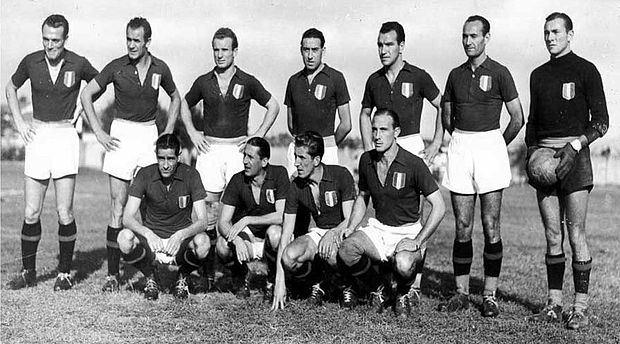
Each player had a specific role within a meticulously drilled system. The team played a WM formation with flexibility, pressing high, rotating positions, and attacking in waves. Their short passing, positional awareness, and relentless tempo overwhelmed opponents. They didn’t just win matches — they dictated the way football was played.
An Era of Total Domination
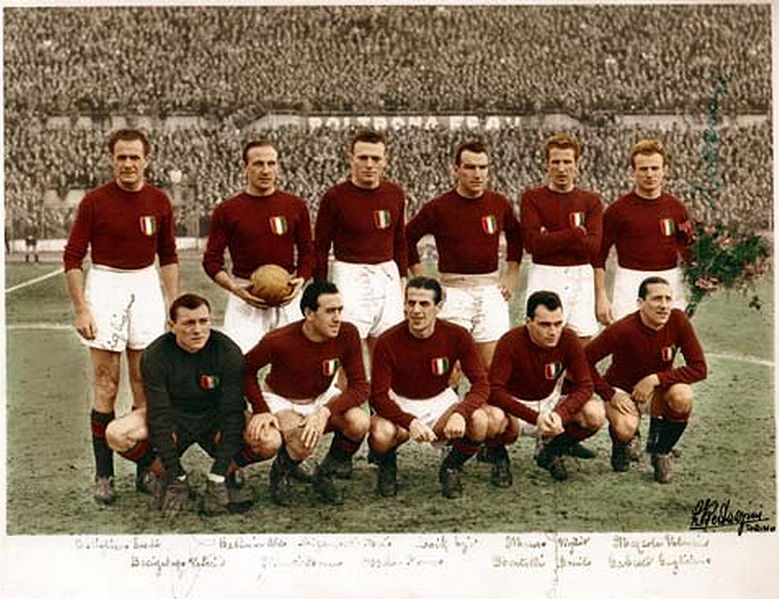
From 1943 to 1949, Torino won five consecutive Serie A titles (excluding the 1944 wartime championship, which was played under unique conditions). Their dominance bordered on the ridiculous:
- In the 1947–48 season, they scored 125 goals in 40 matches.
- They went unbeaten at home for nearly six years at the Stadio Filadelfia.
- Their average margin of victory was often three or four goals.
- In 1947, 10 of the 11 starters for Italy’s national team were Torino players.
No club before or since has exerted such influence on the national side. Italy played like Torino. Their style became the blueprint for modern Italian football: disciplined yet daring, structured yet expressive.
Grande Torino were admired, feared, and loved — not only in Turin, but across Italy. After years of fascism, war, and suffering, this team offered a vision of something pure, joyful, and aspirational.
Lisbon, Benfica, and the Final Flight
In early May 1949, Grande Torino travelled to Lisbon to play a friendly match against Benfica, a testimonial for Portuguese captain Francisco Ferreira. Despite fatigue and injuries, the players insisted on going — honouring both friendship and the game they loved so much.
They flew back home on May 4, 1949, aboard a Fiat G.212 aircraft. As the plane approached Turin, it encountered thick fog and poor visibility. The pilots, believing they were on the correct approach path, tragically miscalculated.
At 5:05 PM, the aircraft crashed into the rear wall of the Basilica of Superga, perched on a hilltop just outside the city.
All 31 passengers on board died instantly — including 18 players, all of the coaching staff, club officials, three journalists, and the flight crew.
Italy Mourns
The aftermath of the Superga air disaster was a national tragedy, over half a million people filled the streets of Turin for the funeral procession. Men wept openly, newspapers halted regular coverage, radio stations played only classical music. Even fierce rivals paid tribute – Juventus, Inter and Milan all stood united in mourning.
Torino’s youth team, made up of reserves and Primavera players, completed the final four matches of the season. Out of respect, their opponents also fielded youth squads. Torino won the league and were awarded the title — their fifth consecutive Scudetto.
A Legacy That Endures
The loss of Grande Torino deeply affected Italian football. The national team, which had been built almost entirely around Torino’s players, suffered a sharp decline. When Italy travelled to Brazil for the 1950 World Cup, they did so by ship, so traumatised were they by the idea of flying.
It would take decades for Torino to recover as a club. They would win a Scudetto again in 1976, and sporadically challenge for trophies but Grande Torino was unrepeatable.
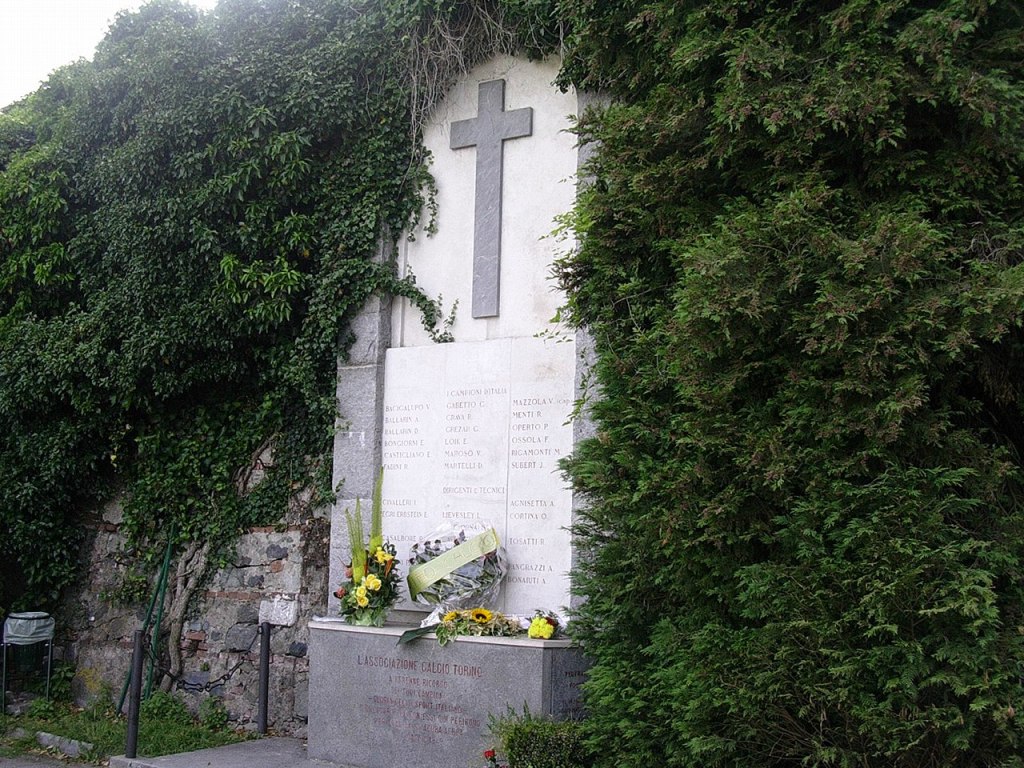
Yet their legacy remains immortal. Each year, on May 4, Torino players, staff, and supporters climb the hill to Superga Basilica. There, overlooking the city they once thrilled, they remember — not just the tragedy, but the glory.
The plaque reads:
“Gli eroi sono sempre immortali agli occhi di chi in essi crede.”
“Heroes are always immortal in the eyes of those who believe in them.”
Why Grande Torino Still Matters
Grande Torino were not only the best football team of their era — they represented something greater. In a country emerging from dictatorship and war, they were symbols of unity, modernity, and belief. Their style of play laid the foundation for future generations. Their professionalism, spirit, and sacrifice continue to inspire.
In the end, they were not defined by how their story ended — but by how brightly they shone while they lived.
 The Calcio Blog