New kits are being “dropped” every day at the moment by the sides who’ll make up Serie A this season. There’s the new home kit, the away kit, the third kit, the special celebration third kit, the European away kit and the goalkeeper kit and at over €100 a time, it’s clear why teams do this.
And yet, what is wrong with them all? There’s very few I look at and think, “My word, take my money please”. As an Interista I’m very disappointed by this seasons crayon drawing away kit and the bizarre home stripes. Annoyingly, Milan’s away kit is a thing of beauty too.
But there was a time when Serie A kits were true works of art that were reminiscent of the renaissance artists of yesteryear. There’s a reason you’re more likely to see a classic retro effort in the Curva than the latest “effort”.
So what’s the best Italian kit of all time? I’ve made my choices, they’re below. Let me know what you think…
Inter Milan – 1989/90
I was always starting with Inter wasn’t I? This effort from the late 80s is a true masterpiece and puts the last few efforts to real shame. Inter finished third this season, but consistently win best kit compilations with this effort. Clean, simple and worn by the famous German trio of Brehme, Klinsmann and Matthaus it’s a lovely way to start…
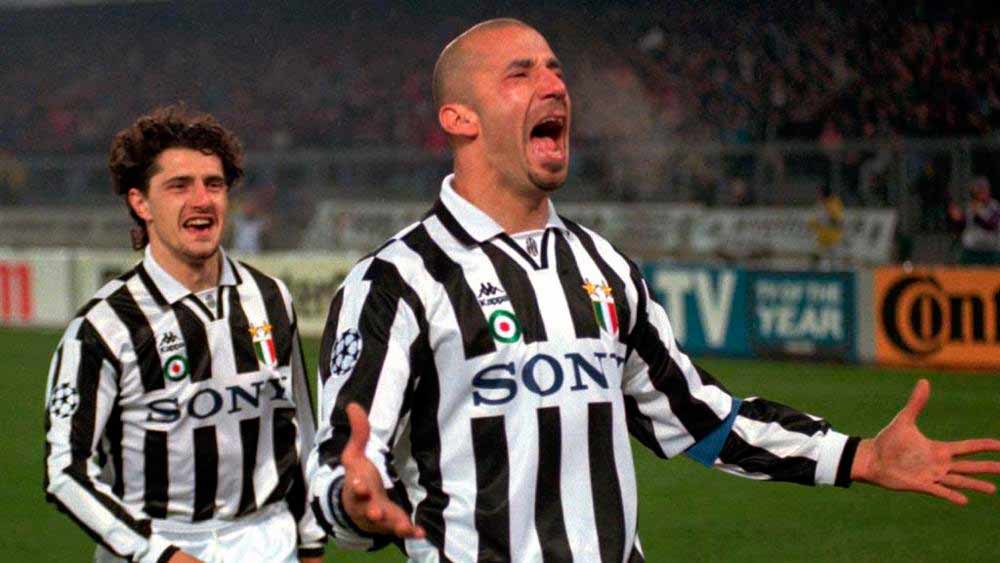
Juventus – 1995/96
My word, this is a pure classic! They should’ve stopped designing Juventus kits here and just used this one consistently. And not just because they won the European Cup for the first time in 11 years. The Kappa creation, with the thinner stripes than we see today was complimented by the Sony sponsorship. Everything about this shirt works, give me this every season please!
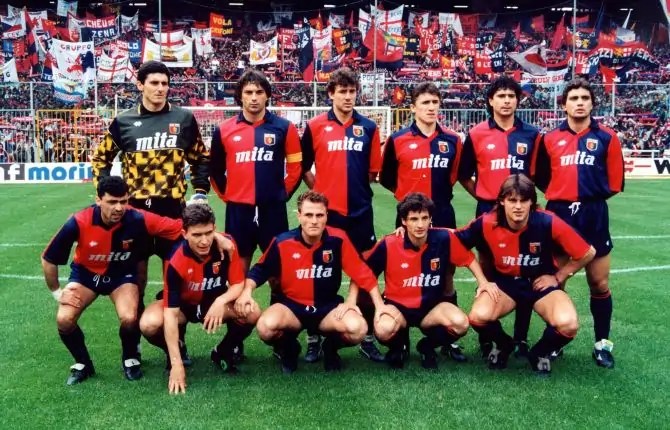
Genoa – 1991/92
Genoa barely avoided relegation in 1992, but they should have been awarded an extra 5 points for this shirt alone. They did, however, reach the UEFA Cup Semi Final, narrowly avoiding an all Italian final by missing out to eventual winners Ajax. Torino knocked out Real Madrid, but that achievement means nothing when Genoa were rocking this simple classic.
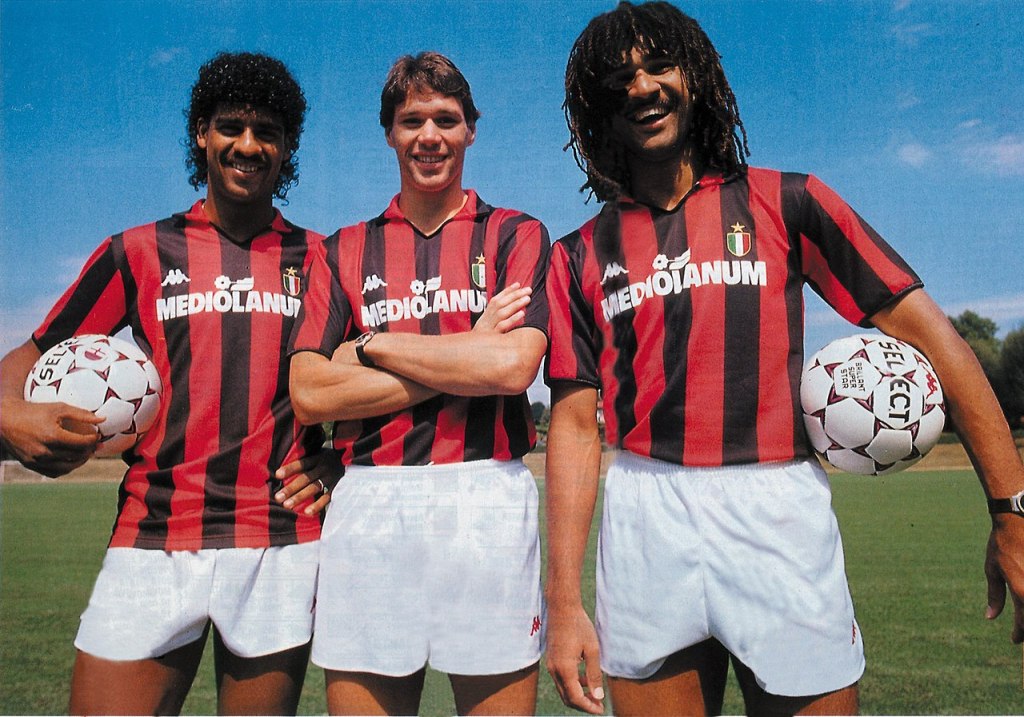
Milan – 1988/89
Gullit. Van Basten. Rijkaard. Do you need any more than this? Ok fine, simple thin stripes, white shorts, total football – oh and a European Cup win. Just enjoy the kit.
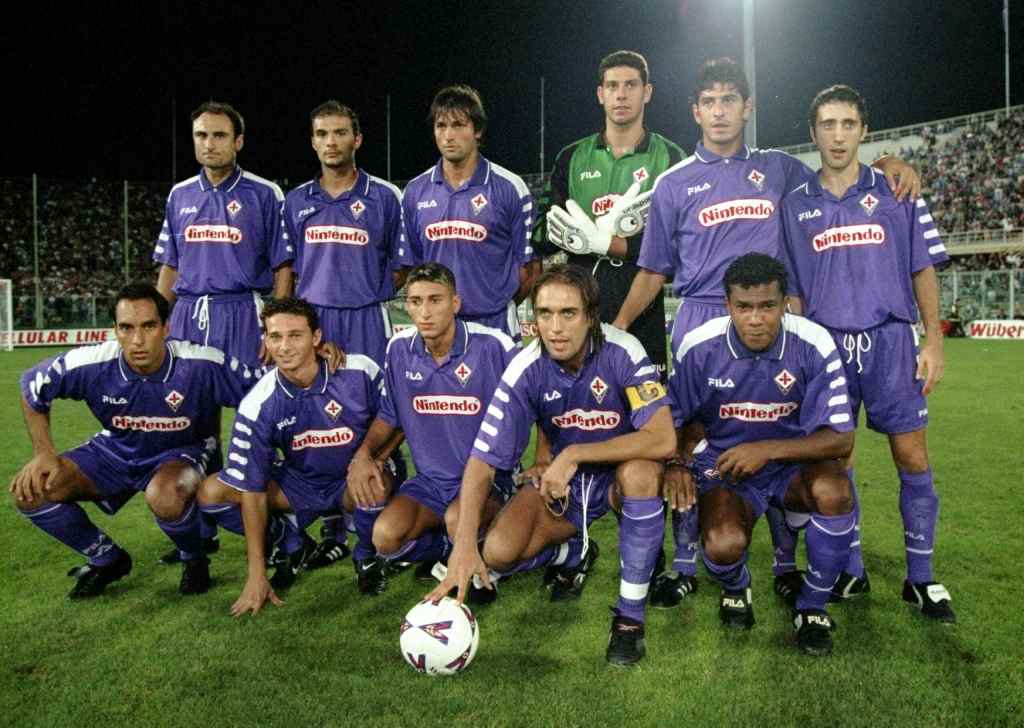
Fiorentina – 1998/99
This might be my favourite shirt of all time. Not just in Italy. You don’t see many purple shirts in football but this just works. The Nintendo sponsorship is pure classic and the fact that it’s synonymous with Batigol just completes it. Great kit – 12/10
Perugia – 1999/00
Ok stick with me here. The dragon detailing on this kit is a fine addition. But let’s be honest, this is a slightly more English looking design than you’d get in Italy, almost reminds me of Charlton Athletic in these times. But Nakata running around in this shirt bring back fond memories. The kit makes it for that alone.
Roma – 2000/01
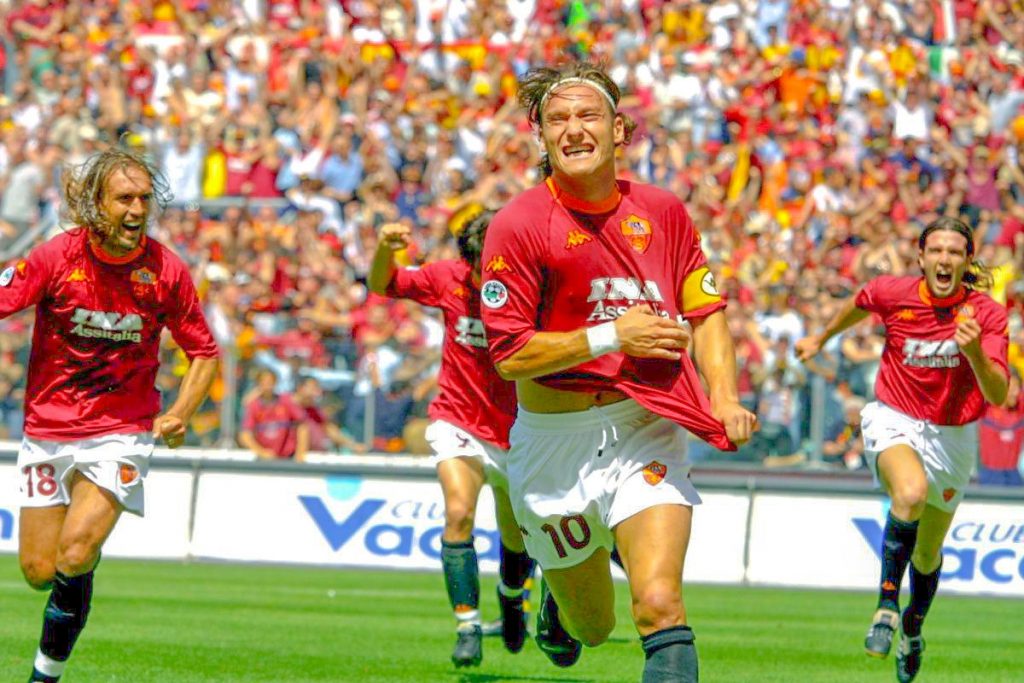
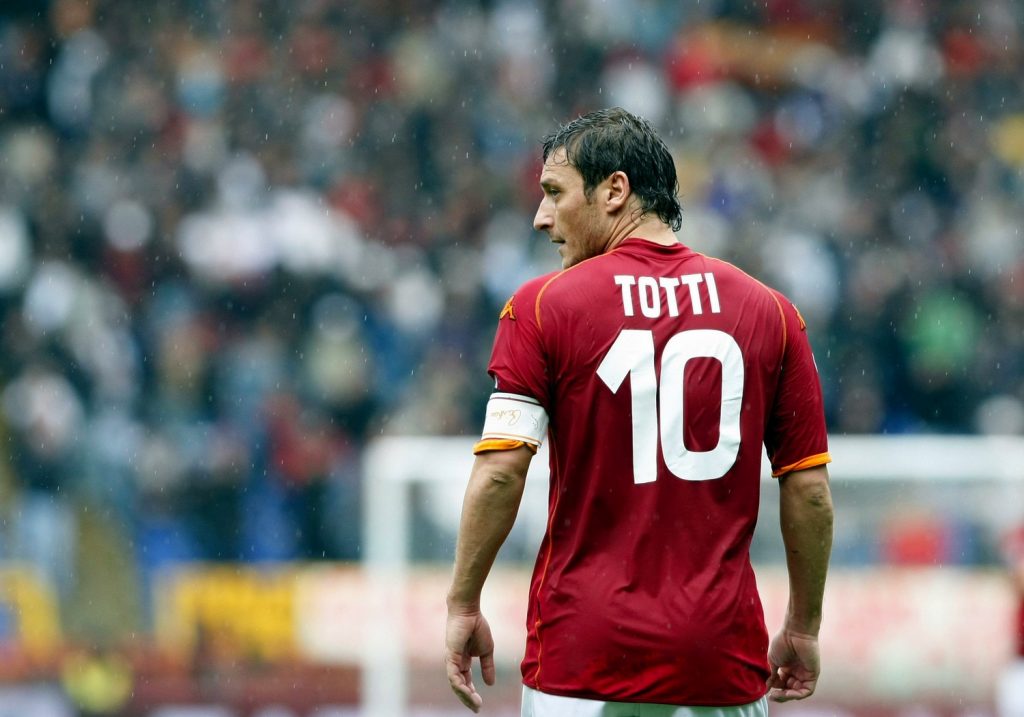
Any Scudetto kit is special for the team who won it, but this is a really smart kit. The classic collar, the orange trim, the Scudetto season, Francesco Totti and the start of the skin tight shirt era all made by Kappa. Pure. Italian. Gold.
Napoli – 1986/87
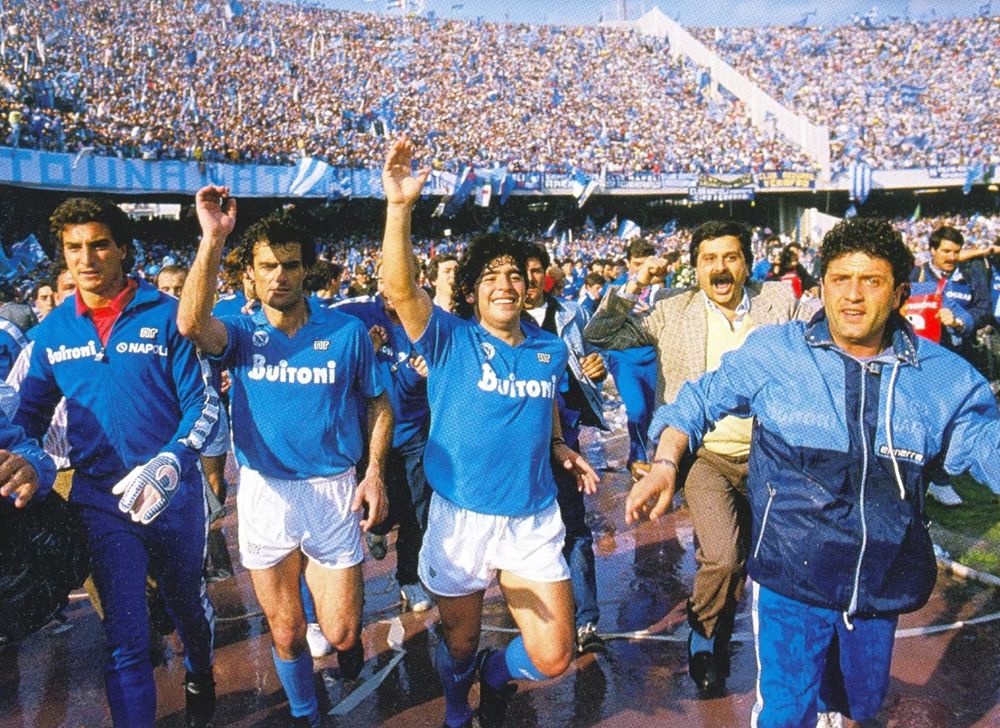
Diego Maradona won Napoli’s first Scudetto in this kit. I’m not saying anything else because that’s enough reason why this kit is great nostalgia. The Mars kit might be the more well known, but come on, look at that kit.
Torino – 1948/49
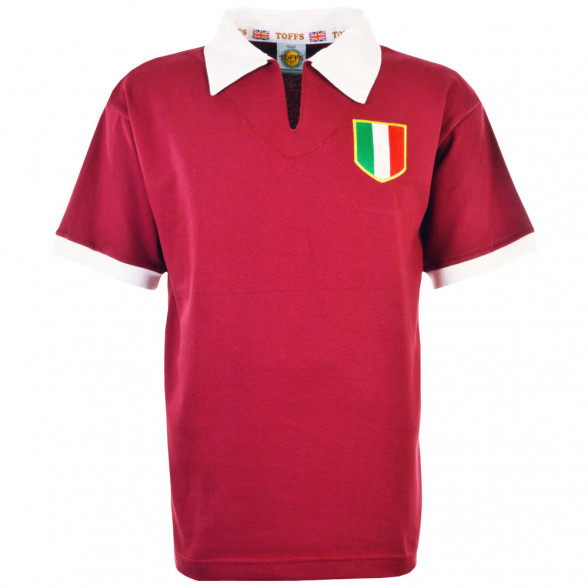
One of the greatest tragedies in Italian sport, the end of Grande Torino. It’s something to read about separately, this is a kit post. And that great team was characterised by this absolutely clean classic shirt. One colour, no sponsor, Scudetto on the chest, white colour. Perfection.
Lazio – 1999/00
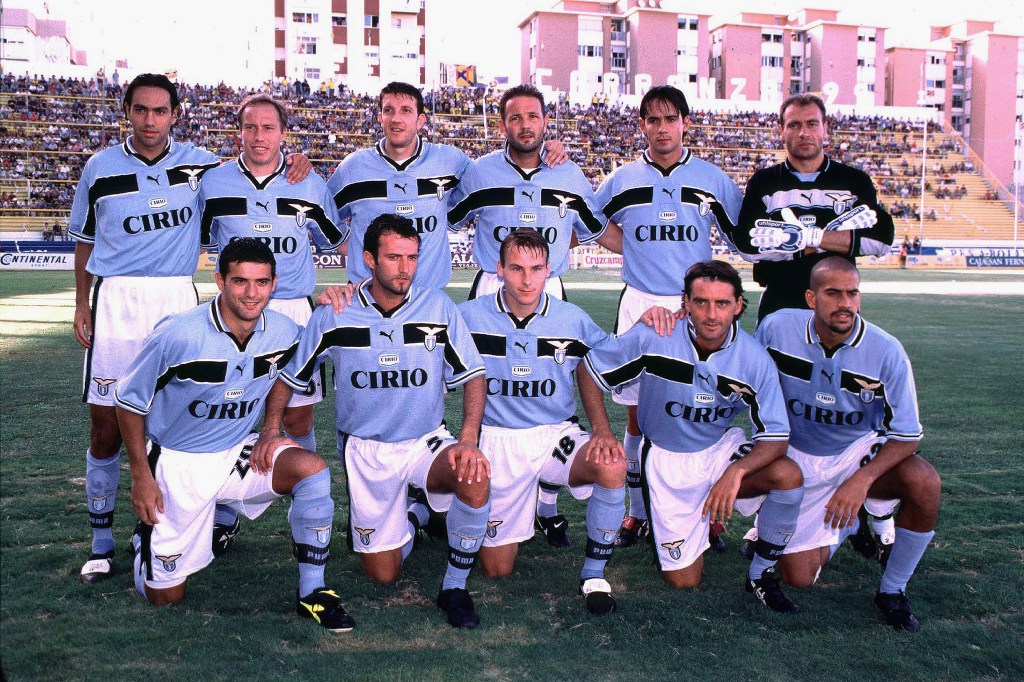
Sven. Inzaghi. Salas. Scudetto. Lazio won the league with this kit, they also won the UEFA Super Cup and reached the Champions League Quarter Finals. Some utterly fantastic players wore this kit and the basic design along with classic Cirio sponsor make this an all time Serie A classic.
Honourable Mentions
So there were some efforts that were fantastic but didn’t quite make it. Rounds of applause to Parma in 1999, Sampdoria in 1992, Bologna in 1997 and any 90s effort from Bari please.
What do you think then? Are these the greatest kits of all time in Italy or have I missed anything? Let me know in the comments or comment on the X thread @EnglishCalcio.
In 2026 the Winter edition of the Olympic Games will be held in Milano-Cortina, Lombardy. Great news for the area. Or so you’d think. When the opening ceremony of the tournament is held in February, there was only one venue that was deemed sufficient. The Stadio San Siro was the perfect choice for the opening ceremony. With one exception. Milan are due to play host to Como on February 8th.
In any other ordinary “non-batshit crazy” league, they might move the game to a different stadium in the same area. Or they could swap the home and away matches around and avoid the clash altogether. What did the FIGC decide? Go to fucking Australia and play football.
I’m all for Serie A increasing its commercialisation. I’m a huge fan of Italian football and have long held belief that everyone else should love it as much as me. It’s why I have a blog. But what the hell are they thinking here?
It is the middle of the season, not a pre-season tour. Milan and Como will be travelling some 20 hours to Perth (if reports are to be believed) and then, suffering with immense jetlag, will proceed to “put on a show” for the Australian fans.
Then, when that’s all done – in the Aussie summer by the way – they’ll fly another 20 hours back to Italy to continue their season. So a half arsed show for a few extra quid. Is this worth the pressure on the players and the squads?
If Serie A really want to push their product into a new region, they firstly need to choose a country where they can actually tune into the games at a reasonable hour, like when they’re awake. East Coast of America is an option, Saudi Arabia too. Why Australia?
It is completely baffling to me why they’ve made this particular choice. The Supercoppa is already in Saudi Arabia, so why not send Milan and Como over there to increase the presence of Italian football, cement relationships and show some faith to the country. Sure, Saudi Arabia comes with other legitimate criticisms and questions, but if the FIGC has already decided to do it, then why not go all in?
The travel to Australia, the cost of the teams heading there, the affect it has on the playing squad out there and the disruption to the calendar just doesn’t seem worth it.
If Australia really is a target audience for Serie A and the FIGC, then why are they going out for one match in the middle of February? Why don’t they go out there for 2/3 games with a few teams over a longer period? Why don’t they take the Supercoppa there? Why don’t they go for a pre-season competition?
The whole idea feels half baked. A quick decision that’s been taken hastily. Have Milan or Como agreed to this willingly? What’s the compensation they’re getting for agreeing to this?
And where does it stop? Is this a green light from UEFA for more matches to be hosted in foreign commercial paradises? The Premier League will be following this debacle closely and you can bet your bottom dollar that within two years we’ll be watching Fulham v Wolves in Charlotte, NC.
It smacks of a big comedic bag with a dollar sign on it has been handed around somewhere (allegedly of course), and everyone’s nodding along without really thinking of the consequences. Not just the consequences for the teams involved, but for the integrity of top level European football. It’s going to have far reaching consequences and Milan v Como in Perth is going to be ground zero for it.
In the late 1990s, a small club from the Veneto region etched its name into calcio folklore. They beat Napoli to lift the Coppa Italia. They almost knocked Chelsea out of Europe. And then… they disappeared.
This is the story of L.R. Vicenza — a club that dreamed big, defied the odds, and left a legacy far greater than their trophy cabinet suggests.
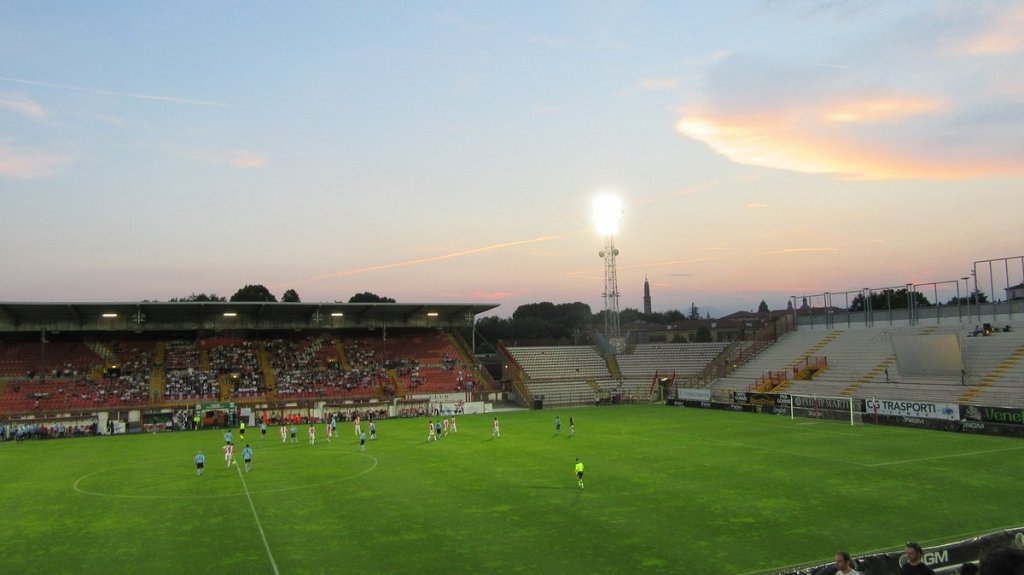
Founded in 1902, L.R. Vicenza is one of Italy’s oldest clubs. Based in the historic city of Vicenza, they’ve always been seen as a classic “provinciale” — a small, local side often bouncing between Serie A and B. Their home, the Stadio Romeo Menti, holds just over 12,000 but has witnessed moments that rival even the grandest stages in Italian football.
For decades, Vicenza quietly survived in the shadows of northern giants like Milan, Inter, and Juventus — until one unforgettable season changed everything.
In 1995, under the tactical guidance of Francesco Guidolin, Vicenza were promoted to Serie A and quickly became Italy’s surprise package. They played compact, organized football with bursts of creativity, led by key figures such as Uruguayan striker and cult hero Marcelo Otero, the safe hands of Giorgio Sterchele and the attacking duo of Giovanni Cornacchini and Alessandro Iannuzzi.
The next season, in 1996-97 they would embark on a magical run to the Coppa Italia final, beating the likes of Bologna and Genoa on the way to facing Napoli. Vicenza would lose the first leg at San Paolo 1-0, but at home three weeks later they completed a stunning turnaround in front of a raucous home crowd. Goals from Giovanni Cornacchini, Maurizio Rossi, and Alessandro Iannuzzi secured a 3–0 win after extra time — and with it, their first major trophy in 95 years of existence.
In the age of Batistuta, Baggio, and Del Piero, it was Vicenza that lifted silverware. A provincial club, built on heart and discipline, had conquered the cup.
As Coppa Italia winners, Vicenza qualified for the 1997–98 UEFA Cup Winners’ Cup. And incredibly, they didn’t just make up the numbers — they lit up the continent.
Beat Shakhtar Donetsk and Roda JC to reach the semi-finals.
Drew English powerhouse Chelsea in the final four.
In the first leg at the Stadio Menti, Pasquale Luiso scored the winner to give Vicenza a 1–0 lead. Chelsea, loaded with stars like Gianfranco Zola, Gustavo Poyet, and Mark Hughes, were stunned.
But at Stamford Bridge in the second leg, Vicenza’s European dream fell apart. Goals from Poyet, Zola, and Hughes sent Chelsea through 3–1 on aggregate. It was heartbreak — but Vicenza had shown Europe what they were capable of.
Just one year later, however, in the 1998–99 season, Vicenza were relegated from Serie A.
Key players left, financial difficulties crept in and over the next decade, the club bounced between Serie B and C, with ownership instability and budget issues mounting.
The final blow came in 2018, when the club was declared bankrupt and lost its professional status. After over a century of history, Vicenza Calcio was no more.
In the wake of the collapse, a new entity was formed: L.R. Vicenza Virtus, following a merger with nearby club Bassano Virtus. While technically a new club, it carries the same badge, colours, and loyal fanbase.
They returned to Serie B in 2020, and though they were relegated again in 2022, the passion remains.
Stadio Romeo Menti still echoes with memories of Otero’s goals and that famous win over Napoli. And Vicenza’s story continues — not in the headlines, but in the hearts of calcio romantics everywhere.
In an era before oil money and inflated sponsorships, clubs like Vicenza could still write fairy tales. With tactical discipline, local pride, and passionate fans, they showed that in Italian football, anything was possible.
Today, we remember them not because they became a giant — but because, for one brief, beautiful moment, they stood toe-to-toe with giants and didn’t flinch.
“Do you remember Vicenza’s fairytale run in the ‘90s? Should Serie A do more to protect its provincial clubs?”
Drop your memories or thoughts in the comments below — or tag us on X @EnglishCalcio and Instagram @calcioenglish.
Ok, it isn’t strictly week one, since there was a window pre- Club World Cup, but the main summer window is now open and Italian clubs have wasted no time getting to work.
It’s been a week, just, and what’s going on? Who’s signed, who’s leaving and who’s rumoured to be doing what? We’ve rounded up the latest news and rumours below!
✅ Confirmed Signings (Incoming)
🔵 Inter Milan
Ange‑Yoan Bonny (Parma → Inter) – €23 million + €2 million in add‑ons.
⚪ Juventus
Jonathan David (Lille → Juve) – Free Transfer
Pierre Kalulu (Milan → Juve) – €14.3 m(after loan)
🔴 AC Milan
Samuele Ricci (Torino → Milan) – €23 m + €1.5 m add‑ons
🔵 Napoli
Luca Marianucci (Empoli → Napoli) – €9 m
🔵 Pisa
Isak Vural & Mateus Lusuardi (Frosinone → Pisa) – €4.5 m & €0.5 m
🔄 Rumoured Incoming Transfers
🔵 Inter Milan
Giovanni Leoni (Parma → Inter) – Rumoured buy
Richard Rios (Palmeiras → Inter) €30m rumour
⚪ Juventus
Jadon Sancho (Man Utd → Juve) – ≈ €25 m in talks
Dusan Vlahović – Rumoured sale (~€70 m)
🔴 AC Milan
Luka Modrić (Real → Milan) – Free; arrival confirmed August, on a one‑year deal worth net €3–3.5 m .
Lorenzo Lucca (Udinese → Milan) – Interest growing
🔵 Napoli
Jayden Addai (AZ → Napoli) – ≈ €14 m, close deal
Jens Cajuste (Besiktas → Napoli) – Loan with €6.5 m option
🔵 Lazio
Lorenzo Insigne – Free agent, potential September arrival
📤 Outgoing Transfers
🔴 AC Milan
Tijjani Reijnders → Man City – €55 m + €15 m add‑ons
Theo Hernández → Al Hilal – €25 m
Marco Pellegrino → Boca Juniors – €4 m
Davide Calabria, Alessandro Florenzi, Luka Jović – Left on free transfers
⚪ Juventus
Timothy Weah → Marseille – ≈ €15 m, deal in progress
👑 Spotlight: Ange‑Yoan Bonny → Inter Milan
Fee: ~€23m + €2m in add‑ons; plus a 20% sell‑on clause per Calcio e Finanza
Contract: 5‑year deal until June 2030 earning €2m net/year
Why It Matters: Inter have secured a young, powerful striker and are now prioritizing midfield and defence reinforcements
⚽ Final Thoughts
Serie A’s transfer window is in full swing. Transfers like Bonny, Modrić, and major departures have reshaped several squads. Expect more dramatic moves as clubs await preseason preparations.
How often can one man unite the whole of Italy? How often does a player play for Juventus, Milan and Inter and become universally admired by their fans? How often does a man miss a crucial penalty in a World Cup final and have his legend grow? How often can one man be told his career is over due to injury and still continue?
Welcome to the crazy world of Roberto Baggio, Il Divin Codino (the divine ponytail). The sale of Roberto from Fiorentina to Juventus in 1990 was so poorly received that it led to rioting, looting and 50 people being hospitalised. A fall out with Marcelo Lippi at Inter would lead to the manager being sacked. A man who was the idol of Zinedine Zidane.
Baggio was born in Caldogno in 1967 and made his debut in Calcio at the tender age of 15 for Vicenza. He would stay with Vicenza for three years, playing in 47 games and bagging 15 times in that time.
A move to Florence followed and he would impress so much there in his 5 years that his transfer to Juventus inspired rioting and looting, with the move seen as a betrayal by the player and the club. After 55 goals in 136 appearances there, it’s easy to see why the fans were so upset to lose Baggio.
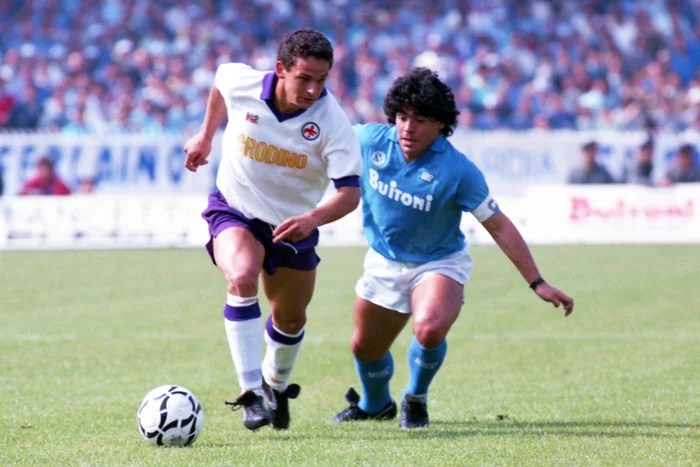
He truly announced himself to World football when in 1989 while playing for Fiorentina against Napoli, he outshone Maradona with a dazzling solo goal. This all came after his first career ending injury, too. During a game in 1985 at the age of only 18, Baggio experienced a major ACL and meniscus tear so brutal that doctors said he’d never play again.
Baggio takes on Maradona
It was his determination and will to come back and succeed that endeared him to La Viola fans, and would lead to their outrage at his sale. Baggio would later tell JuveFC.com that he “didn’t want to leave Florence. I felt indebted to this city, these people, these fans”.
When Baggio returned to Florence with Juventus in a Coppa Italia match, the anger over his move only intensified when he refused to take a penalty and his replacement subsequently missed.
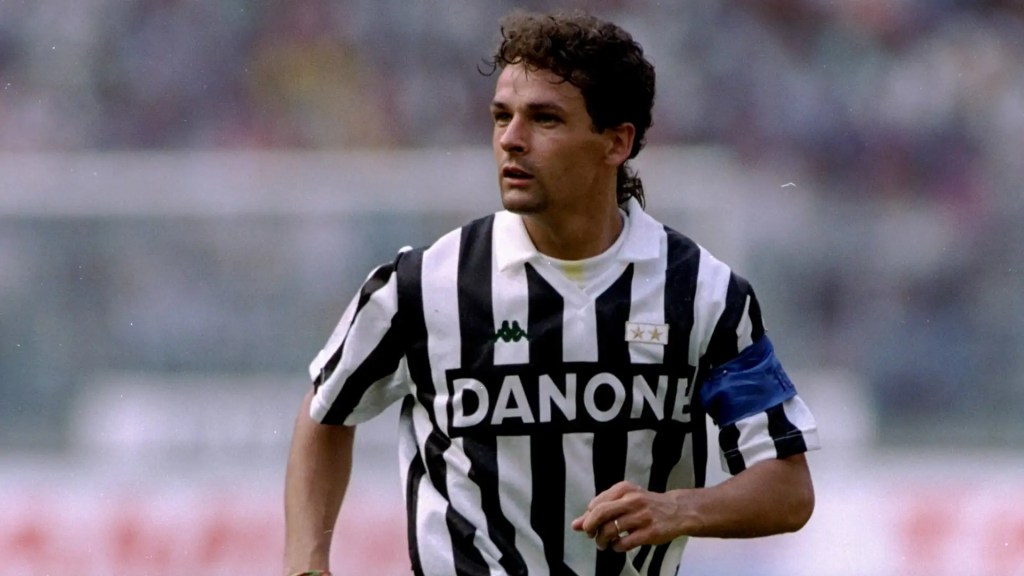
However, his time at Juventus wasn’t all controversy, it was mainly illuminating moments. Il Divin Codino scored 115 goals in 200 matches for the Old Lady and would win the Scudetto, Coppa Italia and UEFA Cup during a spell that also saw him win the Ballon D’Or.
Roberto Baggio scored 115 times for Juventus
In that 1993 UEFA Cup final against Borussia Dortmund he would score two goals and assist his namesake Dino in a 3-1 first leg win away to the German side. Dino would say of Roberto after the game, “Roberto could change the game in an instant, he is our leader without shouting”.
Roberto Baggio would truly make his name a year later, however, with a virtuoso performance in the 1994 World Cup in USA. Italy would start the tournament very slowly, with a 1-0 loss to Ireland in their first game before a narrow 1-0 win against Norway (in which Sacchi was criticised for subbing off Roberto) followed by a 1-1 draw with Mexico that saw Italy scrape through to the second round.
It was in the second round that Il Divin Codino burst into life. With Italy trailing Nigeria 1-0 in the Round of 16 game, Baggio stole an equaliser in the 88th minute, before scoring the winning penalty in Extra Time.
Again, in the 88th minute of the Quarter Final against Spain, Baggio took control of the game, slaloming through defenders to score a sensational winner that put Italy through to the Semi Final against surprise package Bulgaria. Baggio scored twice in the first half to secure a 2-1 win for the Azzurri, the second being a classic Baggio run and finish – poetry in motion.
Unsurprisingly playing on an injury, Baggio had carried Italy to the final with one leg. Arrigo Sacchi said after this game, “He played like an angel with the knees of an old man”.
All that was left to complete the legend of Baggio was for the Ballon D’Or holder to carry Italy to World Cup triumph in the final against Brazil.
A cagey affair, the final went the distance, going to a penalty shoot out after a 0-0 draw. It was the first ever World Cup final to be decided on penalties and with Brazil having missed one and Italy having failed twice, it all rested on Roberto Baggio to keep the dream alive.
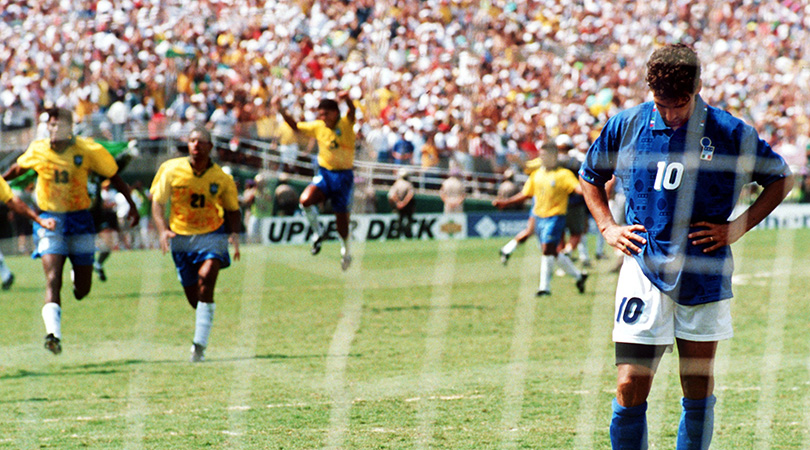
In truth, even if he had scored, Brazil would’ve won by scoring the next kick, but it never got there. Roberto skied his penalty high above the goal and into the stand behind the goal. Later Baggio would say, “I failed. But only those who have the courage to take a penalty can miss them”.
Italy’s Roberto Baggio hangs his head after missing the decisive penalty during the 1994 World Cup Final
Despite the miss, Baggio had garnered global admiration for dragging Italy to that final almost single handedly. Lothar Matthaus of Germany and Inter said afterwards, “He was magical, like Maradona in 86, but with worse luck”. World Cups aren’t just about who wins them, they’re about the players who light them up, and Baggio had certainly done that. Baresi said, “Roberto was the World Cup, without him we were half the team”.
Baggio returned to Italy and would play for Milan between 1995-1997, winning the Scudetto again. After notching 19 goals in 67 games for them, he moved to Bologna to improve his chances of appearing in France 98. Scoring 22 goals in 33 appearances there succeeded in getting him on the plane to France where he would score his last goal for Italy in a 2-1 win over Austria.
Roberto Baggio for Inter Milan
That form earned him a transfer to Inter Milan, where he would score 17 times in 59 games, including two on the last day of the season against Parma to secure a 2-0 win and Champions League football for Inter. This all came after a fall out with coach Marcello Lippi who was sacked after the game, showing the influence of the Divine Ponytail in club decisions.
Baggio’s final career move was to Brescia where he spent 4 seasons until retiring in 2004. He had scored 45 goals in 101 appearances by this point including a sublime lob from outside the area against Juventus at the age of 34. He helped Brescia to qualify for Europe and mentored a young Andrea Pirlo during his time there, cementing his cult status among Calcio fans.
Upon his retirement, Roberto Baggio had scored 288 goals in 643 Serie A matches, along with 27 goals in 56 games for the Azzurri. He had played for the three biggest teams in Italy who were also the biggest enemies. He had cost Italy a World Cup that he nearly won them. And yet everyone loved him. Baggio was a symbol of the beauty of football above all else. He was a symbol of the decadent days of Calcio in the 90s. He was a symbol of artistry, humility and perseverance. He inspired a generation of fantasisti with Totti, Del Piero and Cassano all citing him as an influence.
The San Siro, a fitting venue for Roberto Baggio’s last ever game
Perhaps the best way to sum up Roberto Baggio is with the words of Italian journalist Gianni Mura, “Roberto Baggio is not a footballer. He is an idea”.
Back to chronicling some travel again on today’s blog and judging by its popularity last time out I’m calling it as being “Back by popular demand”.
And yes, I went over to everyone’s favourite football tournament, the FIFA Club World Cup. Now, I know it’s not everyone’s cup of tea but I’m so open minded I was willing to give it a go, and when my pal Francesco suggested we fly over to experience it and watch Inter take on River Plate – I thought, “why the hell not”.
The first thing to say is, I’m not a millionaire, far from it! In fact I’m not even rich, I do ok in my job but high rent and cost of living means I generally live month to month. So how were we going to plan this properly? Tickets weren’t an issue (as is well publicised) and with our Inter Club Memberships we easily purchased tickets in the “Inter end” for the game, for around €120.
But how to get to America? Seattle is as far away from London as it can possibly be so this wasn’t going to be cheap. BA were after £1600 for return flights, Virgin wanted more and the American airlines seemed to want me to fly exclusively with BA. I tried looking at connecting options if I could get into New York with Fly Norse for cheap but to no avail.
Suddenly, Icelandair revealed itself to me. I’d heard rumours before that they were cheap due to some variation on long haul taxes in the Viking island. A quick check on their website confirmed it. Around a £1000 saving on the previous cheapest option. It seemed mad to me, £650? Really? to get to Seattle and back?
Now there’s a few caveats here, that was the base fare and didn’t include my seat or luggage. There’s a generous free hand luggage allowance of a small wheeled suitcase and a backpack. The thing you pay £50 to bring on Ryanair. I didn’t need to book a seat either, as you can get one allocated for free, but for ease I decided to pay for a window.
Icelandair Economy was more than spacious for someone of 6′ plus!
So all in I think it was around £700 to fly. I didn’t get fed, you have to buy food, but that’s fairly reasonably priced. But there’s something I haven’t told you! In a bid to boost tourism, Icelandair offers up to 7 nights stopover in Iceland for no additional airfare. So whatever you pay for you flight, you can connect in up to a weeks time for nothing extra.
Francesco had already decided he was going to head over there on Friday night and give himself a few days to explore. It was a little trickier for me. Work commitments, a wedding and the Mrs being furious I was going away for a week without her meant I joined him on the Monday.
My layover was only 16 hours in Reykjavik and it was a bloody expensive 16 hours. Frustratingly for me, we were flying to Keflavik and not the central Reykjavik airport. There was an Icelandic Premier League game kicking off at 6pm that was right next to that airport, but Keflavik was around a 45 minute transfer away. Alas, I didn’t make it to the Icelandic match, but I did catch the second half in a bar while waiting for Francesco to return from an excursion.
It’s a shame I didn’t manage to make it, the game finished 7-1 and I wouldn’t have spent £45 on three pints… Never mind though, that wasn’t the game I was coming for. Francesco and I got a bit drunk and headed back to the hotel where blackout blinds were most welcome. It was around 2am when we got back there and the sun was still shining like it was 8pm in England. A truly bizarre experience!
Next morning we headed over to the airport for about 8am, our flight was at 10:30 and we didn’t want to take any chances. As it turns out, the process in Keflavik couldn’t have been smoother. We breezed through security, straight through passport control to be stamped out and headed straight for a coffee (pint).
Boarding was on time and quick and I must say I was hugely impressed with Icelandair. The plane was bright and spacious, we had huge TV screens for entertainment, the food and drink was well priced and the temperature was just right. I’m not sure what it is most airlines do, but pretty much every other plane I’ve been on has been too hot or too cold, but Icelandair got it just right.
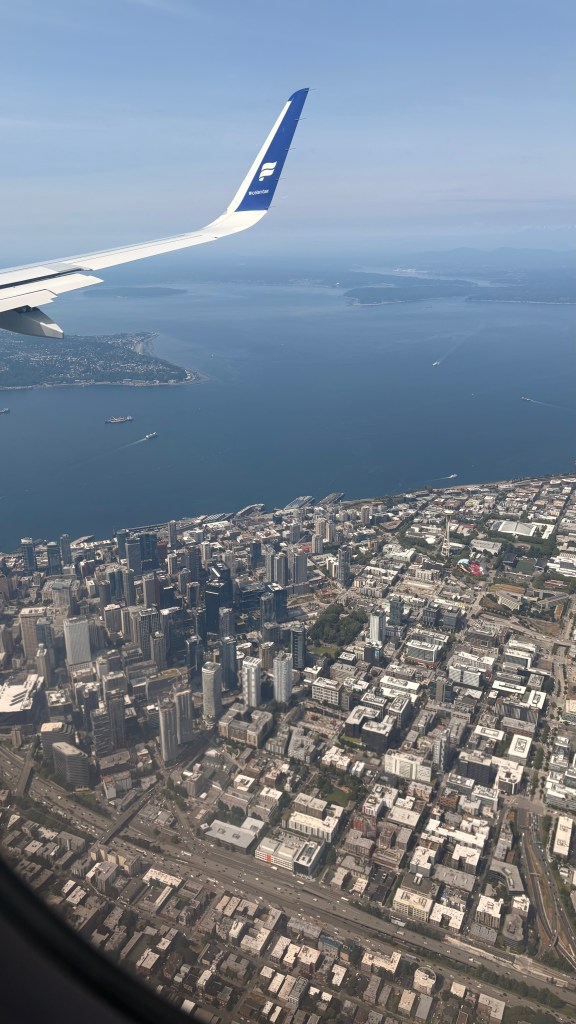
After take off, I tucked into a cup of noodles, very tasty and 4 beers in between chatting with Francesco, reading a book, watching Twisters (don’t bother) and napping. It’s that weird thing flying to America where the travel time and time difference mean you essentially land the same time you leave. And we did just that. Arriving into Seattle roughly 30 minutes after take off. In reality, our day had moved on 7 hours, but in Seattle we were only 30 minutes further on in our day!
A great sunny approach into Seattle over the bay
To stave off jetlag we enjoyed a nice long queue at the US border (sort it out Trump) and then an even longer queue for the bus to the car rental service. Each queue was around 40 minutes and moved the day along nicely. At the car rental area, we were greeted with our first taste of good ol’ fashioned USA when we were presented with a monster of a pick up truck!
It wasn’t exactly what we were used to, but you know what they say – when in Rome…
Getting into the spirit with this monster…
After checking in at our Motel on the outskirts of Seattle, we drove into town to check out the Inter team hotel, see what was going down. It turned out to be great timing, we arrived there about 6pm just in time for some kind of player curfew as we met Davide Frattesi. He was good enough to pose for pictures with us and some other fans before heading into the hotel. Sebastiano Esposito also stopped for a photo but didn’t seem best pleased to be doing so!
After dinner, we walked back past the hotel towards the car with some more perfect timing and stumbled across bona fide Inter and Argentina legend Javier Zanetti. He was a gentleman who stopped for photos and long chats with all the Inter fans – much to the annoyance of his wife who was waiting to go back into the hotel.
An Inter legend with Javier Zanetti…
Wednesday was match day and the day began with another stop at the hotel – Francesco’s obsession – and we once again arrived just as the players returned from training. This time there was no mood for photos, Thuram, Bisseck and Frattesi all strolled straight into the hotel, while I’ve never seen Zielinski move so quick as when some kids wanted an autograph. Maybe Inter should employ some to follow him around the San Siro pitch?
The game kicked off at 6pm local time and we decided around midday that it was time for a beer and headed to the oldest pub in Seattle called Central Bar. On the way there, we once again tripped over an Inter legend when we saw Maicon out for a stroll.
Central Bar is your typical American pub, it looks a little like what an American thinks a British pub should look like. But the bar staff and the locals were welcoming and keen to learn about “soccer” from us and some River fans.
This leads me in nicely to dropping a little praise for River fans. They’re mental. They outnumbered Inter fans there by 20 to 1 and they were all over the city and constantly decked out in their River shirts. They also have this weird thing where when one group sees another group, they immediately start singing and jumping up and down. They had clearly come to party and were in bouyant mood on match day.
The teams about to (slowly) enter the pitch…
After a short pub crawl towards the stadium (Lumen Field is so central in Seattle it’s crazy), we arrived at a designated meeting point for the Inter fans. Some of the clubs from America had organised a get together at The Gantry pub just outside of the stadium.
Flags were prominent with Inter Club DC, Miami and Ohio present with Francesco and I repping London. It was great to see the fans come together like this and it was definitely a different experience to the San Siro being among American fans. Some of them are children of Italian immigrants, some of them are Italians who live and work in the States and others just liked Inter because they were in Milan on their honeymoon when Inter played.
We shared some beers (maybe too many) and sang songs, we bantered with River fans and appeared on various Argentinian TV stations who wanted to speak to us. It was a great way to pass a couple of hours pre match.
Around an hour before kick off, Francesco and I decided to head into the stadium. Now, let me tell you, Americans may not have the right kind of football, but their stadiums for this sport are nothing short of amazing. Lumen Field is a spectacular stadium, with the Inter fans housed in a large open air section behind one goal. Behind the stand was a plaza like area with food and drink stalls and general mingling.
Our seats were amazing, right down behind the goal and we got a great view of the spectacular River fans behind the other goal enjoying their day. The noise that came from them was incredible, I can only imagine the scenes if they’d scored.
As it stands, they didn’t. Inter actually played well, probably for the only time in the tournament. They had a nervy opening few minutes but quickly settled and were largely the better side. A few scuffed chances and the score could’ve been a lot better than 0-0 at half time.
Pio Esposito – the younger brother – was an absolute handful throughout and probably played his way into Chivu’s thinking for next season. His goal was therefore thoroughly well deserved. Good play by the also impressive Petar Susic played him in and he turned well before firing low into the net. The celebrations of his team mates tell you this was a popular goal.
The second followed from Bastoni who rode a couple of attempted assualts from the Argentinians before smashing low under the keeper and into the net. What followed was all a bit unsavoury if not desperately funny as Dumfries and Acuna clashed and followed it on after the full time whistle.
Heading back into Seattle post match
Inter had won, they’d played well and deserved it, I’m not sure if we’ll say that a lot based on the fall out that followed. More importantly though, it was literally a 5 minute walk from the ground the a dive bar where we enjoyed a few beers in the evening before heading back to the Motel.
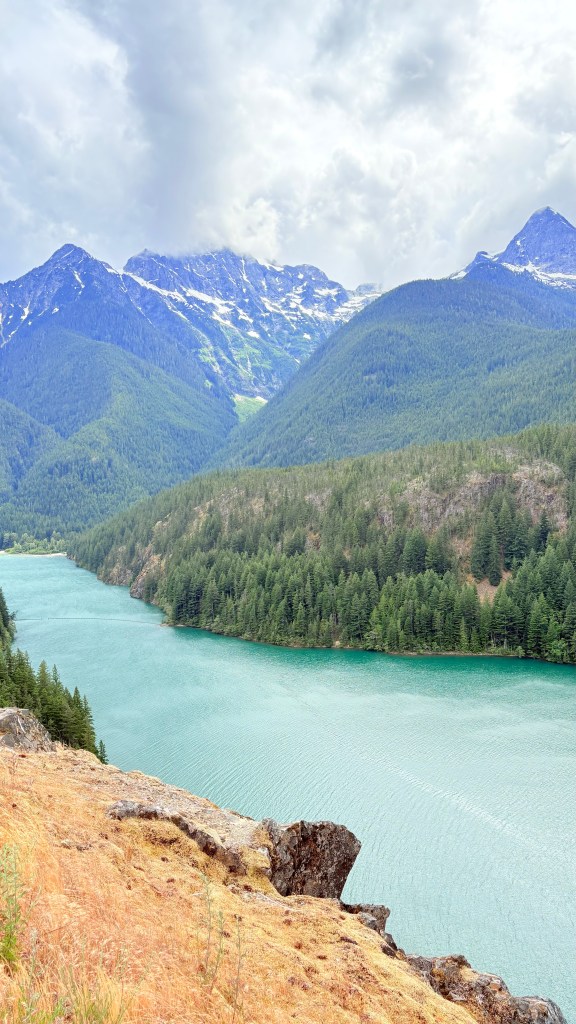
The next couple of days were quite chilled. We drove North near to Canada to the Northern Cascades National Park which was breathtakingly beautiful, exploring small town America on the way. We did all the tourist bits in Seattle too, the Space Needle and the boat tour round the harbour and I’ve got to say I really enjoyed the city.
Looking towards Canada in the Northern Cascades National Park
Now don’t get me wrong, there’s not really enough going on in Seattle to warrant a flight around the World just to see it, but it’s clean and spacious, it isn’t as busy and bustling as some of the other US cities. It doesn’t really represent what we all hear about “Trump’s America” either, it all seemed a bit… woke, I guess. Everyone was friendly, there was Pride flags hanging everywhere as it was Pride month, the food was all Mexican, Vietnamese, Thai – people from all cultures were mixing.
Seattle from the boat tour around the bay
Well worth adding to any trip you’ve got planned in the States.
As for the Club World Cup? Well, I had kept an open mind. I’m glad I did. Even though I only did one game I thoroughly enjoyed the spectacle. Where else can we see Europe’s finest take on South America’s finest in something meaningful? I do a lot of international tournaments following England and the group stages are always the best part. Everyone from around the World is still there, everyone’s happy because the proper serious stuff hasn’t kicked off yet.
Seattle certainly had these vibes. After the games River fans and Inter fans were swapping shirts, swapping scarves, swapping flags, sharing a drink together and laughing together. There’s no doubt that FIFA’s new flagship tournament has some work to do – but I enjoyed myself in this first iteration.
Any football fan with an algorithm worth anything will have come across the video on Instagram or TikTok before. An emotional Francesco Totti bidding an emotional farewell to an even more emotional Stadio Olimpico. I’m not a Roma fan, but I am a human being so I always stop and watch the video.
Football fans far and wide – except maybe Laziali – almost all stop and watch the video and get a lump in their throat. Totti spanned club rivalries, a one club man who stayed true to his hometown in the face of enormous offers from elsewhere. He lived out everyone’s childhood dream, captaining their local team, lifting a title for them and becoming their all time great.
I read somewhere that he said he hasn’t been able to walk around the city he loves so much in 20 years because he’s mobbed everywhere he goes. It seems bittersweet for a man who turned down Real Madrid to stay in Rome.
But how did he get here? Plenty of players come through their hometown youth system and don’t end up a legend across the entire country – look at Trent Alexander Arnold…
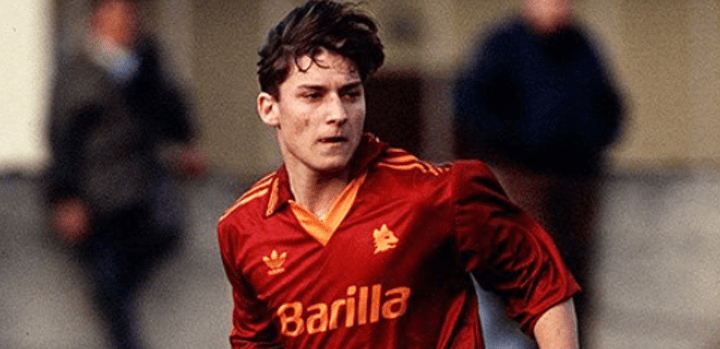
On March 28th 1993, Vujadin Boskov probably had no idea what he was unleashing on the world when he handed a 16 year old Francesco Totti his debut. Boskov had recognised his talent in training, specifically his technical ability, and called him up to the first team.
Il Bambino makes his debut for Roma, aged 16
He was so young, the other players called him “il bambino” (the kid) and he kept his school books in his locker at the training ground. Early the next season, on September 4th 1994 a 17 year old Totti opened the scoring against Foggia with a powerful, well placed effort.
It was the first of many goals, 307 in total during 786 appearances. He also contributed 180 assists and at the time of his retirement was second in the list of all time Serie A appearance holders. The numbers speak for themselves, but numbers is a modern curse that we judge footballers on – thanks Pep. What made Totti a great was the way he effortlessly did incredible things on the pitch, his inventiveness and his ingenuity.
Thierry Henry described Totti as having “magic in his boots” and Pele said he was “one of the most intelligent players” he’d ever seen. It wasn’t always plain sailing for Totti however, in the mid-2000s he would suffer with recurring ankle and knee problems.
Not only this, but in the closing months of the 2005-06 season, he would break his leg in a match against Empoli. With the 2006 World Cup coming fast, Totti didn’t play a game from February until the end of the season.
The career threatening injury, as it turned out, couldn’t even threaten Totti’s World Cup. He would play in all seven games for Italy as they lifted the famous trophy following a shoot out win over France in the Final.
During the tournament, Totti would provide 4 assists and a crucial goal in the 95th minute of the Round of 16 against Australia, winning the game for Italy from the penalty spot and preventing extra time. After the tournament, manager Marcelo Lippi was moved by Totti’s commitment and ability, commenting, “Only Totti could’ve played like that with half a leg”.
Francesco Totti, with half a leg and the World Cup trophy
His resolve to Roma was tested a few times, mainly by Real Madrid, who offered him a mega money deal in the early 2000s and pretty much guaranteed him a Ballon D’Or. On turning them down (several times), Totti said, “If I had gone to Madrid, I might have won more, but I would have betrayed myself”.
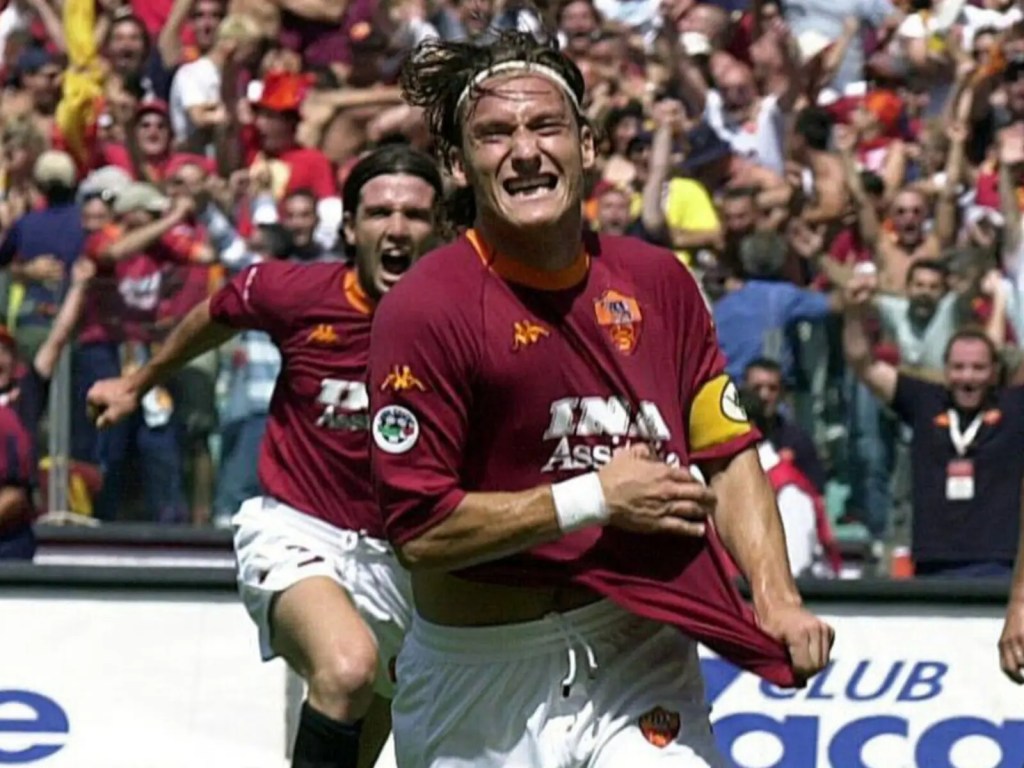
It was, therefore, fitting that Totti would provide the crucial goal to provide Roma’s first Scudetto since 1983. In the game against Parma on 17th June 2001, Totti scored the decisive goal that sealed a 3-1 victory and would see him parade around the pitch with a gladiator’s cape on. All over the city, the celebrations went on for days, and there’s still graffiti across Rome to this day saying “Grazie Capitano”.
What the Scudetto means to Francesco Totti
There were many more iconic moments for Totti throughout his career. Some that come to mind are his ridiculous 40 yard lob against Inter at the San Siro in 2005. Spotting Julio Cesar off his line, he went for it and secured himself goal of the season, prompting commentary cries of “Non ci credo!!!” That’s “I don’t believe it” to you and I.
He also had a signature penalty move, crowned in Euro 2000 against the Netherlands when he chipped the ball down the middle in the shoot out under enormous pressure. His now iconic “cucchiaio” penalty was preceded by him turning to his team mates and saying, “Now I’ll do the spoon”.
Totti was the true inventor of the selfie celebration too, after scoring twice in the Rome Derby, he grabbed a phone from coach Guido Nanni and took a selfie with the Curva Sud. His second goal in that game equalled the record for goals scored in the Derby della Capitale with 11 – alongside Dino Da Costa.
It was this sort of cavalier performance for Rome, after turning down the big money and personal honours that led to team mates like Daniele De Rossi to say of him, “He is football for Rome. He’s the banner, the heart, and the king of this city.” His long term coach Luciano Spalletti said of him, “Totti is Roma, and Roma is Totti. He’s a symbol of a city, not just a club.”
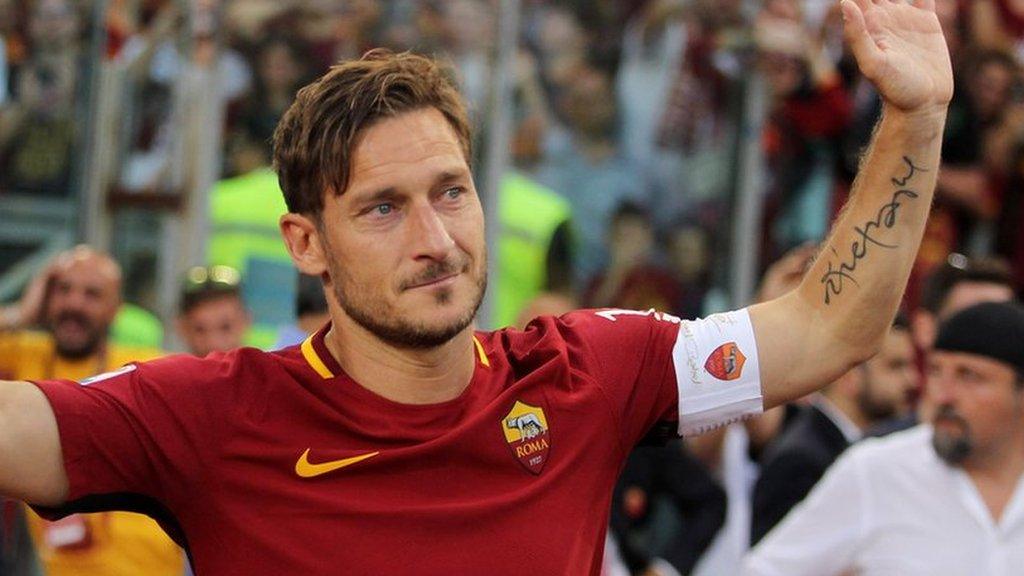
When the time came to call time on his career, it was no wonder he was going to get the send off we all watch on Instagram and TikTok every time. Totti once said, “Winning one title at Roma to me is worth winning 10 at Juventus or Real Madrid.” It was that kind of refreshing loyalty that endeared him to so many across Rome and Italy.
A tearful Francesco Totti says goodbye
When he stood on the pitch at the end of the game against Genoa at Stadio Olimpico, Totti – overcome with emotion – bid farewell to Roma with some typically passionate words, “Now I’m afraid. I need you and the love you’ve always shown me.”
So many footballers say they struggle after retirement and this openness with his public was typical of a man who once said, “I was born a Roman, and I’ll die a Roman”.
And perhaps that’s the best way to remember one of the true Legends of Calcio…
There are all sorts of quotes from opponents, team mates, managers and pundits that are quoted in this blog, but to be honest, the biggest compliment from me is that Il Fenomeno was the man who made me fall in love with Calcio – and especially the Nerazzurri. Although I clearly hide my bias towards Inter well usually, I won’t in this blog.
Those Sunday afternoons spent glued to Channel 4 in the UK watching James Richardson sit outside a café with the Gazzetta describing the articles to us would spawn a lifelong obsession with the beautiful game in Italy. It would be years before I finally took a trip to the San Siro, Ronaldo long gone, but his shirt still for sale in the club shop and in the stalls around the stadium tells the true story of his impact on Inter.
The reigning FIFA Player of the Year arrived in Milano in 1997 after one season at Barcelona. A paltry €28m paid to secure his services was a world record fee at the time – those days are long gone from Italian football. He hit the ground running in Italy, hitting 34 goals in 47 appearances in all competitions, although he would only play another 52 in the next four years before departing for Real Madrid.
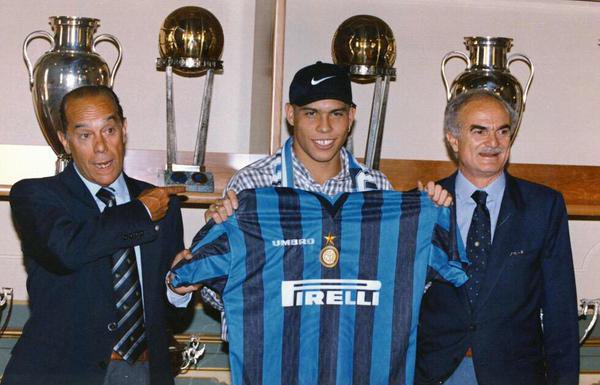
Ronaldo signs for Inter
His team mates, opponents and managers alike were in awe of the phenomenon. Zanetti remarked that he was “from another planet” and Lippi said “you didn’t coach Ronaldo; you just gave him the ball”. The fact he was referred to by Maldini as the “toughest player I ever faced” and Cannavaro described facing him “a nightmare – he was unstoppable” should tell you all you need to know.
That first season was capped by a UEFA Cup win (Europa League) with a 3-0 victory against fellow Serie A side Lazio, in which Ronaldo delivered a spectacular solo goal, showcasing his natural pace, power and composure to leave a Lazio defence spinning. However, it would be another cup final against Lazio that would come to define the man.
He’d already suffered a serious rupture of the tendons in his right knee in a Serie A match against Lecce in November 1999. Surgery and a significant recovery period had the star man sitting on the sidelines watching his team mates compete for the rest of the season. As Ivan Cordoba remarked at the time, “Watching someone so talented suffer like that was painful for all of us”.
“He fought so hard to return, and that injury broke all of us”.
Christian Vieri
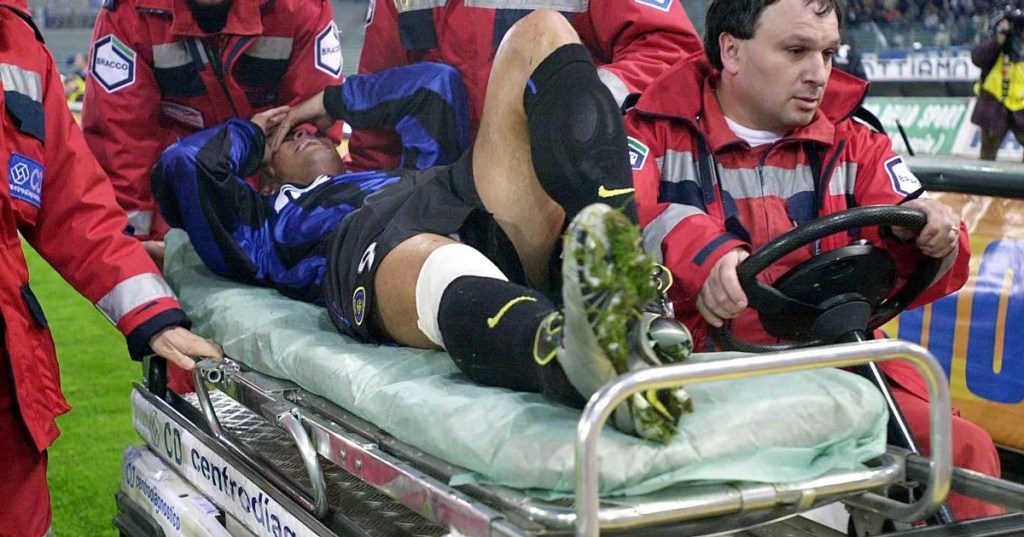
However, on April 12th 2000, Ronaldo was back on the bench in the Coppa Italia final against Lazio. His return highly anticipated by a team that had drifted somewhat without him. However, just 6 minutes after his introduction a sudden movement caused his kneecap to rupture, Ronaldo collapsed to the floor and was in visible agony, clutching his knee.
Ronaldo leaves the pitch in agony. Again.
The impact wasn’t just on the player himself, but his team mates too. Goalkeeper Gianluca Pagliuca said, “It was devastating. Seeing Ronaldo, knowing how much he worked to come back was unbearable”. With strike partner Christian Vieri adding, “He fought so hard to return, and that injury broke all of us”.
Ronaldo headed to Paris for surgery under famed physician Dr Gerard Saillant spending over a year in rehabilitation, rebuilding his strength and mobility. As Javier Zanetti would say after his return, “even when it looked impossible, he never gave up”. And at one point it looked impossible. There was some doubt whether Ronaldo would even walk again, let alone play football.
One of many celebrations in an Inter shirt for Ronaldo.
Fortunately for Il Fenomeno, he had a strong group around him, including team mate Roberto Baggio who has suffered similar knee issues over his career. “I spoke with Ronaldo often. I told him recovery is a mental battle as much as a physical one”. Over a year later it seemed Ronaldo had won the mental and physical battles.
Looking understandably tentative on the pitch initially, Ronaldo was back on the pitch in September 2001 against Brescia. He would only appear 16 times that season, scoring 7 goals, but he had showed the World his resilience. Hector Cuper, Nerazzurri coach that season, said of Ronaldo, “He showed the World that after everything he went through, he was still Ronaldo – still Il Fenomeno”.
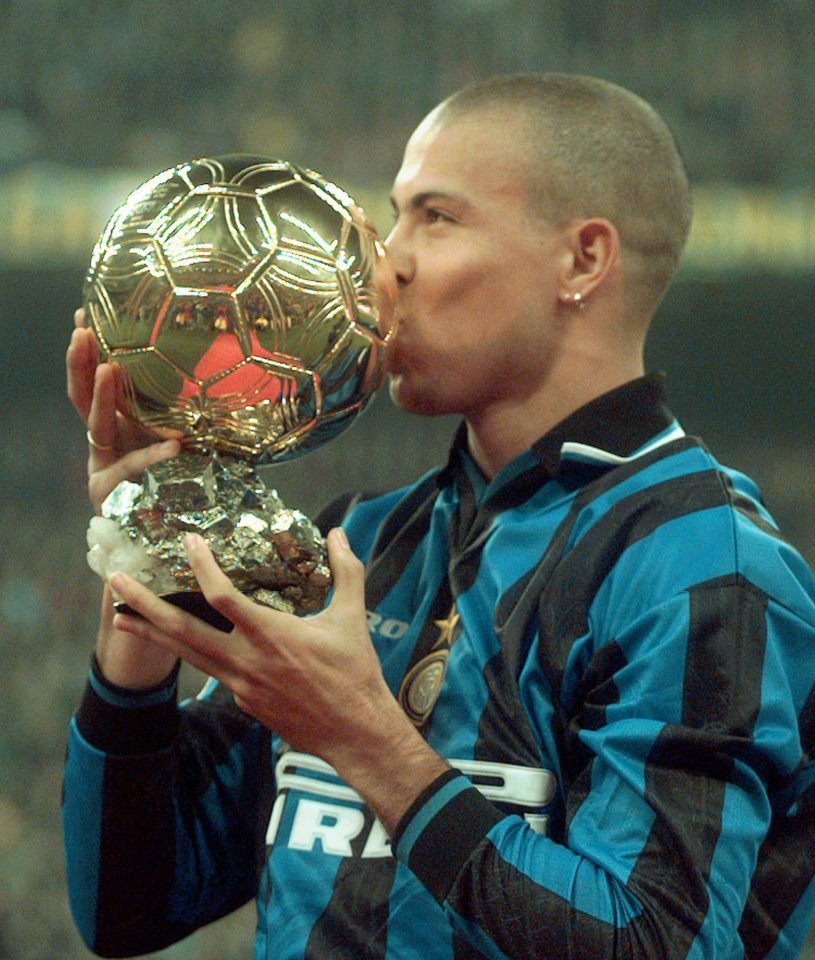
The pace and explosiveness that made him the World’s youngest Ballon D’Or winner in 1998 aged 21 were affected. But his football brain, his finishing and his faith in himself have never been diminished.
Ronaldo with his 1998 Ballon D’Or
Youri Djorkaeff once said that “Even in training, he’d do things we couldn’t even imagine” and Luigi Simoni commented that “he made the impossible seen ordinary”. Recovering from that injury against Lazio probably tops any feat he ever managed on the pitch. His legacy is still felt today, with strikers such as Kylian Mbappe and Zlatan Ibrahimovic attributing his influence to their game.
In 2002 Real Madrid and the galacticos came calling and Ronaldo was gone from Italy after 59 goals in 99 appearances in Milan. It wasn’t forever, however, and Ronaldo would return to Calcio, and Milan in 2007. This time in red and black and for a mere €7.5m and would stay for an injury plagues year and a half. He managed 9 goals in 20 appearances for Milan, forging a strong partnership with Kaka and Clarence Seedorf.
He once commented that one of the most bittersweet moments of his career was scoring for Milan against the Nerazzurri in the Derby della Madonnina in the 2007/08 season. During a match against Livorno, Ronaldo once again ruptured his patellar tendon in his left knee and the season was over – with it his time in Italy.
Ronaldo in a Milan shirt, being congratulated on ANOTHER goal.
One of the few players to score for both sides in the Derby della Madonnina, he also managed to score for both sides in El Clasico. The only footballer in history to do both. Perhaps why he’s known the world over as Il Fenomeno.
Firstly, straight off the bat, let me make it absolutely clear that “banter era” is a phrase used in modern football that I abhor. For an over 30s man like me, it represents everything I don’t like about modern day football. But it seems strikingly appropriate to describe Inter at the moment.
It seemed for a while that the banter era was over at Inter. Conte came in to the club in 2019 and promptly turned their fortunes around, coming runner up in the 2020 Europa League final and then winning a Scudetto a year later. A couple of Coppa Italia and Supercoppa triumphs followed under Simone Inzaghi and they finally added their second star in 2024 as well as competing in two Champions League finals.
But that second Champions League final was where it all seemed to come undone for Inter. An ageing and already exhausted squad was stuttering in the Serie A race with Napoli and were unceremoniously dumped out of the Coppa Italia by city rivals Milan in an embarrassing 3-0 defeat.
A complete collapse against Lazio in the league followed and meant that Napoli had to slip up at home in their final league game. They didn’t, became champions and Inter were second. But no worries, they had a Champions League final to compete in barely a week later.
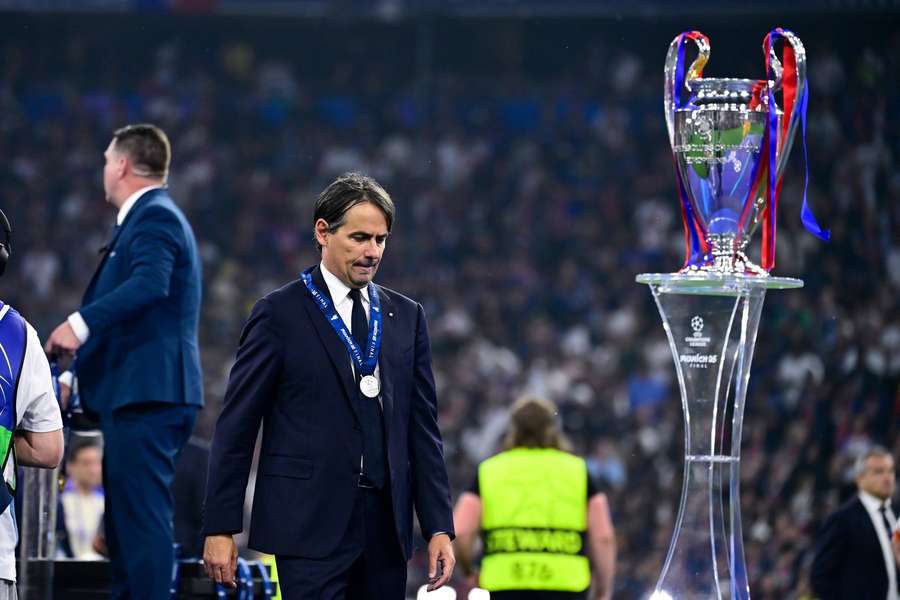
Inzaghi picked up another medal, but not the one he wanted
Everything began to unravel in the wake of the Scudetto disappointment when Gazzetta broke the news that Simone Inzaghi had been approached by Saudi club Al-Hilal. Surely this wouldn’t be seriously entertained? Yep. News broke that his wife and representatives were in Saudi Arabia in the build up to the final. An eye watering €30m per year on offer should he decide to make the move.
A distracted Inter were shocking in the final, slapped 5-0 by a remarkably good PSG side and that was that. No trophies this season. Immediately the fingers began pointing, and most of them landed squarely at Inzaghi’s feet. He was too distracted, he’d already planned to leave, apparently he’d already began tapping up players to join him… We’ll never know the truth but in the wake of the embarrassment and abuse, Inzaghi decided Arabia and a shitload of money was a better bet.
Inter were left licking their wounds, but had designs set on Cesc Fabregas. The young Como coach is impressing and it wasn’t his first link to an outside job. However, he plumped for staying by the lake and building something with Como, another embarrassing pursuit for Inter. That forced the clubs hand and at the last minute before travelling to America they landed on former defender Christian Chivu.
Chivu is learning on the job, and needs to do so quickly
Their former youth team coach had managed 13 games in Serie A with Parma at the end of last season and while a popular person, his appointment has received a mixed bag of reviews.
Still, a trip to America and a chance to put the shambles of the start of 2025 behind them and prove everyone wrong. The start of the trip was only the start of the issues, Hakan Calhanoglu was a target for Galatasaray and his agent promptly flew to Istanbul to try and get a deal going. Oddly enough, Hakan was then injured and would miss every Inter match during the tournament.
Their first game, a 1-1 draw with CF Monterrey was typical of Inter in the second half of the season. Dominant on the ball, creating chances but a combination of poor defending and profligacy meant they had to come from behind to rescue the point.
Worse was to come, in a victory over Japanese side Urawa Red Diamonds, Inter were 1-0 down thanks to poor defending (again) and chasing a game they never really had the creativity to do. Leave it to Lautaro to pull something from nowhere from a set piece (as he did in match 1) and then Carboni to break the hearts of the tired Japanese side.
Matchday 3 was a significant improvement. A comfortable 2-0 win over River Plate that in truth, could’ve been more. Maybe Inter had clicked, maybe they were back? Don’t get carried away.
They went into last night’s perfectly winnable game against the only team with an older defence than them (probably in the World) and laboured from the start. 1-0 down thanks to some poor defending by De Vrij and Darmian and questionable goalkeeping from Sommer, they never truly looked like having the creativity or ideas to break down Fluminense.
A second goal on the break for Fluminense capped a well deserved victory for them and a thoroughly well deserved defeat for Inter.
Lautaro not holding back…
But at least the season was now over, a chance to rest before next year and come back fighting to move on. You wish. Inter were straight into the playground, with Lautaro calling on anyone who didn’t want to stay and fight for Inter to “just leave”. Lautaro, however, was positively diplomatic when compared with Marotta who bluntly put it as, “he means Calha”.
That’s that then.
Calha’s wife put out a message on Instagram (now deleted) that was akin to something your mum’s friend puts on Facebook mid-divorce. Something to do with trust and loyalty or whatever.
Hakan responded with his own statement on his Instagram page today ending with, “History always remembers those who stood tall, not those who shouted the loudest”. All it was missing was a black and white picture of Tommy Shelby holding a shotgun and it would’ve been perfect.
In amongst all this, there was some good news! Ange-Yoan Bonny arrived in Milan for his medical ahead of a €25m deal from Parma. The 21 year old is part of the club’s strategy to lower the average age of the squad and add some much needed depth. Nico Paz, Giovanni Leoni are two others who are linked heavily with Inter this summer. They might want to sort out what’s happening inside the club first though.
One thing’s for sure, this soap opera at Inter isn’t finished yet.
Atalanta look set to complete the signing of Kamaldeen Sulemana from Southampton—a move that has caught the eye both in Italy and abroad. For fans of La Dea unfamiliar with the Ghanaian winger, here’s everything you need to know about the 23-year-old: his style, stats, journey so far, and why he could thrive in Bergamo.
🧒 Who is Kamaldeen Sulemana?
Full Name: Kamaldeen Sulemana
Date of Birth: 15 February 2002 (23 years old)
Nationality: Ghanaian
Height: 1.75 m (5’9″)
Preferred Foot: Right
Primary Position: Left Winger
Other Positions: Right Winger, Second Striker / False 9
International Team: Ghana (Senior debut in 2020)
Sulemana is a graduate of Ghana’s famed Right to Dream Academy and has earned a reputation as one of the most exciting dribblers of his generation. He’s dynamic, fearless, and unpredictable—traits that could make him a serious asset in Serie A.
🛤️ Career Path So Far
➤ Right to Dream Academy (Ghana)
Kamaldeen honed his skills in one of Africa’s top youth academies, known for producing talents like Mohammed Kudus.
➤ FC Nordsjælland (Denmark) — 2020–2021
He made his professional debut in Denmark at just 18, quickly standing out for his pace and flair. In 34 Superliga appearances, he scored 13 goals—putting him on the radar of top clubs across Europe.
➤ Stade Rennais (France) — 2021–2023
Sulemana became Rennes’ record signing, costing around €20 million. He impressed early on with his explosive style in Ligue 1, registering 6 goals and 4 assists in 47 appearances.
➤ Southampton FC (England) — 2023–2025
Signed during the Saints’ Premier League relegation fight, Sulemana made headlines by scoring twice on the final day of the 2022/23 season. Despite the club’s Championship stint in 2023/24, he returned to the top flight for 2024/25—although struggled for consistency.
📊 2024/25 Season Stats (Premier League)
Category
Stat
Appearances
26 (plus 4 in domestic cups)
Goals
1 (plus 1 in FA Cup)
Assists
2
Dribbles per 90
~4.3 (Elite level)
Assists per 90
96th percentile
Crosses
Above average
Goal conversion
Low (5th percentile)
Defensive work rate
Limited
Despite modest end product, Sulemana remained among the most dangerous players when it came to progressive ball carries and 1v1 take-ons. His dribbling and acceleration were consistently among the top in the Premier League.
⚽ Playing Style
Kamaldeen Sulemana is a textbook modern winger:
Explosive Speed – Capable of beating defenders over short and long distances.
Elite Dribbling – Among Europe’s best for successful take-ons per 90.
Direct & Vertical – Excels in transition, loves to attack space.
Tactical Flexibility – Can operate on either flank or as a central attacker in a free role.
Final Product Needs Work – Finishing and decision-making are areas for development.
He thrives when given creative freedom and space to run. At Atalanta, a team that emphasizes pressing and attacking width, Sulemana’s profile fits naturally into their aggressive game model.
🗣️ Quotes from Coaches & Experts
“Form is temporary, class is permanent. Kamaldeen is in the same ballpark as Vinicius Jr and Jeremy Doku.” — Tom Vernon, Right to Dream founder
“When he is in space, he is basically unstoppable in one‑on‑one situations.” — Mas-Ud Didi Dramani, Ghana coach
“If you like Mbappé, you’ll like Kamaldeen. He has four signature moves you know are coming—but you still can’t stop them.” — Gary Al-Smith, BBC Ghana journalist
🔍 Strengths & Weaknesses
✅ Strengths:
Dribbling & close control
Acceleration & agility
Assists and creative intent
Positional versatility
⚠️ Weaknesses:
Finishing under pressure
Defensive contribution
Tactical discipline
Can drift in and out of games when uninvolved
Southampton fans often described him as a “mood player”—brilliant when confident, but quiet if the team isn’t playing through him. That will be one of the key challenges Ivan Juric may need to address.
What Can He Bring to Atalanta?
For Atalanta, this could be a low-risk, high-reward transfer. Sulemana’s skillset mirrors that of previous success stories at the club—unrefined talents developed into stars in Bergamo’s high-octane system. If given confidence and structure, he could become a key figure off the left, capable of both breaking open games and serving as a rotation option in European fixtures.
In short: Sulemana brings chaos, pace, and flair. With the right guidance, he could become one of Serie A’s most exciting wide players.
📝 Final Verdict
Kamaldeen Sulemana is far from the finished product, but his raw attributes are undeniable. If Atalanta can unlock his potential, Serie A defenders are in for a nightmare.

















 The Calcio Blog