Tag: history

  • Legends of Calcio: Alessandro Del Piero

    Legends of Calcio: Alessandro Del Piero

    “He is football’s gentleman, but also a killer in front of goal.”

    This is how Marcello Lippi once described Alessandro Del Piero and it’s hard to find a more perfect summation. Elegant yet ruthless, soft-spoken yet decisive, Del Piero embodied the romantic spirit of Italian football while quietly carving out a legacy as one of its most lethal forwards. From his trademark curling finishes to his unwavering loyalty to Juventus through triumph and scandal, “Pinturicchio” left a mark not only on the pitch, but in the hearts of calcio lovers worldwide. This is the story of a true legend — the boy from Conegliano who became a global icon.

    Alessandro was born in 1974 in Conegliano and while playing locally for San Vendemiano used to play in goal, something his mother encouraged as he would sweat less and would also less likely pick up an injury. It was his brother, Stefano, who noticed the young Alessandro’s skill and suggested he play as a forward.

    It seemed to work and by 1988 Padova had noticed his talent and snapped up the young Del Piero. He would make his senior debut at the age of 17 in Serie B and in 1993 he scored his first goal in a 5-0 victory over Ternana. This was the start of a prolific goalscoring career which would see him score in every single competition he played in.
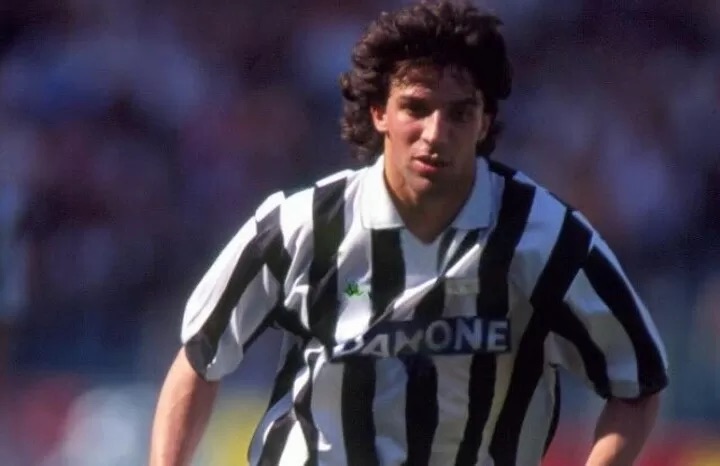
    A young Del Piero making his debut for Juventus

    Following his short spell in Padova, Del Piero transferred to Juventus for just over 5 billion lire and he would stay for over 19 seasons, staying loyal through triumph and scandal. Del Piero made his debut in September 1993 against Foggia, and would score his first Juventus goal a week later against Reggina. During these early years at Juventus he was often called “topolino” by veterans for his quiet demeanour and big ears!

    This nickname would soon be replaced to Pinturicchio, after the Renaissance painter, which was coined by Juve President Gianni Agnelli to reflect his artistry. Nowhere was this more evident than a November 1993 match against Parma, where a 19 year old Del Piero netted a stunning hat trick despite starting on the bench. His status as a generational talent was cemented a season later when he played a key support role as Lippi’s Juve won the Scudetto, Coppa Italia and Supercoppa.

    As Baggio departed to Milan in the mid-90s, Del Piero was handed the famous Juventus 10 shirt. Over the next few seasons, Del Piero as a focal point would become the keystone of Juventus’ attacking play. He perfected his “Gol alla Del Piero”, curling in from the edge of the box, and in 1996 started in the Champions League Final that Juventus won against Ajax. He would also be present as Juventus reached the next two finals, losing both.

    Alessandro lifting his only Champions League trophy

    Del Piero’s career seemed to be at an all time high, his stock constantly rising including being added the the Euro 96 squad for Italy, however, it would all come crashing down over the next few years. In November 1998 in the final moments of a match with Udinese, Del Piero picked up a serious ACL and MCL injury, which would keep him out for the remainder of a season where Juventus would suffer. Over the next couple of seasons, Del Piero would struggle to regain full fitness and would suffer many niggly injuries as Juventus struggled to assert and dominance in Serie A.

    All would change in 2001, Conte had left Juventus and Del Piero was named captain and in the 2001-02 season, a rejuvenated squad won the Scudetto in a dramatic final day. Alessandro scored 16 goals and dragged Juve through several tight matches.

    A familiar site, Del Piero celebrating another goal

    The next season he was again crucial in another run to a Champions League Final and another in which Juventus would lose, this time on penalties against Milan at Old Trafford. Over the following seasons he was key as Juventus won back to back Scudetti under Fabio Capello. The Calciopoli scandal would revoke these titles, and enforce a relegation to Serie B for Juventus, stars would leave the sinking ship. Del Piero, rather predictably, stayed to fight on for his team. Unsurprisingly, in 2006/07 he was top scorer in Serie B as he dragged Juventus back to Serie A.

    Later in his career, Del Piero became an ageless icon, winning the Capocannoniere aged 33 with 21 Serie A goals in 2008. A year later he scored twice for Juventus at the Bernabeu, receiving a standing ovation from the home support there. In his penultimate Juventus season, he broke the all time Juventus goalscoring record of Giampiero Boniperti and in his last game, Del Piero came good one last time for Juventus, scoring past Atalanta as Conte’s team won Serie A unbeaten.

    At the end of 2011-12 Alessandro Del Piero finally bid farewell to Juventus after 19 seasons in which he became their all time top scorer and all time appearance holder with 705 games and 290 goals. It nearly wasn’t so though – during the late 90s there was a move to Manchester United on the cards…

    One of the most intriguing “what if” moments of Alessandro Del Piero’s career came in the late 1990s, when Sir Alex Ferguson made a serious approach to bring him to Manchester United. After Juventus reached consecutive Champions League finals in 1996, 1997, and 1998, Del Piero had firmly established himself as one of the world’s premier forwards. Ferguson, searching for a technical, creative forward to complement the likes of Dwight Yorke and Andy Cole, reportedly saw Del Piero as the perfect fit. According to interviews years later, the move was genuine — but Del Piero declined the offer, citing his deep connection to Juventus and loyalty to the club that had helped make him a global star. “Leaving Juve never really crossed my mind,” he said in a 2019 interview. “Even though it was Manchester United — and it was a huge honour — my heart was in Turin.” It became a defining moment in his career, symbolising the kind of loyalty that’s increasingly rare in modern football.

    Del Piero wasn’t just a Juventus legend however, over 13 seasons, he would make 91 appearances for the Azzurri, scoring 27 goals. The most famous of which was undoubtedly Italy’s second in the 2006 World Cup Semi-Final against hosts Germany. In typical fashion, Del Piero cut in from the left hand side and curved a ball beautifully from the edge of the area and into the top corner. Italy would go on to win the final and Del Piero lifted the World Cup – his only honour for Italy.

    Sealing the deal for Italy

    During his career he would win 6 Scudetti (in theory it could’ve been 8, Google Calciopoli), a Champions League, one Coppa Italia, 4 Supercoppas, a UEFA Super Cup and one Intercontinental Cup. After Juventus he headed to Australia for a spell in the A League with Sydney FC, where he was known as “Alex” due to the locals struggling to pronounce Alessandro! The greatest comment on his career probably came from a former team mate and eventual opponent, former Ballon D’Or winner Zinedine Zidane once said of him, “If I had to pick a player to watch for pure aesthetic joy, it would be Del Piero.”

    Alessandro Del Piero… A true Legend of Calcio.

  • Legends of Calcio: Paolo Maldini

    A name that transcends rivalries. Universally admired by teammates, rivals, coaches and pundits. The embodiment of Italian defensive mastery. The art of defending, personified. One Club Man. Elegance, Intelligence, Loyalty. Is there a bigger legend of Calcio than Paolo Maldini?

    Born in 1968 in Milan, Maldini quickly rose through the ranks at AC Milan and would make his debut at the age of just 16 in 1985. By the time he retired in 2009 he had made over 900 appearances in all competitions for Milan, appeared in 7 major tournaments for Italy, won 7 Serie A titles and 5 Champions Leagues.

    The man who would be cited as inspiration by John Terry, Gerard Pique and Virgil Van Dijk. His career took him all around the World, collecting trophies. But he never left Milan and he never won a thing with Italy.

    A young Maldini making his debut.

    Hi father, Cesare Maldini was on the coaching staff in 1985 when he made his debut, and his son Daniel would begin his career at Milan with his Dad as Technical Director. He’s since moved on, as has Paolo, and Milan feels a bit emptier for it.

    Maldini would win his first Serie A title in 1988 as part of the irresistible pressing side of Arrigo Sacchi. He formed part of an indomitable back line with Baresi, Tassotti and Costacurta. His first European triumph wasn’t far behind when Milan dismantled Steaua Bucharest 4-0 in the final in 1989.

    Milan would win back to back European Cups, defeating Benfica 1-0 in the final in 1990 with a defensive masterclass from their famous quartet.

    The best was yet to come in Europe, however, and in 1994 Milan defeated the great Cruyff Barcelona 4-0 in the final, with Maldini putting on a clinic as a fill in centre back. Europe provided plenty of low moments too, though, with arguably the worst coming in 2005.

    Paolo scored the fasted ever final goal (at that point) when he put Milan 1-0 up against Liverpool in Istanbul. By half time it was 3-0 and their name was on the cup. Fate had other ideas, however, and Liverpool roared back in the second half, eventually winning on penalties after extra time.

    Despite the defeat, Maldini was praised for his leadership and sportsmanship that night in Istanbul. It would be avenged two years later though, when a 38 year old Maldini captained his side through a knee injury to a 2-1 victory over the same opponents.

    A much happier Paolo Maldini

    England provided another sweet Champions League moment for Maldini too, when he lifted his first one as captain in 2003. Not only did Milan defeat the old enemy Juventus, but they did so in Old Trafford, Manchester – birthplace of his father Cesare.

    Back home in Italy, Maldini collected trophies like they were prizes in a cereal box. By the time of the Juventus final in 2003, he had already won 6 of the 7 titles he would win. Milan also won a Coppa Italia title with him, as well as 5 Supercoppas.

    But it was internationally that Maldini was hardest done by. Making his debut against Yugoslavia in 1988, at just 19, he would play 126 games for the Azzurri across 7 tournaments but only collect runners up medals.

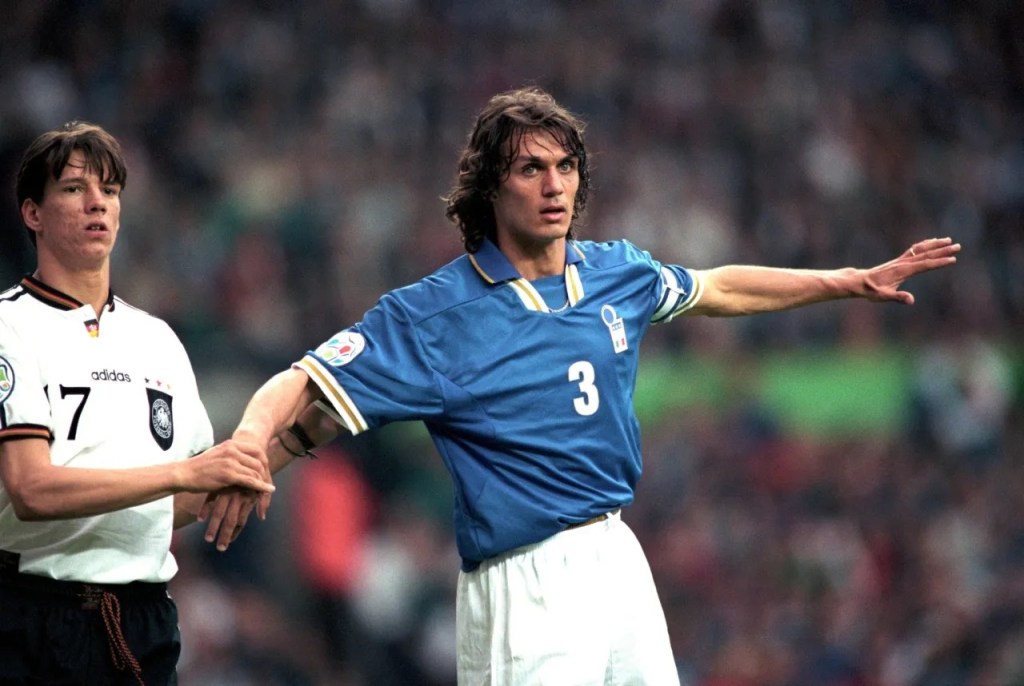
    Paolo Maldini in action at Euro 96

    The first of these came in the 1994 World Cup, when he was ever present in Italy’s run to the final. He captained the side for the first time too, after Franco Baresi was injured. However, three missed penalties in the final meant that Italy wouldn’t win the tournament and his medal would be silver.

    He would remain captain of Italy after the tournament and would miss the chance to lift a major honour again when in Euro 2000 in Holland and Belgium, Italy lost the final to France 2-1 after extra time.

    The absolute scandalous refereeing performance at the 2002 World Cup that saw Italy eliminated to South Korea in their home tournament eventually proved too much for Maldini and he announced his retirement from the international game to focus on Milan.

    It was a good decision, Maldini played a further 7 years for Milan, eventually hanging up his boots after 902 matches and 33 goals in all competitions. He even received his first ever Red Card in that final season.

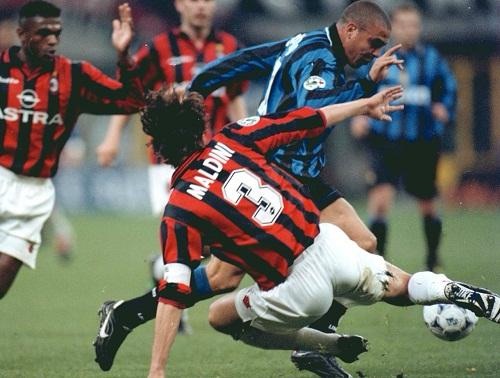
    The best were terrified of taking on Maldini

    Maldini was quoted as saying that, “If I have to make a tackle then I have already made a mistake”. He embodied the ideals of the perfect Italian defender with the way he read the game. His coolness under pressure, composure on the ball and a fabulous range of passing. He was uncompromising, tough, but fair and sporting.

    These were all traits he would take into his next role, as Technical Director of Milan. He had the role from 2018 until leaving in 2023 under something of a cloud after tensions with the club’s owners RedBird Capital. His exit has been viewed by some Milan fans as the moment when the team started to lose its identity.

    Maldini was widely regarded as one of the World’s greatest defenders of all time – known for his elegance, positional intelligence and loyalty. Inspiring a wealth of modern defenders, Thiago Silva (once of Milan) summed it up nicely with, “I dreamed of being a defender like Maldini”.

    And the truth is, there’s no one quite like Maldini…

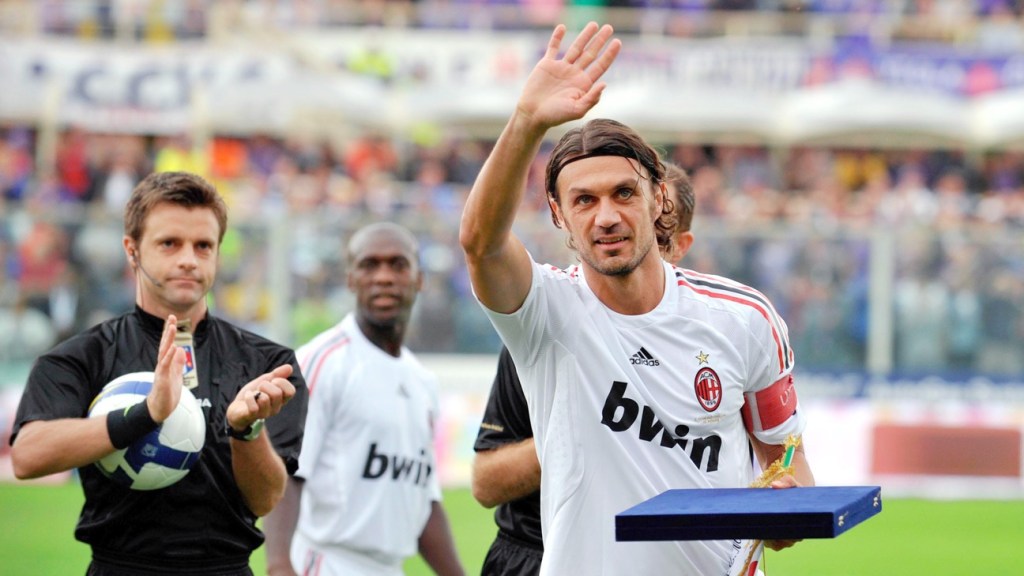
    Maldini bids farewell

  • Forgotten Giants: Vicenza – Calcio’s Forgotten Fairytale

    Forgotten Giants: Vicenza – Calcio’s Forgotten Fairytale

    In the late 1990s, a small club from the Veneto region etched its name into calcio folklore. They beat Napoli to lift the Coppa Italia. They almost knocked Chelsea out of Europe. And then… they disappeared.

    This is the story of L.R. Vicenza — a club that dreamed big, defied the odds, and left a legacy far greater than their trophy cabinet suggests.

    Founded in 1902, L.R. Vicenza is one of Italy’s oldest clubs. Based in the historic city of Vicenza, they’ve always been seen as a classic “provinciale” — a small, local side often bouncing between Serie A and B. Their home, the Stadio Romeo Menti, holds just over 12,000 but has witnessed moments that rival even the grandest stages in Italian football.

    For decades, Vicenza quietly survived in the shadows of northern giants like Milan, Inter, and Juventus — until one unforgettable season changed everything.

    Vicenza's 1995 promotion side

    In 1995, under the tactical guidance of Francesco Guidolin, Vicenza were promoted to Serie A and quickly became Italy’s surprise package. They played compact, organized football with bursts of creativity, led by key figures such as Uruguayan striker and cult hero Marcelo Otero, the safe hands of Giorgio Sterchele and the attacking duo of Giovanni Cornacchini and Alessandro Iannuzzi.

    The next season, in 1996-97 they would embark on a magical run to the Coppa Italia final, beating the likes of Bologna and Genoa on the way to facing Napoli. Vicenza would lose the first leg at San Paolo 1-0, but at home three weeks later they completed a stunning turnaround in front of a raucous home crowd. Goals from Giovanni Cornacchini, Maurizio Rossi, and Alessandro Iannuzzi secured a 3–0 win after extra time — and with it, their first major trophy in 95 years of existence.

    Vicenza players parade the Coppa Italia trophy after their 3-1 aggregate win over Napoli in the 1997 final

    In the age of Batistuta, Baggio, and Del Piero, it was Vicenza that lifted silverware. A provincial club, built on heart and discipline, had conquered the cup.

    As Coppa Italia winners, Vicenza qualified for the 1997–98 UEFA Cup Winners’ Cup. And incredibly, they didn’t just make up the numbers — they lit up the continent.

    • Beat Shakhtar Donetsk and Roda JC to reach the semi-finals.
    • Drew English powerhouse Chelsea in the final four.

    In the first leg at the Stadio Menti, Pasquale Luiso scored the winner to give Vicenza a 1–0 lead. Chelsea, loaded with stars like Gianfranco Zola, Gustavo Poyet, and Mark Hughes, were stunned.

    Vicenza defeated Chelsea 1-0 in the first leg of the 1998 European Cup Winners Cup Semi Final.

    But at Stamford Bridge in the second leg, Vicenza’s European dream fell apart. Goals from Poyet, Zola, and Hughes sent Chelsea through 3–1 on aggregate. It was heartbreak — but Vicenza had shown Europe what they were capable of.

    Just one year later, however, in the 1998–99 season, Vicenza were relegated from Serie A.

    Key players left, financial difficulties crept in and over the next decade, the club bounced between Serie B and C, with ownership instability and budget issues mounting.

    The final blow came in 2018, when the club was declared bankrupt and lost its professional status. After over a century of history, Vicenza Calcio was no more.

    In the wake of the collapse, a new entity was formed: L.R. Vicenza Virtus, following a merger with nearby club Bassano Virtus. While technically a new club, it carries the same badge, colours, and loyal fanbase.

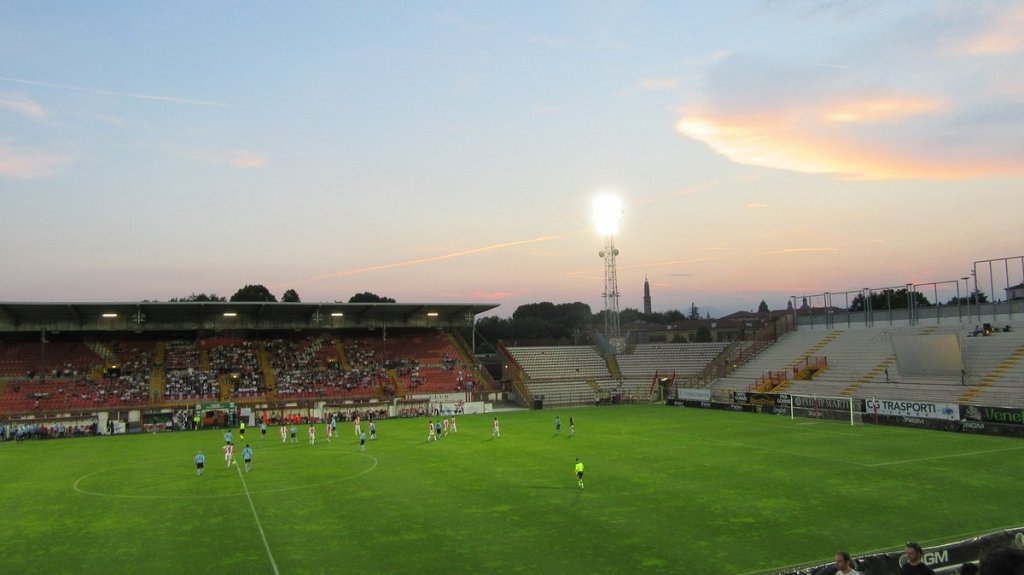
    Vicenza still play at the Stadio Romeo Menti today

    They returned to Serie B in 2020, and though they were relegated again in 2022, the passion remains.

    Stadio Romeo Menti still echoes with memories of Otero’s goals and that famous win over Napoli. And Vicenza’s story continues — not in the headlines, but in the hearts of calcio romantics everywhere.

    In an era before oil money and inflated sponsorships, clubs like Vicenza could still write fairy tales. With tactical discipline, local pride, and passionate fans, they showed that in Italian football, anything was possible.

    Today, we remember them not because they became a giant — but because, for one brief, beautiful moment, they stood toe-to-toe with giants and didn’t flinch.

    “Do you remember Vicenza’s fairytale run in the ‘90s? Should Serie A do more to protect its provincial clubs?”

    Drop your memories or thoughts in the comments below — or tag us on X @EnglishCalcio and Instagram @calcioenglish.

  • How England helped shape the Italian game…

    How England helped shape the Italian game…

    We English have a habit of laying claim things that aren’t ours. Like half the World at one point… But one thing we do have a pretty firm claim on is that we invented the beautiful game.

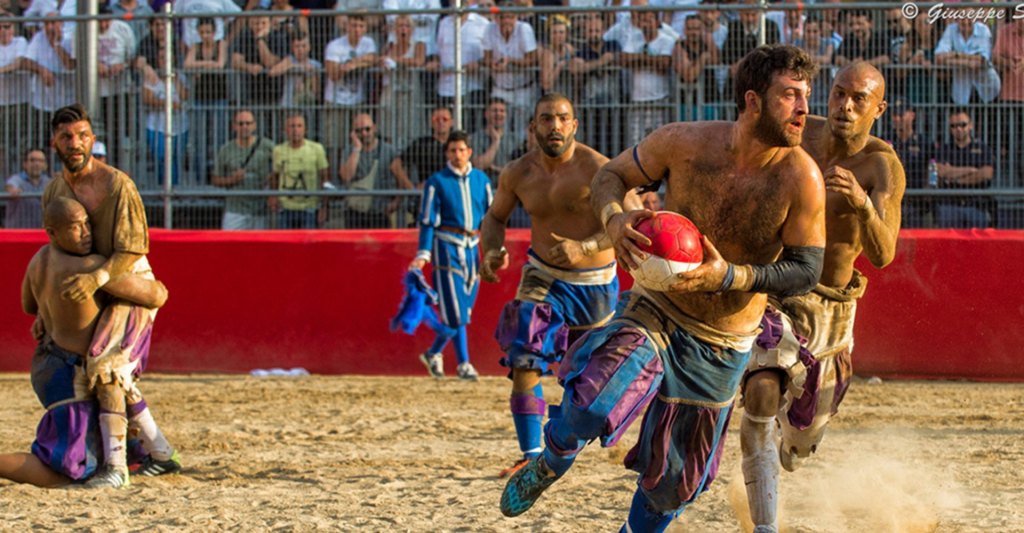
    In the 1920s and 30s Benito Mussolini would have Italians believe that Calcio descended from Calcio Storico Fiorentino, the medieval football of Florence. This game was mostly played by noblemen (including Popes) and dates back to 1530 where it was first referenced in Piazza Santa Croce. The game combined elements of football, rugby, wrestling and street fighting, which I guess is where the great Italian defenders of the 70s and 80s were drawing inspritation.

    Locals in Florence play a game of Calcio Storico Fiorentino.
    Calcio Storico Fiorentino in the modern day

    Benito Mussolini promoted the game as the “true origin” of Calcio in direct contrast to the foreign game of football. He used the game in fascist propaganda to reinforce the idea of Italy’s deep cultural and martial heritage, distancing itself from British influence. The game was even revived in the 1930s in Florence with choreographed pageantry to tie it in with Renaissance and Roman virtues.

    But Calcio does owe a lot to British football, including one of its biggest clubs and one of the most iconic kits in the game.

    James Richardson Spensley in Genoa

    Dr James Richardson Spensley was an English physician and football enthusiast who worked on boats that came through the port in Genoa. During his time in Italy, Dr James would organise football matches with local dockers and as a result, is largely considered to be the first person to bring football to the masses in Italy.

    James Richardson Spensley founded Genoa
    James Richardson Spensley – Apparently…

    By 1897 he had founded the Genoa Cricket and Football Club. Not only did he found the club, but he managed it, organised their games and was their goalkeeper. He helped to shape Genoa into the first dominant team of Italian football, winning the first championship in 1898, going on to win another 5 titles with him at the helm. He retired from playing when he was nearly 40 and would go on to manage the side for a few more years before his death in World War One at the Fortress of Mainz.

    Had it not been for the four clubs in Turin founded by Edoardo Bosio then Dr James would’ve founded the first club in Italy. The two of them are rightly considered as the Grandfathers of Italian football.

    Herbert Kilpin and the Milan cricket club

    129 Mansfield Road in Nottingham is an unassuming terraced property that could be any other in England. However, on the 24th January 1870 at this property, a man was born who would go on to shape Italian – and World – football for years to come.

    Herbert Kilpin was a lace maker who lived most of his life in Nottingham playing as a Midfielder and Defender for local part time teams. In 1891, he moved to Turin to work for Edoardo Bosio who was an Italian-Swiss textile merchant. Bosio had founded the first ever Italian side, Internazionale Torino, and Kilpin would represent the team in his time with Bosio.

    In 1898, however, while living in Milan with Samuel Richard Davies, Kilpin would found AC Milan, then known as the Milan Cricket and Football Club. To this day Milan still uses the English spelling of the city’s name to pay homage to their founder.

    He chose the famous red and black stripes after being quoted as saying, “We’re going to be a team of devils. Our colours will be red like fire and black to invoke fear in our opponents”.

    Herbert Kilpin, founder of Milan, in the first red and black that AC Milan ever wore.
    Herbert Kilpin striking fear into his opponents in Red and Black

    The first elected president of AC Milan was Alfred Edwards with Kilpin acting as player-manager. Milan were, unsurprisingly, immediately successful, winning the championship in 1901 in only their second season. Kilpin spent 9 years with the Milan side and won two more titles in 1906 and 1907.

    Herbert Kilpin died in Milan in 1916 aged 46, apparently due to his smoking and drinking habits – another English trait. Little was known, or acknowledged, of his influence over Milan’s early history until the 1990s when Luigi La Rocca tracked down Kilpin’s grave in the Municipal Cemetary in Milan. In 1999 the club paid for a new tombstone acknowledging his role in Milan’s history and in 2010 he was moved into the Famedio in the main building where Milan’s most illustrious personalities are interred.

    Curva Sud in Milan pay homage to Herbert Kilpin, the original founder of AC Milan
    The Curva Sud pay homage to their founder

    John Savage and the spare kits

    Nottingham’s influence over Calcio doesn’t finish there though, a few years later in 1903 an Englishman John Savage would help one of Italy’s most iconic clubs gain their iconic kit design.

    John Savage was a footballer who had played with Kilpin at Internazionale Torino before joining Juventus in 1900. He was the first foreign player to represent the Old Lady, who at the time wore pink shirts. Savage wasn’t impressed with the quality of them though and likened them to being similar to a “gang of war survivors”. Whatever that means.

    He wrote a letter to Nottingham based tailoring company Shaw and Shrewsbury requesting new kits and nearly a month later received a spare set of Notts County kits, in the famous black and white stripes.

    Juventus originally wore a pink kit until John Savage intervened and gave them their famous black and white stripes.
    Juventus in their new colours alongside some of the old kits

    At first, Juventus were not impressed with the change, Domenico Donna – a founder of Juventus – compared them to funeral attire. However, thanks to a remarkable upturn in form in the new kits, Donna labelled the kits as “a symbol of old fashioned Piedmontese elegance”.

    Juventus would keep the Notts County kits and the retain the black and white to this day, the link remained so close that when Juventus opened their new stadium in September 2011, Notts County were invited over to play in the first ever game here.

    John Savage would go on to referee the 1902 Italian Football Championship final between the other two English influenced clubs, AC Milan and Genoa.

    More general influences

    The Italian Football Federation (FIGC) was inspired by the structure of the English FA when it was formed in 1898. Not much of a surprise given the English influence of the game in those early years, rules and club structures were based on the English game and most of the clubs were started as cricket and football clubs.

    In fact, one of the Italian terms still used today, Il Mister, used to describe a coach is attributed to an affectionate term given to William Garbutt during his time managing Genoa between 1912-27. He won three championships with Genoa and introduced structured training and tactics to Italian football.

    Inter and Roma are two clubs that have had English ownership stakes or partnerships in the past and Serie A was brought into British homes in the 90s thanks to James Richardson and his Sunday show Football Italia on Channel 4. That programme, in fact, was responsible for this Calcio fan’s own obsession!

    Much like everything else though, England introduced the sport to Italy but Italy took it and ran with it, made it their own and subsequently has won 4 World Cups to England’s one. They even beat England in their own back yard in the Euro 2020 final after a penalty shootout to really assert their dominance over the English game.

    While English domestic football has surpassed Italian domestic football for quality and finances, Calcio had some great days in the 80s and 90s and Italian clubs still have joy against Premier League teams in England.

    England and Italy will always be inseparable for their love of the game and their passion for it, and we’ll always be linked thanks to those English pioneers back in the day.