Tag: books

  • Grande Torino: The Glory, The Tragedy, The Legacy

    Grande Torino: The Glory, The Tragedy, The Legacy

    In the grand tapestry of football history, few teams have left a mark as deep and as enduring as the Grande Torino. They were more than a club — they were an idea, a movement, and, tragically, a legend forged not only through triumph, but through heartbreak.

    A Team Reborn: Post-War Ambition

    Torino FC had tasted success before — winning their first Scudetto in 1928 — but it was in the 1940s, under the presidency of Ferruccio Novo, that the club’s destiny changed forever. Novo was not your typical football president – visionary and methodical, he approached the game with a modern sensibility. He studied the systems used in England and brought a scientific, professional approach to Torino.
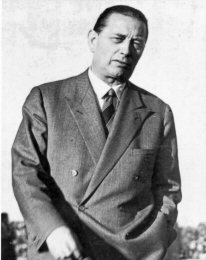
    Ferruccio Novo was the president of Torino during the Grande Torino era, when the team ruled Italian football for a decade
    Ferruccio Novo

    He appointed a backroom staff that included tactical specialists, fitness trainers, and scouts. Most crucially, he built a team not just of stars, but of perfectly complementary talents. Between 1942 and 1949, he assembled what would become the most dominant team in Italian history — Grande Torino.

    Building the Machine

    At the heart of it all was Valentino Mazzola, signed from Venezia in 1942. Mazzola was not only a footballer of rare technical skill and intelligence, he was also a natural leader — the type of captain who could inspire, intimidate, and elevate those around him. Whether playing as a mezzala or inside forward, his impact was immense.

    Mazzola’s iconic gesture — rolling up his sleeves during a match — became a symbol that the team was about to turn up the intensity. Fans knew what came next: movement, power and a storm of goals.

    Surrounding Mazzola was an ensemble cast of brilliant players:

    • Ezio Loik, his partner from Venezia, brought dynamism and strength in midfield.
    • Guglielmo Gabetto, a former Juventus striker, added flair and finishing.
    • Romeo Menti, Franco Ossola, and Pietro Ferraris contributed relentless pace and creativity on the flanks.
    • At the back, defenders like Aldo Ballarin, Mario Rigamonti, and the elegant Virgilio Maroso held firm.
    • And in goal, the reliable and acrobatic Valerio Bacigalupo.

    Each player had a specific role within a meticulously drilled system. The team played a WM formation with flexibility, pressing high, rotating positions, and attacking in waves. Their short passing, positional awareness, and relentless tempo overwhelmed opponents. They didn’t just win matches — they dictated the way football was played.
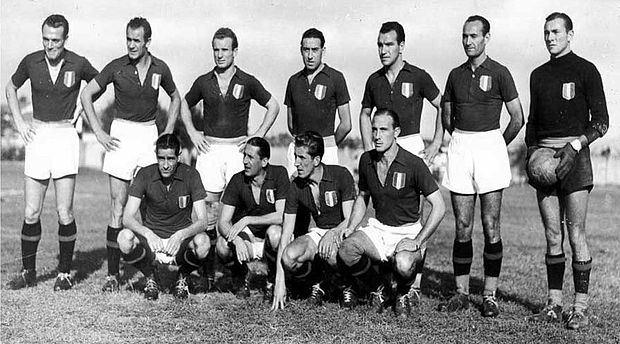
    Grande Torino before a match in 1946/47 season, Calcio legends
    The early representatives of Grande Torino

    An Era of Total Domination

    From 1943 to 1949, Torino won five consecutive Serie A titles (excluding the 1944 wartime championship, which was played under unique conditions). Their dominance bordered on the ridiculous:

    • In the 1947–48 season, they scored 125 goals in 40 matches.
    • They went unbeaten at home for nearly six years at the Stadio Filadelfia.
    • Their average margin of victory was often three or four goals.
    • In 1947, 10 of the 11 starters for Italy’s national team were Torino players.

    No club before or since has exerted such influence on the national side. Italy played like Torino. Their style became the blueprint for modern Italian football: disciplined yet daring, structured yet expressive.

    Grande Torino were admired, feared, and loved — not only in Turin, but across Italy. After years of fascism, war, and suffering, this team offered a vision of something pure, joyful, and aspirational.
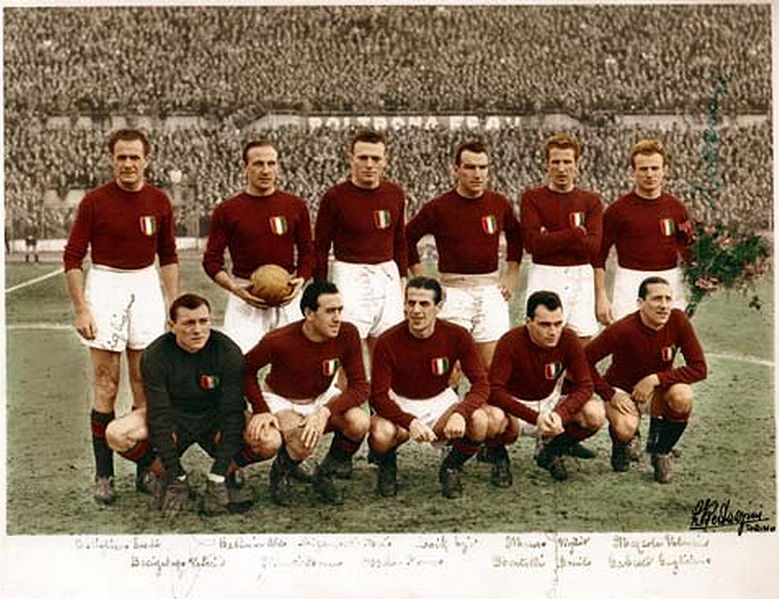
    Grande Torino in 1948-49 season, before tragedy would strike the team on the way back from a match in Portugal.
    Torino in 1948-49. before tragedy would strike the team

    Lisbon, Benfica, and the Final Flight

    In early May 1949, Grande Torino travelled to Lisbon to play a friendly match against Benfica, a testimonial for Portuguese captain Francisco Ferreira. Despite fatigue and injuries, the players insisted on going — honouring both friendship and the game they loved so much.

    They flew back home on May 4, 1949, aboard a Fiat G.212 aircraft. As the plane approached Turin, it encountered thick fog and poor visibility. The pilots, believing they were on the correct approach path, tragically miscalculated.

    At 5:05 PM, the aircraft crashed into the rear wall of the Basilica of Superga, perched on a hilltop just outside the city.

    All 31 passengers on board died instantly — including 18 players, all of the coaching staff, club officials, three journalists, and the flight crew.
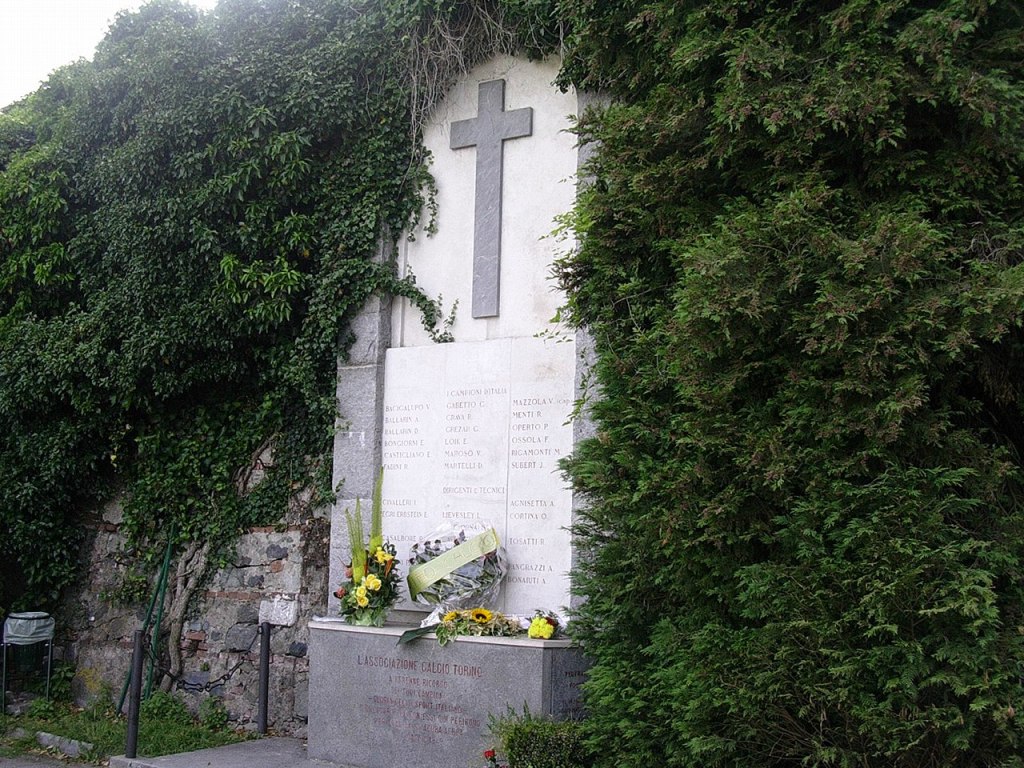
    The memorial to the Grande Torino team at Superga.
    The Memorial at Superga

    Italy Mourns

    The aftermath of the Superga air disaster was a national tragedy, over half a million people filled the streets of Turin for the funeral procession. Men wept openly, newspapers halted regular coverage, radio stations played only classical music. Even fierce rivals paid tribute – Juventus, Inter and Milan all stood united in mourning.

    Torino’s youth team, made up of reserves and Primavera players, completed the final four matches of the season. Out of respect, their opponents also fielded youth squads. Torino won the league and were awarded the title — their fifth consecutive Scudetto.

    A Legacy That Endures

    The loss of Grande Torino deeply affected Italian football. The national team, which had been built almost entirely around Torino’s players, suffered a sharp decline. When Italy travelled to Brazil for the 1950 World Cup, they did so by ship, so traumatised were they by the idea of flying.

    It would take decades for Torino to recover as a club. They would win a Scudetto again in 1976, and sporadically challenge for trophies but Grande Torino was unrepeatable.

    Yet their legacy remains immortal. Each year, on May 4, Torino players, staff, and supporters climb the hill to Superga Basilica. There, overlooking the city they once thrilled, they remember — not just the tragedy, but the glory.

    The plaque reads:
    “Gli eroi sono sempre immortali agli occhi di chi in essi crede.”
    “Heroes are always immortal in the eyes of those who believe in them.”

    Why Grande Torino Still Matters

    Grande Torino were not only the best football team of their era — they represented something greater. In a country emerging from dictatorship and war, they were symbols of unity, modernity, and belief. Their style of play laid the foundation for future generations. Their professionalism, spirit, and sacrifice continue to inspire.

    In the end, they were not defined by how their story ended — but by how brightly they shone while they lived.
  • Group Stage Review: Juventus and Inter Qualify

    Group Stage Review: Juventus and Inter Qualify

    The blog took a short break this week as I took a little holiday, but we’re back at the end of the Group Stage of the Club World Cup. In fact, that’s where my holiday was, Seattle to catch the Inter v River Plate match – but more on that later.

    The game against River Plate signalled the end of Inter’s group stage matches, while Juventus completed their run in Group G against Man City. So how did the Italians fare? What does the press think? And what’s next for both? Well the Calcio Blog has it covered.

    Inter Milan

    Inter came into the back of the tournament off the back of a disappointing season where a potential Quadruple resulted in zero trophies, culminating in that 5-0 schellacking in Munich against PSG.

    They didn’t exactly bounce into the tournament full of beans, with the loss of Simone Inzaghi and the failed pursuit of Fabregas. But the announcement of club legend Christian Chivu as manager lifted spirits somewhat in the approach to the tournament.

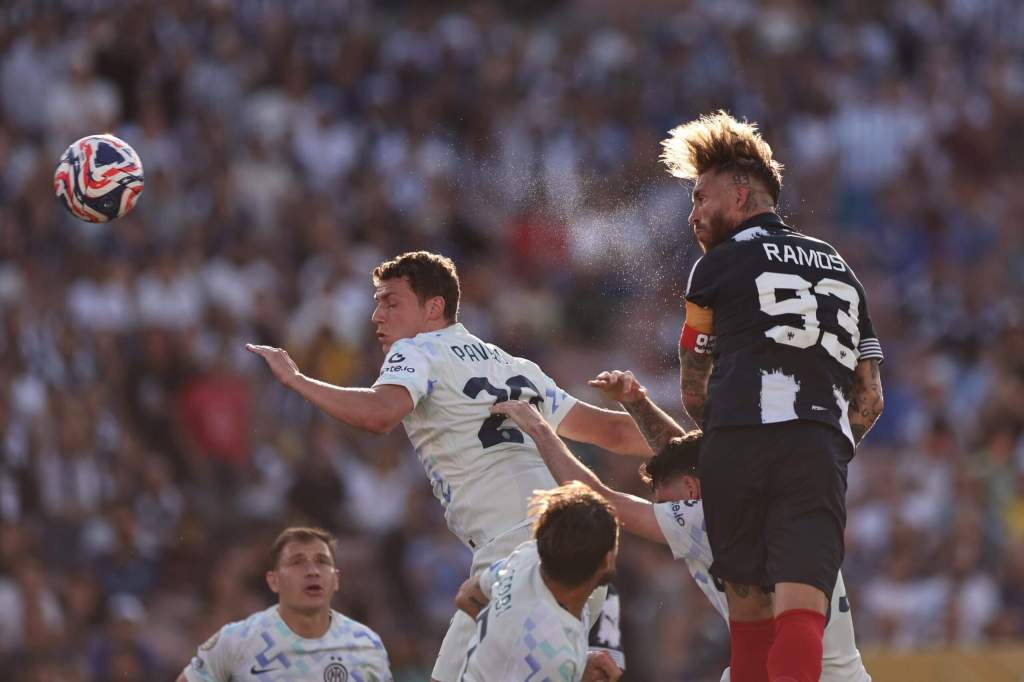
    Their first match against CF Monterrey was a chance to put all that behind them and get on the pitch and show everyone that Inter still had it. And it got off to a terrible start, going 1-0 down to a Sergio Ramos header. Unmarked and definitely saveable for Sommer, it appeared the weak underbelly of Inter hadn’t gone anywhere.

    Sergio Ramos puts CF Monterrey 1-0 up against Inter Milan in their opening Club World Cup match.
    Sergio Ramos’ free header opener against Inter Milan.

    But they steeled themselves, and ultimately dominated the game, equalising through a well worked Asllani free kick that led to Lautaro slotting in at the back post. Inter showed high energy in the game, the press would have been pleasing for Inter fans and their mental toughness and resilience to fight back from 1-0 down also pleasing.

    Chivu said before the game of their recovery from Munich, “sometimes you have to eat a bit of shit… accept that you have to do it” and they did so in both of their first matches. They fell behind against the run of play to Urawa Red Diamonds who then sat in as deep as they possibly could and demanded Inter break them down.

    Something, they struggled to do for most of a first half which they dominated and the second appeared to be petering out to nowhere despite a dominance that saw Inter enjoy nearly 90% possession. They were out of the competition until their captain stepped up.

    Lautaro scored a fairly spectacular bicycle kick to drag them back into the game before Valentin Carboni sealed the win in stoppage time. There wouldn’t have been many more popular scorers than Carboni, a young prodigious talent who suffered a terrible ACL injury at the start of last season.

    In fact possible the only more popular scorer than Carboni would’ve been one of the Esposito brothers. Sebastian had been starting games in the absence of Marcus Thuram but in the final group game with River Plate, younger brother Pio was in from the start and caused all kinds of issues for the South Americans.

    Pio was only 19 at the time of the game and the younger brother is somehow much taller and stronger than Sebastian. Pio bullied an Argentinian back line famous for their resilience and strength themselves.

    Inter were too strong for River, in what should’ve been their toughest test of the Group Stage, they dominated River and Pio’s opening goal assisted by new signing Petar Sucic. One of the criticisms of Inter last season was the age of their squad, and the need to bring that down.

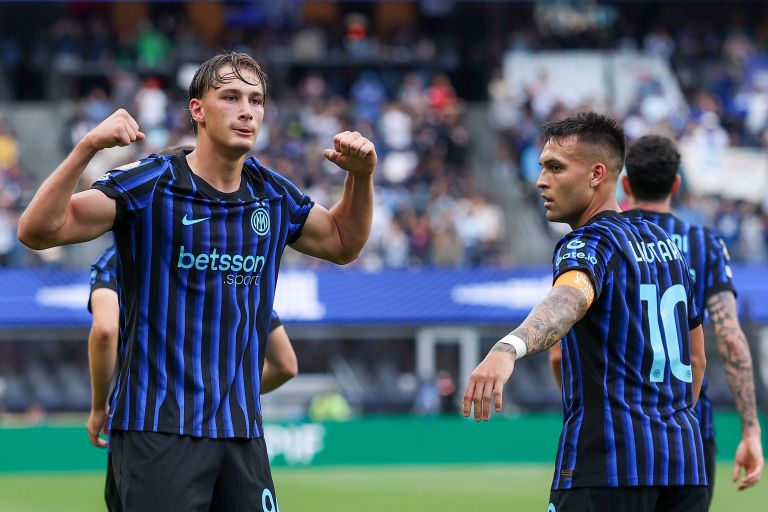
    Pio Esposito celebrating his first goal for Inter Milan. The goal against River Plate was assisted by Petar Susic
    Lautaro congratulates Pio Esposito after his opener against River Plate.

    Sucic was the first step made this summer towards that, the Esposito brothers introduction to the team is a chance for them to stake their claim with the departure of Correa and Arnautovic (although Bonny appears to be coming in from Parma). Bastoni put the gloss on this win before the game ended in fairly ugly scenes as Dumfries and Acuna continued their dispute from the 2022 World Cup.

    So what are we to make of Inter’s matches in Group E? Chivu was quick to praise his new team’s mentality and the Italian media celebrated Chivu’s “relaxed yet strategic” approach and their higher intensity.

    Young talent has certainly been stepping up, Pio Esposito’s goal was well taken and rounded off a stellar performance from him against River Plater, while Valentin Carboni’s winner in match 2 was pleasing for everyone involved at Inter.

    AS.com noted that Inter have made positive steps in rotation, with Thuram and Frattesi recovering from injuries and the club’s pursuit of Parma’s Bonny and Nico Paz from Como. Chivu is consciously building depth, aware of the fatigue that comes with a congested season and these games have seen deep rotation.

    A scouting report from Goal.com noted Inter’s shift to a “great” level from “very good”, proving they can hold their own on a global stage.

    Next up, Inter will face Fluminense on Monday evening. They’ll need to maintain a deep and compact shape, the Brazilian side are quick in the transition and high in energy. Inter’s early rotation has balanced the energy of the Squad well and with Thuram and Frattesi now fit, it’ll be interesting to see what Chivu does up front.

    Inter stumbled into the tournament off the back off an embarrassing end to the season, losing their manager and a swiftly handled replacement, but they’re bouncing into the Round of 16 thanks to improving performances and a solid win over River Plate. They’ll fancy their chances against Fluminense and setting up a Quarter Final tie against either Man City or their old manager at Al-Hilal.

    Bigger tests are to come for Inter, but Juventus have already faced one of the tournament favourites in their group…

    Juventus

    If you follow the X account, you’ll know that it’s no secret I’m an Inter fan, but I’m probably equally as big a Kenan Yildiz fan. In the Juventus opener he dazzled. Granted Al Ain weren’t going to represent the biggest challenge, but Yildiz bagged in the opener which set him on his way to being currently tied for top scorer.

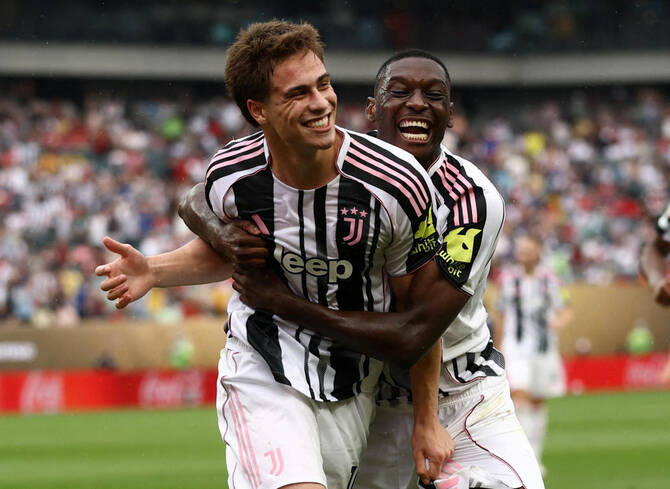
    Randal Kolo Muani scores the second goal for Juventus against Al Ain in the Club World Cup.
    Kolo Muani celebrates with Conceicao after scoring against Al Ain.

    Conceicao and Kolo Muani both netted twice in what was a routine win for Juventus. In the second match, Juventus faced Wydad Casablanca, and recorded a second routine win. This was the game that Kenan Yildiz used to announced himself to the World bagging a hat trick. Well, ok, he only got two apparently, with the first going down as an own goal, but a virtuoso performance sealed a 4-1 with outgoing striker Dusan Vlahovic also on the scoresheet.

    Kenan Yildiz celebrates his stunning goal against Wydad Casablanca.
    Yildiz scored a screamer against Wydad Casablanca.

    Analysts rightly were falling over themselves to laud the attacking verve and their technical proficiency in these opening two matches, but the big test was to follow in game three.

    Early tournament favourites Manchester City were next but Juventus were confident heading into the match after two proficient wins.

    However, a humbling was to follow, with City rolling 5 past Juventus. Doku opened the scoring after 9 minutes, but Koopmeiners equalised almost immediately. However, a Kalulu own goal followed by Haaland, Foden and Savinho strikes meant that it was game over by the time Vlahovic netted a consolation.

    Punditry scorn followed, with Juve’s defensive frailties being exposed too easily by City. Prominent pundit Giuseppe Rossi commented on the lack of midfield depth and called for urgent reinforcements if Juventus are going to compete at the top level.

    One recurring critique was a lack of defensive compactness and their midfield control, which failed to withstand high-intensity pressing. While their were undoubtedly moments of brilliance in Juventus’ group stage matches – even the City one – journalists noted the “midfield being overrun, defensive lines stretched”.

    Igor Tudor was happy to take responsibility for the City result, saying his decision to rotate had backfired. Tudor still wants the team to progress, however, stating “Juve always plays to win, we are not at the Club World Cup just to participate”.

    Igor Tudor coaching Juventus in the Club World Cup against Manchester City.
    Tudor wasn’t happy against City, but took the blame himself.

    Errors under pressure cost Juve in the City game, the own goal by Kalulu and the Ederson error underline recurring lapses in concentration. The attempted high pressure press against City was an admirable tactic, City have been vulnerable in the Premier League this season, but Rodri and Reijnders exposed the breaks in the lines.

    It isn’t all doom and gloom though, Vlahovic looked to be on the way out of the team he and Koopmeiners showed sparks in the City game and the consolation at the end showed a resilience and goal threat under great pressure.

    It doesn’t get much easier either, Real Madrid await on Tuesday evening…

    Juventus’ Club World Cup journey has shown both potential and vulnerability. They can craft intricate play and score—but under elite pressure and demanding conditions, their defensive frailty and tactical inexperience at this level emerge starkly. With Tudor at the helm, the tone is optimistic—yet results now hinge on whether tactical lessons are swiftly converted into tighter, sharper performances.

  • Seven things to look out for in Calcio this week.

    Seven things to look out for in Calcio this week.

    1. The Azzurri Coach Saga: Spalletti’s Swansong

    In a dramatic turn, Luciano Spalletti has been sacked after Italy’s embarrassing 3–0 defeat to Norway and a poor start to their 2026 World Cup qualifying campaign. He’ll still lead the team one more time, though—against Moldova on Monday—before stepping down.


    2. Pioli or Ranieri? FIGC’s Next Head Coach Dilemma

    Who steps into the Azzurri hot seat next? The Italian FA (FIGC) is torn between Claudio Ranieri—fresh off a Roma renaissance and desperate enough to postpone retirement—and Stefano Pioli, still basking in his Milan fame.


    3. Chelsea Tries Club World Cup Heist on Maignan

    AC Milan’s top-class keeper Mike Maignan is being eyed by Chelsea—who’ve made an emergency bid in hopes of registering him in time for the Club World Cup next week. Milan are lining up Roma’s Mile Svilar as a replacement. Classic mercato drama: massive tournament, ticking deadline, and goalkeeping musical chairs.


    4. Italian Representation at Club World Cup

    Speaking of the competition, Inter Milan have confirmed their participation, with a tough group including Monterrey, Urawa Red Diamonds and River Plate. And Inter will debut a new coach—with Cristian Chivu taking the reins. Meanwhile Juventus’ run will hinge on whether interim boss Igor Tudor impresses enough to earn the gig permanently. Expect some epic comebacks… or meltdowns.


    5. Transfer Talk: Chalobah to Napoli, Svilar to Milan

    Napoli are prioritizing Chelsea’s English defender Trevoh Chalobah to bolster Antonio Conte’s defence. At the same time, AC Milan are edging closer to bringing in Luka Modric, expect movement when the international duty ends. Napoli are also closely linked to Alejandro Garnacho and Jack Grealish – watch these closely over the next weeks.


    6. Managerial Chairs Spinning Across Serie A

    Atalanta have officially announced Ivan Juric as Gasperini’s successor after the legendary coach moved to Roma. Roma, in turn, confirm Gasperini on a three-year deal . Inter confirmed Chivu from Parma and Lazio have also re-hired Maurizio Sarri, one year after his departure, just in time to plan their summer transfer binge. It’s raining gaffer changes in Italy… umbrellas optional.


    7. Season Wrap & Azzurri Warm-Up

    We’re still raw from Napoli’s Scudetto triumph and Inter’s crushing Champions League final loss, capped by Simone Inzaghi’s departure. Now, the Azzurri need a lift ahead of the Moldova game—ideal for one last rally (or epic meltdown) before sweeping the coach saga under the rug. Let’s just hope they’ve practiced their goal celebrations.


    Why It Matters

    This week is pure Italian football theatre:

    • National team in turmoil = big story.
    • Transfers and coaching swaps will set next season’s tone.
    • Club World Cup puts Italian clubs on global display.
    • All against the backdrop of season-end fatigue and summer sizzle.

    Brace yourself for press-room drama, comedic transfer photos, and hopefully some actual… you know… goals.


    What are you most excited about? The national team drama, the managerial musical chairs, or who ends up playing keeper for Milan?