Category: Legends of Calcio

Legends of Calcio, where to come to find out about the legends of Serie A and Italian football.

  • Grande Torino: The Glory, The Tragedy, The Legacy

    Grande Torino: The Glory, The Tragedy, The Legacy

    In the grand tapestry of football history, few teams have left a mark as deep and as enduring as the Grande Torino. They were more than a club — they were an idea, a movement, and, tragically, a legend forged not only through triumph, but through heartbreak.

    A Team Reborn: Post-War Ambition

    Torino FC had tasted success before — winning their first Scudetto in 1928 — but it was in the 1940s, under the presidency of Ferruccio Novo, that the club’s destiny changed forever. Novo was not your typical football president – visionary and methodical, he approached the game with a modern sensibility. He studied the systems used in England and brought a scientific, professional approach to Torino.
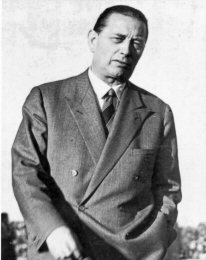
    Ferruccio Novo was the president of Torino during the Grande Torino era, when the team ruled Italian football for a decade
    Ferruccio Novo

    He appointed a backroom staff that included tactical specialists, fitness trainers, and scouts. Most crucially, he built a team not just of stars, but of perfectly complementary talents. Between 1942 and 1949, he assembled what would become the most dominant team in Italian history — Grande Torino.

    Building the Machine

    At the heart of it all was Valentino Mazzola, signed from Venezia in 1942. Mazzola was not only a footballer of rare technical skill and intelligence, he was also a natural leader — the type of captain who could inspire, intimidate, and elevate those around him. Whether playing as a mezzala or inside forward, his impact was immense.

    Mazzola’s iconic gesture — rolling up his sleeves during a match — became a symbol that the team was about to turn up the intensity. Fans knew what came next: movement, power and a storm of goals.

    Surrounding Mazzola was an ensemble cast of brilliant players:

    • Ezio Loik, his partner from Venezia, brought dynamism and strength in midfield.
    • Guglielmo Gabetto, a former Juventus striker, added flair and finishing.
    • Romeo Menti, Franco Ossola, and Pietro Ferraris contributed relentless pace and creativity on the flanks.
    • At the back, defenders like Aldo Ballarin, Mario Rigamonti, and the elegant Virgilio Maroso held firm.
    • And in goal, the reliable and acrobatic Valerio Bacigalupo.

    Each player had a specific role within a meticulously drilled system. The team played a WM formation with flexibility, pressing high, rotating positions, and attacking in waves. Their short passing, positional awareness, and relentless tempo overwhelmed opponents. They didn’t just win matches — they dictated the way football was played.
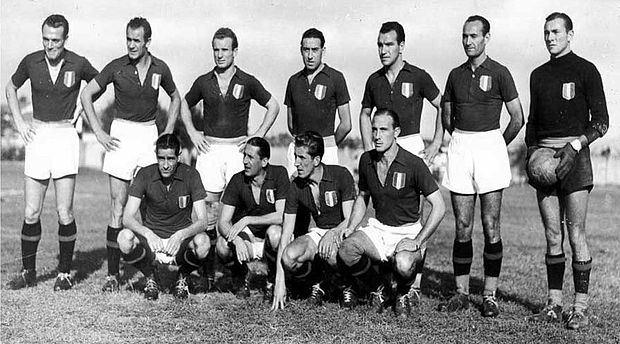
    Grande Torino before a match in 1946/47 season, Calcio legends
    The early representatives of Grande Torino

    An Era of Total Domination

    From 1943 to 1949, Torino won five consecutive Serie A titles (excluding the 1944 wartime championship, which was played under unique conditions). Their dominance bordered on the ridiculous:

    • In the 1947–48 season, they scored 125 goals in 40 matches.
    • They went unbeaten at home for nearly six years at the Stadio Filadelfia.
    • Their average margin of victory was often three or four goals.
    • In 1947, 10 of the 11 starters for Italy’s national team were Torino players.

    No club before or since has exerted such influence on the national side. Italy played like Torino. Their style became the blueprint for modern Italian football: disciplined yet daring, structured yet expressive.

    Grande Torino were admired, feared, and loved — not only in Turin, but across Italy. After years of fascism, war, and suffering, this team offered a vision of something pure, joyful, and aspirational.
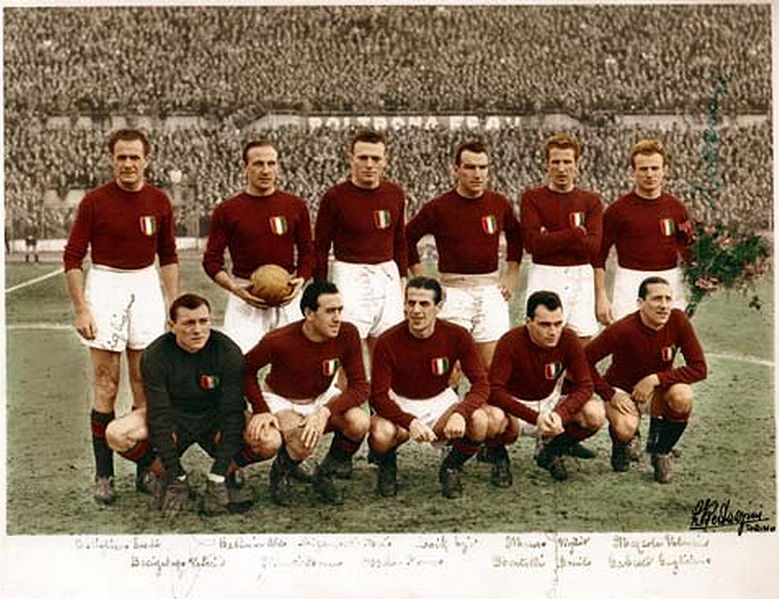
    Grande Torino in 1948-49 season, before tragedy would strike the team on the way back from a match in Portugal.
    Torino in 1948-49. before tragedy would strike the team

    Lisbon, Benfica, and the Final Flight

    In early May 1949, Grande Torino travelled to Lisbon to play a friendly match against Benfica, a testimonial for Portuguese captain Francisco Ferreira. Despite fatigue and injuries, the players insisted on going — honouring both friendship and the game they loved so much.

    They flew back home on May 4, 1949, aboard a Fiat G.212 aircraft. As the plane approached Turin, it encountered thick fog and poor visibility. The pilots, believing they were on the correct approach path, tragically miscalculated.

    At 5:05 PM, the aircraft crashed into the rear wall of the Basilica of Superga, perched on a hilltop just outside the city.

    All 31 passengers on board died instantly — including 18 players, all of the coaching staff, club officials, three journalists, and the flight crew.
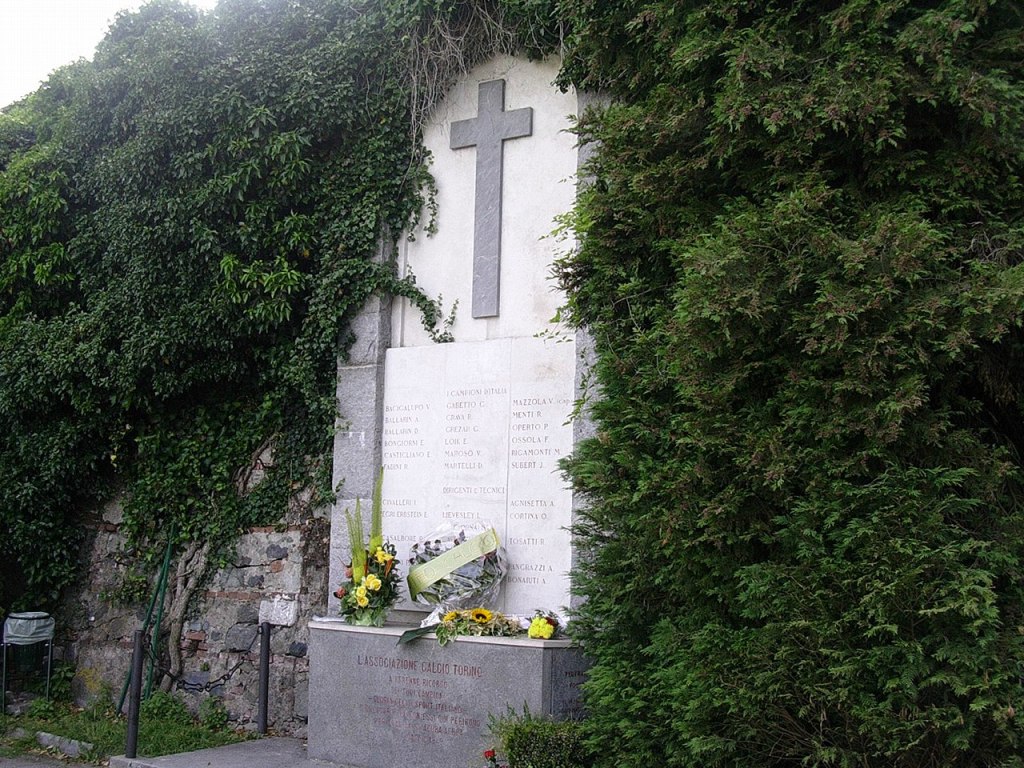
    The memorial to the Grande Torino team at Superga.
    The Memorial at Superga

    Italy Mourns

    The aftermath of the Superga air disaster was a national tragedy, over half a million people filled the streets of Turin for the funeral procession. Men wept openly, newspapers halted regular coverage, radio stations played only classical music. Even fierce rivals paid tribute – Juventus, Inter and Milan all stood united in mourning.

    Torino’s youth team, made up of reserves and Primavera players, completed the final four matches of the season. Out of respect, their opponents also fielded youth squads. Torino won the league and were awarded the title — their fifth consecutive Scudetto.

    A Legacy That Endures

    The loss of Grande Torino deeply affected Italian football. The national team, which had been built almost entirely around Torino’s players, suffered a sharp decline. When Italy travelled to Brazil for the 1950 World Cup, they did so by ship, so traumatised were they by the idea of flying.

    It would take decades for Torino to recover as a club. They would win a Scudetto again in 1976, and sporadically challenge for trophies but Grande Torino was unrepeatable.

    Yet their legacy remains immortal. Each year, on May 4, Torino players, staff, and supporters climb the hill to Superga Basilica. There, overlooking the city they once thrilled, they remember — not just the tragedy, but the glory.

    The plaque reads:
    “Gli eroi sono sempre immortali agli occhi di chi in essi crede.”
    “Heroes are always immortal in the eyes of those who believe in them.”

    Why Grande Torino Still Matters

    Grande Torino were not only the best football team of their era — they represented something greater. In a country emerging from dictatorship and war, they were symbols of unity, modernity, and belief. Their style of play laid the foundation for future generations. Their professionalism, spirit, and sacrifice continue to inspire.

    In the end, they were not defined by how their story ended — but by how brightly they shone while they lived.

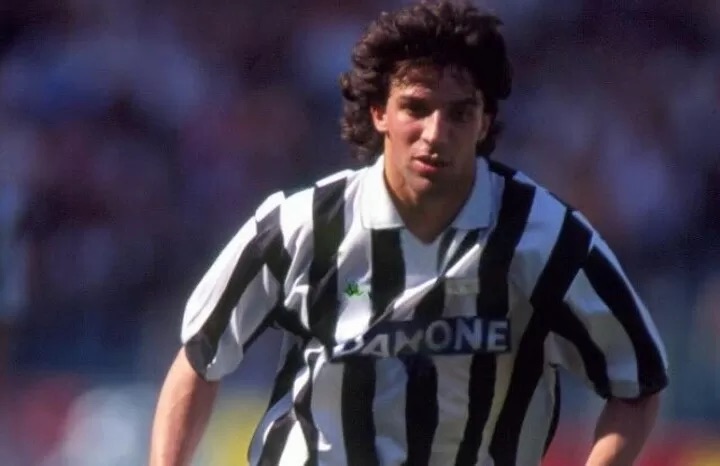
  • Legends of Calcio: Alessandro Del Piero

    Legends of Calcio: Alessandro Del Piero

    “He is football’s gentleman, but also a killer in front of goal.”

    This is how Marcello Lippi once described Alessandro Del Piero and it’s hard to find a more perfect summation. Elegant yet ruthless, soft-spoken yet decisive, Del Piero embodied the romantic spirit of Italian football while quietly carving out a legacy as one of its most lethal forwards. From his trademark curling finishes to his unwavering loyalty to Juventus through triumph and scandal, “Pinturicchio” left a mark not only on the pitch, but in the hearts of calcio lovers worldwide. This is the story of a true legend — the boy from Conegliano who became a global icon.

    Alessandro was born in 1974 in Conegliano and while playing locally for San Vendemiano used to play in goal, something his mother encouraged as he would sweat less and would also less likely pick up an injury. It was his brother, Stefano, who noticed the young Alessandro’s skill and suggested he play as a forward.

    It seemed to work and by 1988 Padova had noticed his talent and snapped up the young Del Piero. He would make his senior debut at the age of 17 in Serie B and in 1993 he scored his first goal in a 5-0 victory over Ternana. This was the start of a prolific goalscoring career which would see him score in every single competition he played in.

    A young Del Piero making his debut for Juventus

    Following his short spell in Padova, Del Piero transferred to Juventus for just over 5 billion lire and he would stay for over 19 seasons, staying loyal through triumph and scandal. Del Piero made his debut in September 1993 against Foggia, and would score his first Juventus goal a week later against Reggina. During these early years at Juventus he was often called “topolino” by veterans for his quiet demeanour and big ears!

    This nickname would soon be replaced to Pinturicchio, after the Renaissance painter, which was coined by Juve President Gianni Agnelli to reflect his artistry. Nowhere was this more evident than a November 1993 match against Parma, where a 19 year old Del Piero netted a stunning hat trick despite starting on the bench. His status as a generational talent was cemented a season later when he played a key support role as Lippi’s Juve won the Scudetto, Coppa Italia and Supercoppa.

    As Baggio departed to Milan in the mid-90s, Del Piero was handed the famous Juventus 10 shirt. Over the next few seasons, Del Piero as a focal point would become the keystone of Juventus’ attacking play. He perfected his “Gol alla Del Piero”, curling in from the edge of the box, and in 1996 started in the Champions League Final that Juventus won against Ajax. He would also be present as Juventus reached the next two finals, losing both.

    Alessandro lifting his only Champions League trophy

    Del Piero’s career seemed to be at an all time high, his stock constantly rising including being added the the Euro 96 squad for Italy, however, it would all come crashing down over the next few years. In November 1998 in the final moments of a match with Udinese, Del Piero picked up a serious ACL and MCL injury, which would keep him out for the remainder of a season where Juventus would suffer. Over the next couple of seasons, Del Piero would struggle to regain full fitness and would suffer many niggly injuries as Juventus struggled to assert and dominance in Serie A.

    All would change in 2001, Conte had left Juventus and Del Piero was named captain and in the 2001-02 season, a rejuvenated squad won the Scudetto in a dramatic final day. Alessandro scored 16 goals and dragged Juve through several tight matches.

    A familiar site, Del Piero celebrating another goal

    The next season he was again crucial in another run to a Champions League Final and another in which Juventus would lose, this time on penalties against Milan at Old Trafford. Over the following seasons he was key as Juventus won back to back Scudetti under Fabio Capello. The Calciopoli scandal would revoke these titles, and enforce a relegation to Serie B for Juventus, stars would leave the sinking ship. Del Piero, rather predictably, stayed to fight on for his team. Unsurprisingly, in 2006/07 he was top scorer in Serie B as he dragged Juventus back to Serie A.

    Later in his career, Del Piero became an ageless icon, winning the Capocannoniere aged 33 with 21 Serie A goals in 2008. A year later he scored twice for Juventus at the Bernabeu, receiving a standing ovation from the home support there. In his penultimate Juventus season, he broke the all time Juventus goalscoring record of Giampiero Boniperti and in his last game, Del Piero came good one last time for Juventus, scoring past Atalanta as Conte’s team won Serie A unbeaten.

    At the end of 2011-12 Alessandro Del Piero finally bid farewell to Juventus after 19 seasons in which he became their all time top scorer and all time appearance holder with 705 games and 290 goals. It nearly wasn’t so though – during the late 90s there was a move to Manchester United on the cards…

    One of the most intriguing “what if” moments of Alessandro Del Piero’s career came in the late 1990s, when Sir Alex Ferguson made a serious approach to bring him to Manchester United. After Juventus reached consecutive Champions League finals in 1996, 1997, and 1998, Del Piero had firmly established himself as one of the world’s premier forwards. Ferguson, searching for a technical, creative forward to complement the likes of Dwight Yorke and Andy Cole, reportedly saw Del Piero as the perfect fit. According to interviews years later, the move was genuine — but Del Piero declined the offer, citing his deep connection to Juventus and loyalty to the club that had helped make him a global star. “Leaving Juve never really crossed my mind,” he said in a 2019 interview. “Even though it was Manchester United — and it was a huge honour — my heart was in Turin.” It became a defining moment in his career, symbolising the kind of loyalty that’s increasingly rare in modern football.

    Del Piero wasn’t just a Juventus legend however, over 13 seasons, he would make 91 appearances for the Azzurri, scoring 27 goals. The most famous of which was undoubtedly Italy’s second in the 2006 World Cup Semi-Final against hosts Germany. In typical fashion, Del Piero cut in from the left hand side and curved a ball beautifully from the edge of the area and into the top corner. Italy would go on to win the final and Del Piero lifted the World Cup – his only honour for Italy.

    Sealing the deal for Italy

    During his career he would win 6 Scudetti (in theory it could’ve been 8, Google Calciopoli), a Champions League, one Coppa Italia, 4 Supercoppas, a UEFA Super Cup and one Intercontinental Cup. After Juventus he headed to Australia for a spell in the A League with Sydney FC, where he was known as “Alex” due to the locals struggling to pronounce Alessandro! The greatest comment on his career probably came from a former team mate and eventual opponent, former Ballon D’Or winner Zinedine Zidane once said of him, “If I had to pick a player to watch for pure aesthetic joy, it would be Del Piero.”

    Alessandro Del Piero… A true Legend of Calcio.

  • Legends of Calcio: Paolo Maldini

    A name that transcends rivalries. Universally admired by teammates, rivals, coaches and pundits. The embodiment of Italian defensive mastery. The art of defending, personified. One Club Man. Elegance, Intelligence, Loyalty. Is there a bigger legend of Calcio than Paolo Maldini?

    Born in 1968 in Milan, Maldini quickly rose through the ranks at AC Milan and would make his debut at the age of just 16 in 1985. By the time he retired in 2009 he had made over 900 appearances in all competitions for Milan, appeared in 7 major tournaments for Italy, won 7 Serie A titles and 5 Champions Leagues.

    The man who would be cited as inspiration by John Terry, Gerard Pique and Virgil Van Dijk. His career took him all around the World, collecting trophies. But he never left Milan and he never won a thing with Italy.

    A young Maldini making his debut.

    Hi father, Cesare Maldini was on the coaching staff in 1985 when he made his debut, and his son Daniel would begin his career at Milan with his Dad as Technical Director. He’s since moved on, as has Paolo, and Milan feels a bit emptier for it.

    Maldini would win his first Serie A title in 1988 as part of the irresistible pressing side of Arrigo Sacchi. He formed part of an indomitable back line with Baresi, Tassotti and Costacurta. His first European triumph wasn’t far behind when Milan dismantled Steaua Bucharest 4-0 in the final in 1989.

    Milan would win back to back European Cups, defeating Benfica 1-0 in the final in 1990 with a defensive masterclass from their famous quartet.

    The best was yet to come in Europe, however, and in 1994 Milan defeated the great Cruyff Barcelona 4-0 in the final, with Maldini putting on a clinic as a fill in centre back. Europe provided plenty of low moments too, though, with arguably the worst coming in 2005.

    Paolo scored the fasted ever final goal (at that point) when he put Milan 1-0 up against Liverpool in Istanbul. By half time it was 3-0 and their name was on the cup. Fate had other ideas, however, and Liverpool roared back in the second half, eventually winning on penalties after extra time.

    Despite the defeat, Maldini was praised for his leadership and sportsmanship that night in Istanbul. It would be avenged two years later though, when a 38 year old Maldini captained his side through a knee injury to a 2-1 victory over the same opponents.

    A much happier Paolo Maldini

    England provided another sweet Champions League moment for Maldini too, when he lifted his first one as captain in 2003. Not only did Milan defeat the old enemy Juventus, but they did so in Old Trafford, Manchester – birthplace of his father Cesare.

    Back home in Italy, Maldini collected trophies like they were prizes in a cereal box. By the time of the Juventus final in 2003, he had already won 6 of the 7 titles he would win. Milan also won a Coppa Italia title with him, as well as 5 Supercoppas.

    But it was internationally that Maldini was hardest done by. Making his debut against Yugoslavia in 1988, at just 19, he would play 126 games for the Azzurri across 7 tournaments but only collect runners up medals.

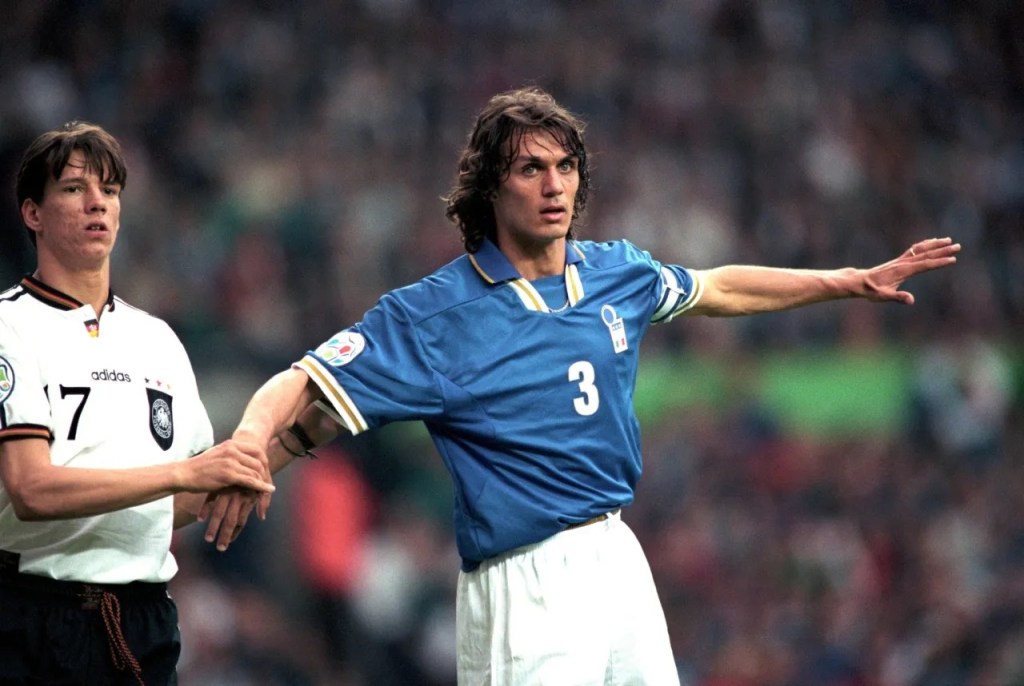
    Paolo Maldini in action at Euro 96

    The first of these came in the 1994 World Cup, when he was ever present in Italy’s run to the final. He captained the side for the first time too, after Franco Baresi was injured. However, three missed penalties in the final meant that Italy wouldn’t win the tournament and his medal would be silver.

    He would remain captain of Italy after the tournament and would miss the chance to lift a major honour again when in Euro 2000 in Holland and Belgium, Italy lost the final to France 2-1 after extra time.

    The absolute scandalous refereeing performance at the 2002 World Cup that saw Italy eliminated to South Korea in their home tournament eventually proved too much for Maldini and he announced his retirement from the international game to focus on Milan.

    It was a good decision, Maldini played a further 7 years for Milan, eventually hanging up his boots after 902 matches and 33 goals in all competitions. He even received his first ever Red Card in that final season.

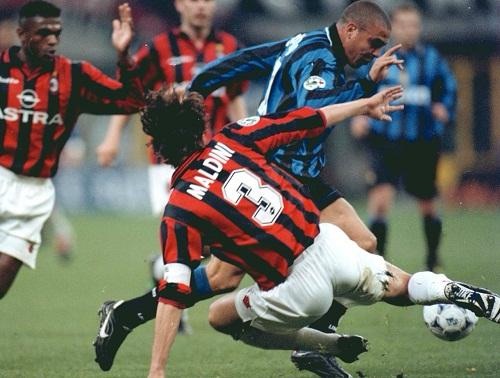
    The best were terrified of taking on Maldini

    Maldini was quoted as saying that, “If I have to make a tackle then I have already made a mistake”. He embodied the ideals of the perfect Italian defender with the way he read the game. His coolness under pressure, composure on the ball and a fabulous range of passing. He was uncompromising, tough, but fair and sporting.

    These were all traits he would take into his next role, as Technical Director of Milan. He had the role from 2018 until leaving in 2023 under something of a cloud after tensions with the club’s owners RedBird Capital. His exit has been viewed by some Milan fans as the moment when the team started to lose its identity.

    Maldini was widely regarded as one of the World’s greatest defenders of all time – known for his elegance, positional intelligence and loyalty. Inspiring a wealth of modern defenders, Thiago Silva (once of Milan) summed it up nicely with, “I dreamed of being a defender like Maldini”.

    And the truth is, there’s no one quite like Maldini…

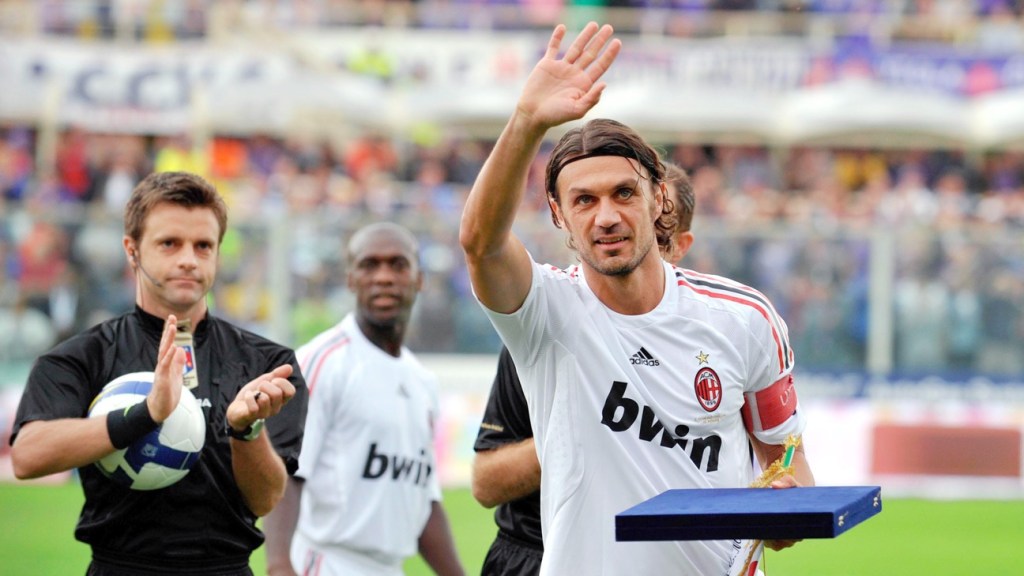
    Maldini bids farewell

  • Legends of Calcio: Il Divin Codino, Roberto Baggio

    Legends of Calcio: Il Divin Codino, Roberto Baggio

    How often can one man unite the whole of Italy? How often does a player play for Juventus, Milan and Inter and become universally admired by their fans? How often does a man miss a crucial penalty in a World Cup final and have his legend grow? How often can one man be told his career is over due to injury and still continue?

    Welcome to the crazy world of Roberto Baggio, Il Divin Codino (the divine ponytail). The sale of Roberto from Fiorentina to Juventus in 1990 was so poorly received that it led to rioting, looting and 50 people being hospitalised. A fall out with Marcelo Lippi at Inter would lead to the manager being sacked. A man who was the idol of Zinedine Zidane.

    Baggio was born in Caldogno in 1967 and made his debut in Calcio at the tender age of 15 for Vicenza. He would stay with Vicenza for three years, playing in 47 games and bagging 15 times in that time.

    A move to Florence followed and he would impress so much there in his 5 years that his transfer to Juventus inspired rioting and looting, with the move seen as a betrayal by the player and the club. After 55 goals in 136 appearances there, it’s easy to see why the fans were so upset to lose Baggio.

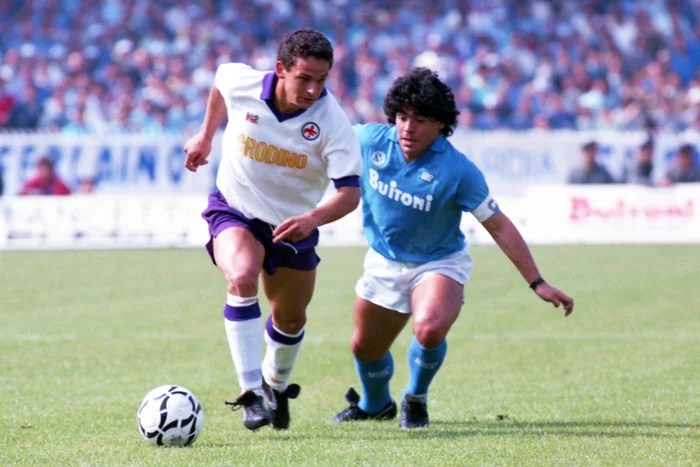
    He truly announced himself to World football when in 1989 while playing for Fiorentina against Napoli, he outshone Maradona with a dazzling solo goal. This all came after his first career ending injury, too. During a game in 1985 at the age of only 18, Baggio experienced a major ACL and meniscus tear so brutal that doctors said he’d never play again.

    A young Roberto Baggio takes on Diego Maradona during Fiorentina v Napoli
    Baggio takes on Maradona

    It was his determination and will to come back and succeed that endeared him to La Viola fans, and would lead to their outrage at his sale. Baggio would later tell JuveFC.com that he “didn’t want to leave Florence. I felt indebted to this city, these people, these fans”.

    When Baggio returned to Florence with Juventus in a Coppa Italia match, the anger over his move only intensified when he refused to take a penalty and his replacement subsequently missed.

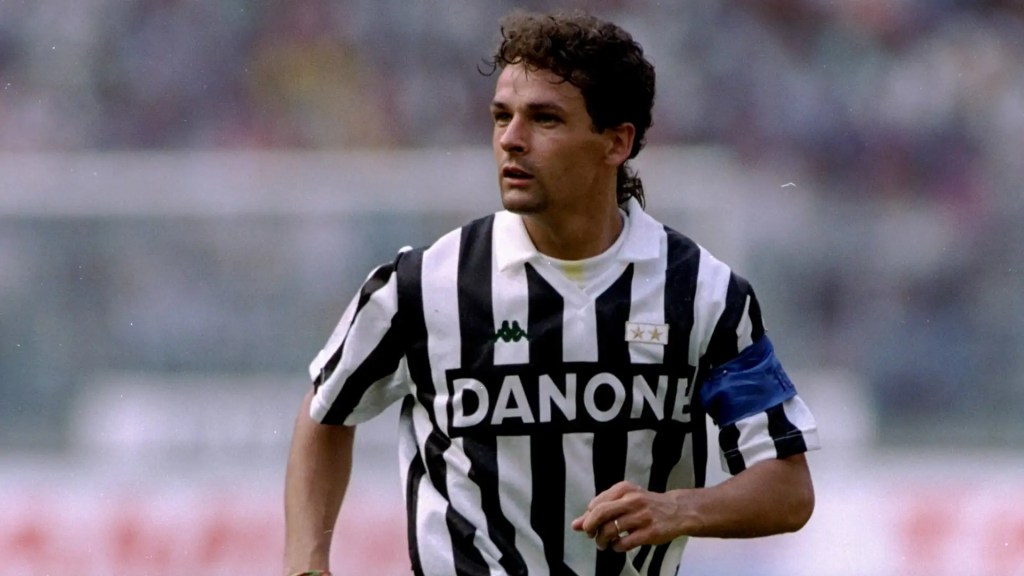
    However, his time at Juventus wasn’t all controversy, it was mainly illuminating moments. Il Divin Codino scored 115 goals in 200 matches for the Old Lady and would win the Scudetto, Coppa Italia and UEFA Cup during a spell that also saw him win the Ballon D’Or.

    Roberto Baggio spent 5 seasons with Juventus
    Roberto Baggio scored 115 times for Juventus

    In that 1993 UEFA Cup final against Borussia Dortmund he would score two goals and assist his namesake Dino in a 3-1 first leg win away to the German side. Dino would say of Roberto after the game, “Roberto could change the game in an instant, he is our leader without shouting”.

    Roberto Baggio would truly make his name a year later, however, with a virtuoso performance in the 1994 World Cup in USA. Italy would start the tournament very slowly, with a 1-0 loss to Ireland in their first game before a narrow 1-0 win against Norway (in which Sacchi was criticised for subbing off Roberto) followed by a 1-1 draw with Mexico that saw Italy scrape through to the second round.

    It was in the second round that Il Divin Codino burst into life. With Italy trailing Nigeria 1-0 in the Round of 16 game, Baggio stole an equaliser in the 88th minute, before scoring the winning penalty in Extra Time.

    Again, in the 88th minute of the Quarter Final against Spain, Baggio took control of the game, slaloming through defenders to score a sensational winner that put Italy through to the Semi Final against surprise package Bulgaria. Baggio scored twice in the first half to secure a 2-1 win for the Azzurri, the second being a classic Baggio run and finish – poetry in motion.

    Unsurprisingly playing on an injury, Baggio had carried Italy to the final with one leg. Arrigo Sacchi said after this game, “He played like an angel with the knees of an old man”.

    All that was left to complete the legend of Baggio was for the Ballon D’Or holder to carry Italy to World Cup triumph in the final against Brazil.

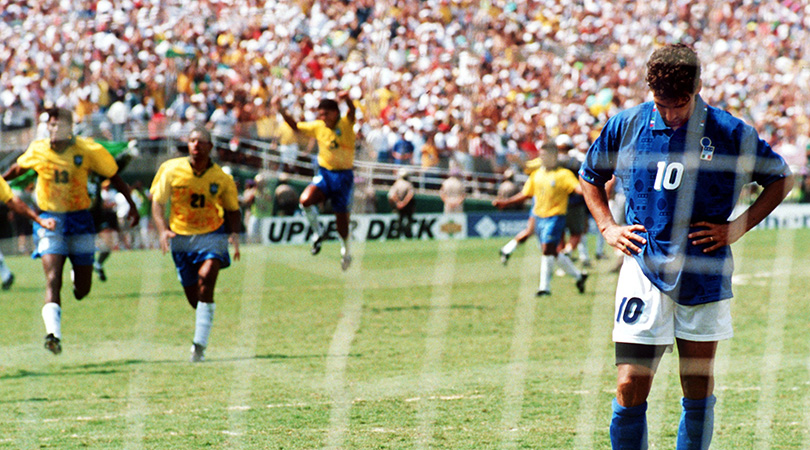
    A cagey affair, the final went the distance, going to a penalty shoot out after a 0-0 draw. It was the first ever World Cup final to be decided on penalties and with Brazil having missed one and Italy having failed twice, it all rested on Roberto Baggio to keep the dream alive.

    In truth, even if he had scored, Brazil would’ve won by scoring the next kick, but it never got there. Roberto skied his penalty high above the goal and into the stand behind the goal. Later Baggio would say, “I failed. But only those who have the courage to take a penalty can miss them”.

    Roberto Baggio missed a penalty against Brazil in the World Cup final in 1994
    Italy’s Roberto Baggio hangs his head after missing the decisive penalty during the 1994 World Cup Final

    Despite the miss, Baggio had garnered global admiration for dragging Italy to that final almost single handedly. Lothar Matthaus of Germany and Inter said afterwards, “He was magical, like Maradona in 86, but with worse luck”. World Cups aren’t just about who wins them, they’re about the players who light them up, and Baggio had certainly done that. Baresi said, “Roberto was the World Cup, without him we were half the team”.

    Baggio returned to Italy and would play for Milan between 1995-1997, winning the Scudetto again. After notching 19 goals in 67 games for them, he moved to Bologna to improve his chances of appearing in France 98. Scoring 22 goals in 33 appearances there succeeded in getting him on the plane to France where he would score his last goal for Italy in a 2-1 win over Austria.

    Roberto Baggio representing Inter Milan
    Roberto Baggio for Inter Milan

    That form earned him a transfer to Inter Milan, where he would score 17 times in 59 games, including two on the last day of the season against Parma to secure a 2-0 win and Champions League football for Inter. This all came after a fall out with coach Marcello Lippi who was sacked after the game, showing the influence of the Divine Ponytail in club decisions.

    Baggio’s final career move was to Brescia where he spent 4 seasons until retiring in 2004. He had scored 45 goals in 101 appearances by this point including a sublime lob from outside the area against Juventus at the age of 34. He helped Brescia to qualify for Europe and mentored a young Andrea Pirlo during his time there, cementing his cult status among Calcio fans.

    Upon his retirement, Roberto Baggio had scored 288 goals in 643 Serie A matches, along with 27 goals in 56 games for the Azzurri. He had played for the three biggest teams in Italy who were also the biggest enemies. He had cost Italy a World Cup that he nearly won them. And yet everyone loved him. Baggio was a symbol of the beauty of football above all else. He was a symbol of the decadent days of Calcio in the 90s. He was a symbol of artistry, humility and perseverance. He inspired a generation of fantasisti with Totti, Del Piero and Cassano all citing him as an influence.

    Roberto Baggio in his last ever match at the San Siro
    The San Siro, a fitting venue for Roberto Baggio’s last ever game

    Perhaps the best way to sum up Roberto Baggio is with the words of Italian journalist Gianni Mura, “Roberto Baggio is not a footballer. He is an idea”.

  • Legends of Calcio: Francesco Totti

    Legends of Calcio: Francesco Totti

    Any football fan with an algorithm worth anything will have come across the video on Instagram or TikTok before. An emotional Francesco Totti bidding an emotional farewell to an even more emotional Stadio Olimpico. I’m not a Roma fan, but I am a human being so I always stop and watch the video.

    Football fans far and wide – except maybe Laziali – almost all stop and watch the video and get a lump in their throat. Totti spanned club rivalries, a one club man who stayed true to his hometown in the face of enormous offers from elsewhere. He lived out everyone’s childhood dream, captaining their local team, lifting a title for them and becoming their all time great.

    I read somewhere that he said he hasn’t been able to walk around the city he loves so much in 20 years because he’s mobbed everywhere he goes. It seems bittersweet for a man who turned down Real Madrid to stay in Rome.

    But how did he get here? Plenty of players come through their hometown youth system and don’t end up a legend across the entire country – look at Trent Alexander Arnold…

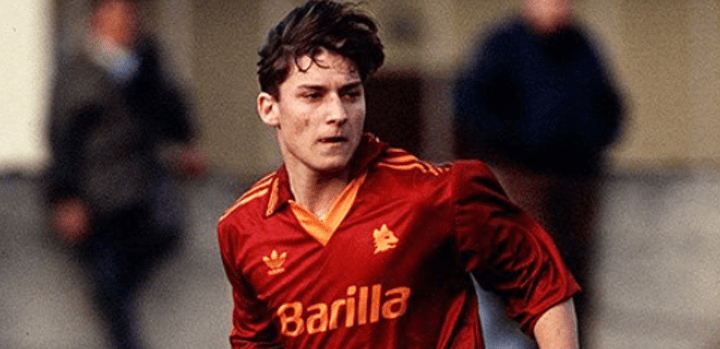
    On March 28th 1993, Vujadin Boskov probably had no idea what he was unleashing on the world when he handed a 16 year old Francesco Totti his debut. Boskov had recognised his talent in training, specifically his technical ability, and called him up to the first team.

    A young Francesco Totti makes his debut against Foggia, aged 16
    Il Bambino makes his debut for Roma, aged 16

    He was so young, the other players called him “il bambino” (the kid) and he kept his school books in his locker at the training ground. Early the next season, on September 4th 1994 a 17 year old Totti opened the scoring against Foggia with a powerful, well placed effort.

    It was the first of many goals, 307 in total during 786 appearances. He also contributed 180 assists and at the time of his retirement was second in the list of all time Serie A appearance holders. The numbers speak for themselves, but numbers is a modern curse that we judge footballers on – thanks Pep. What made Totti a great was the way he effortlessly did incredible things on the pitch, his inventiveness and his ingenuity.

    Thierry Henry described Totti as having “magic in his boots” and Pele said he was “one of the most intelligent players” he’d ever seen. It wasn’t always plain sailing for Totti however, in the mid-2000s he would suffer with recurring ankle and knee problems.

    Not only this, but in the closing months of the 2005-06 season, he would break his leg in a match against Empoli. With the 2006 World Cup coming fast, Totti didn’t play a game from February until the end of the season.

    The career threatening injury, as it turned out, couldn’t even threaten Totti’s World Cup. He would play in all seven games for Italy as they lifted the famous trophy following a shoot out win over France in the Final.

    During the tournament, Totti would provide 4 assists and a crucial goal in the 95th minute of the Round of 16 against Australia, winning the game for Italy from the penalty spot and preventing extra time. After the tournament, manager Marcelo Lippi was moved by Totti’s commitment and ability, commenting, “Only Totti could’ve played like that with half a leg”.

    Francesco Totti of Italy with the World Cup trophy
    Francesco Totti, with half a leg and the World Cup trophy

    His resolve to Roma was tested a few times, mainly by Real Madrid, who offered him a mega money deal in the early 2000s and pretty much guaranteed him a Ballon D’Or. On turning them down (several times), Totti said, “If I had gone to Madrid, I might have won more, but I would have betrayed myself”.

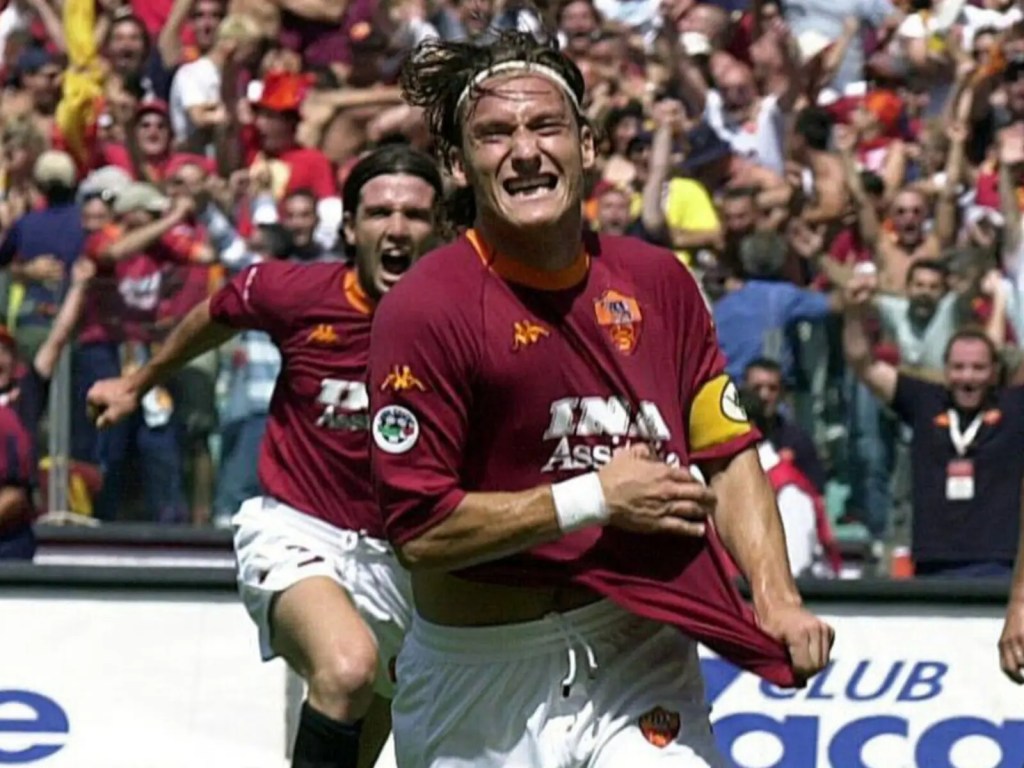
    It was, therefore, fitting that Totti would provide the crucial goal to provide Roma’s first Scudetto since 1983. In the game against Parma on 17th June 2001, Totti scored the decisive goal that sealed a 3-1 victory and would see him parade around the pitch with a gladiator’s cape on. All over the city, the celebrations went on for days, and there’s still graffiti across Rome to this day saying “Grazie Capitano”.

    Francesco Totti celebrating his Scudetto securing goal in 2001
    What the Scudetto means to Francesco Totti

    There were many more iconic moments for Totti throughout his career. Some that come to mind are his ridiculous 40 yard lob against Inter at the San Siro in 2005. Spotting Julio Cesar off his line, he went for it and secured himself goal of the season, prompting commentary cries of “Non ci credo!!!” That’s “I don’t believe it” to you and I.

    He also had a signature penalty move, crowned in Euro 2000 against the Netherlands when he chipped the ball down the middle in the shoot out under enormous pressure. His now iconic “cucchiaio” penalty was preceded by him turning to his team mates and saying, “Now I’ll do the spoon”.

    Totti was the true inventor of the selfie celebration too, after scoring twice in the Rome Derby, he grabbed a phone from coach Guido Nanni and took a selfie with the Curva Sud. His second goal in that game equalled the record for goals scored in the Derby della Capitale with 11 – alongside Dino Da Costa.

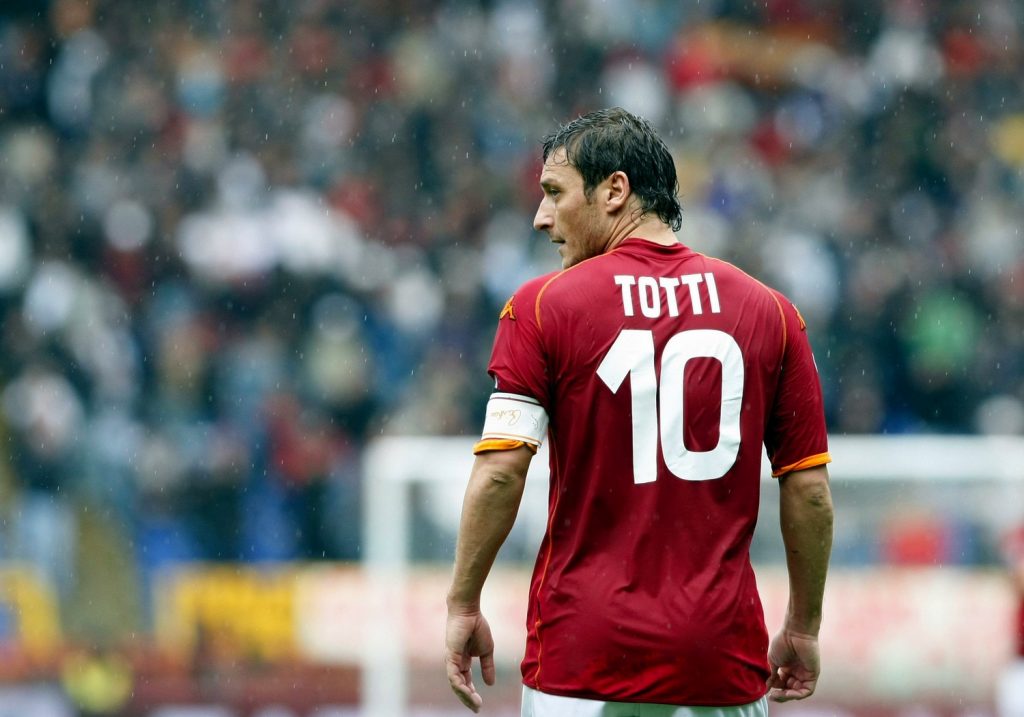
    It was this sort of cavalier performance for Rome, after turning down the big money and personal honours that led to team mates like Daniele De Rossi to say of him, “He is football for Rome. He’s the banner, the heart, and the king of this city.” His long term coach Luciano Spalletti said of him, “Totti is Roma, and Roma is Totti. He’s a symbol of a city, not just a club.”

    When the time came to call time on his career, it was no wonder he was going to get the send off we all watch on Instagram and TikTok every time. Totti once said, “Winning one title at Roma to me is worth winning 10 at Juventus or Real Madrid.” It was that kind of refreshing loyalty that endeared him to so many across Rome and Italy.

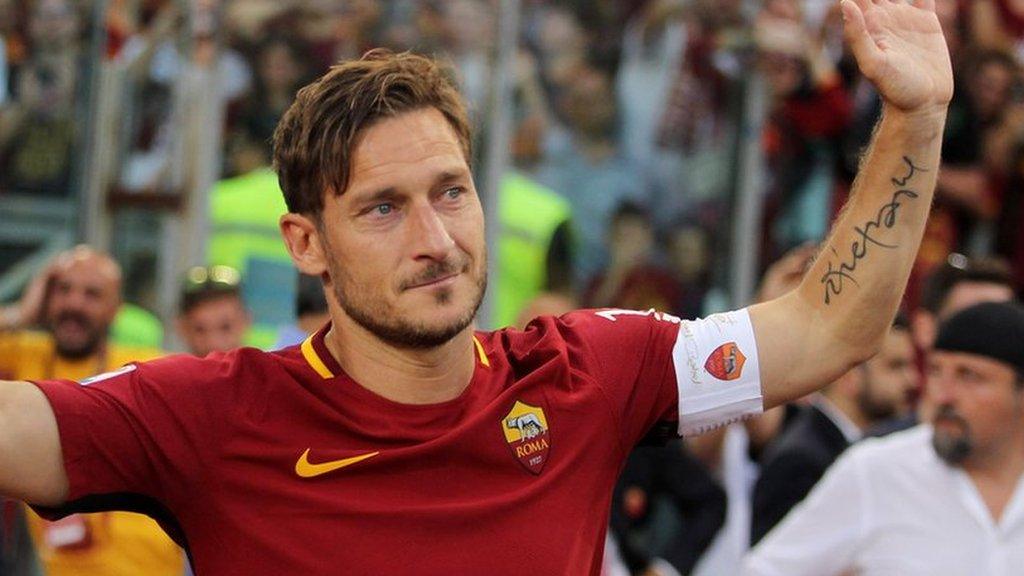
    An emotional Francesco Totti says goodbye to the Stadio Olimpico
    A tearful Francesco Totti says goodbye

    When he stood on the pitch at the end of the game against Genoa at Stadio Olimpico, Totti – overcome with emotion – bid farewell to Roma with some typically passionate words, “Now I’m afraid. I need you and the love you’ve always shown me.”

    So many footballers say they struggle after retirement and this openness with his public was typical of a man who once said, “I was born a Roman, and I’ll die a Roman”.

    And perhaps that’s the best way to remember one of the true Legends of Calcio…

  • Legends of Calcio: Ronaldo

    Legends of Calcio: Ronaldo

    There are all sorts of quotes from opponents, team mates, managers and pundits that are quoted in this blog, but to be honest, the biggest compliment from me is that Il Fenomeno was the man who made me fall in love with Calcio – and especially the Nerazzurri. Although I clearly hide my bias towards Inter well usually, I won’t in this blog.

    Those Sunday afternoons spent glued to Channel 4 in the UK watching James Richardson sit outside a café with the Gazzetta describing the articles to us would spawn a lifelong obsession with the beautiful game in Italy. It would be years before I finally took a trip to the San Siro, Ronaldo long gone, but his shirt still for sale in the club shop and in the stalls around the stadium tells the true story of his impact on Inter.

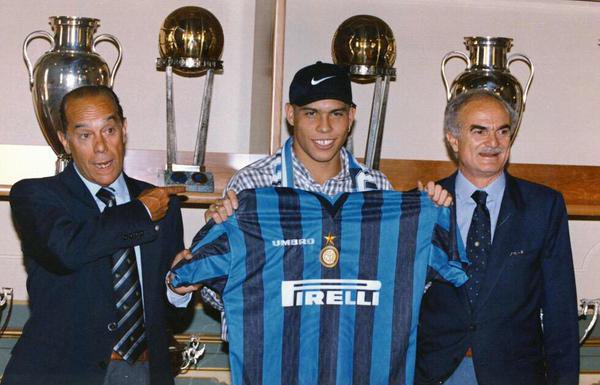
    The reigning FIFA Player of the Year arrived in Milano in 1997 after one season at Barcelona. A paltry €28m paid to secure his services was a world record fee at the time – those days are long gone from Italian football. He hit the ground running in Italy, hitting 34 goals in 47 appearances in all competitions, although he would only play another 52 in the next four years before departing for Real Madrid.

    Ronaldo arrives at Inter and is presented by the board.
    Ronaldo signs for Inter

    His team mates, opponents and managers alike were in awe of the phenomenon. Zanetti remarked that he was “from another planet” and Lippi said “you didn’t coach Ronaldo; you just gave him the ball”. The fact he was referred to by Maldini as the “toughest player I ever faced” and Cannavaro described facing him “a nightmare – he was unstoppable” should tell you all you need to know.

    That first season was capped by a UEFA Cup win (Europa League) with a 3-0 victory against fellow Serie A side Lazio, in which Ronaldo delivered a spectacular solo goal, showcasing his natural pace, power and composure to leave a Lazio defence spinning. However, it would be another cup final against Lazio that would come to define the man.

    He’d already suffered a serious rupture of the tendons in his right knee in a Serie A match against Lecce in November 1999. Surgery and a significant recovery period had the star man sitting on the sidelines watching his team mates compete for the rest of the season. As Ivan Cordoba remarked at the time, “Watching someone so talented suffer like that was painful for all of us”.

    “He fought so hard to return, and that injury broke all of us”.

    Christian Vieri

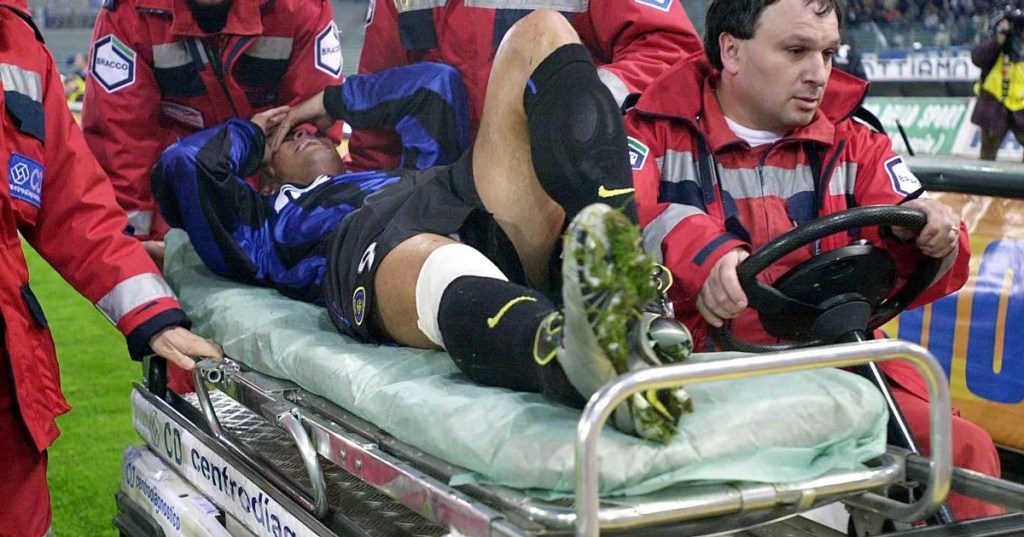
    However, on April 12th 2000, Ronaldo was back on the bench in the Coppa Italia final against Lazio. His return highly anticipated by a team that had drifted somewhat without him. However, just 6 minutes after his introduction a sudden movement caused his kneecap to rupture, Ronaldo collapsed to the floor and was in visible agony, clutching his knee.

    Ronaldo leaves the field injured, one of many knee injuries that plagued his career.
    Ronaldo leaves the pitch in agony. Again.

    The impact wasn’t just on the player himself, but his team mates too. Goalkeeper Gianluca Pagliuca said, “It was devastating. Seeing Ronaldo, knowing how much he worked to come back was unbearable”. With strike partner Christian Vieri adding, “He fought so hard to return, and that injury broke all of us”.

    Ronaldo headed to Paris for surgery under famed physician Dr Gerard Saillant spending over a year in rehabilitation, rebuilding his strength and mobility. As Javier Zanetti would say after his return, “even when it looked impossible, he never gave up”. And at one point it looked impossible. There was some doubt whether Ronaldo would even walk again, let alone play football.

    Ronaldo celebrates scoring in the UEFA Cup
    One of many celebrations in an Inter shirt for Ronaldo.

    Fortunately for Il Fenomeno, he had a strong group around him, including team mate Roberto Baggio who has suffered similar knee issues over his career. “I spoke with Ronaldo often. I told him recovery is a mental battle as much as a physical one”. Over a year later it seemed Ronaldo had won the mental and physical battles.

    Looking understandably tentative on the pitch initially, Ronaldo was back on the pitch in September 2001 against Brescia. He would only appear 16 times that season, scoring 7 goals, but he had showed the World his resilience. Hector Cuper, Nerazzurri coach that season, said of Ronaldo, “He showed the World that after everything he went through, he was still Ronaldo – still Il Fenomeno”.

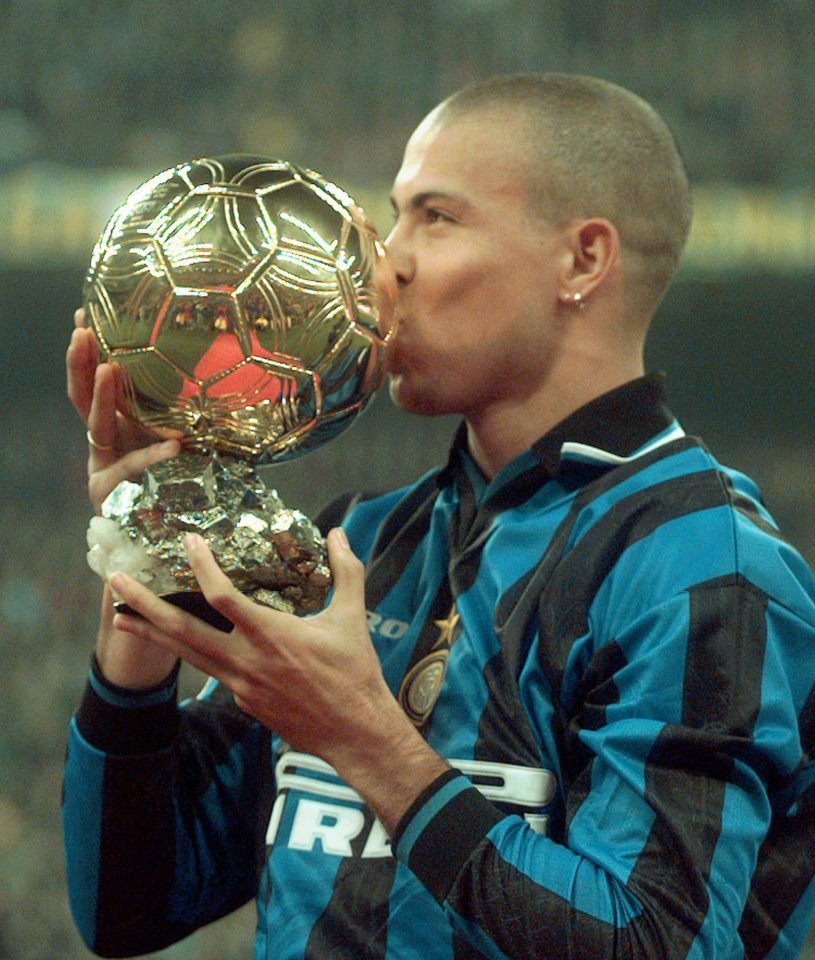
    The pace and explosiveness that made him the World’s youngest Ballon D’Or winner in 1998 aged 21 were affected. But his football brain, his finishing and his faith in himself have never been diminished.

    Ronaldo won the Ballon D'Or in 1998
    Ronaldo with his 1998 Ballon D’Or

    Youri Djorkaeff once said that “Even in training, he’d do things we couldn’t even imagine” and Luigi Simoni commented that “he made the impossible seen ordinary”. Recovering from that injury against Lazio probably tops any feat he ever managed on the pitch. His legacy is still felt today, with strikers such as Kylian Mbappe and Zlatan Ibrahimovic attributing his influence to their game.

    In 2002 Real Madrid and the galacticos came calling and Ronaldo was gone from Italy after 59 goals in 99 appearances in Milan. It wasn’t forever, however, and Ronaldo would return to Calcio, and Milan in 2007. This time in red and black and for a mere €7.5m and would stay for an injury plagues year and a half. He managed 9 goals in 20 appearances for Milan, forging a strong partnership with Kaka and Clarence Seedorf.

    He once commented that one of the most bittersweet moments of his career was scoring for Milan against the Nerazzurri in the Derby della Madonnina in the 2007/08 season. During a match against Livorno, Ronaldo once again ruptured his patellar tendon in his left knee and the season was over – with it his time in Italy.

    Ronaldo is congratulated by Andrea Pirlo and Alex Pato after scoring in the Champions League for Milan
    Ronaldo in a Milan shirt, being congratulated on ANOTHER goal.

    One of the few players to score for both sides in the Derby della Madonnina, he also managed to score for both sides in El Clasico. The only footballer in history to do both. Perhaps why he’s known the world over as Il Fenomeno.

  • Americans in Italy: Christian Pulisic

    Americans in Italy: Christian Pulisic

    The first blog in a regular series looking at some of the players from English speaking countries who are affecting things in Calcio. If you’re anything like me, the first player who immediately springs to mind is AC Milan’s Christian Pulisic. Italy seems to be a hotbed for American “soccer” talent and what better place to start than the first American to score in a Milan derby.

    Hershey, Pennsylvania isn’t a traditional hotbed of football talent like Paris, South London or Milan would be but in September 1998 Kelley and Mark Pulisic welcomed their son Christian to the world. Kelley and Mark had both previously played “soccer” at college level at George Mason University and Mark had gone on to play professional indoor soccer for the Harrisburg Heat in the 90s.

    Christian’s idol growing up may surprise a lot of Milan fans, identifying Inter star Luis Figo as his hero when he was a child, but seeing him run at defenders at the San Siro, they can surely forgive him for adopting his style!

    During a year in England as a child, Christian briefly played in the youth academy of non-league side Brackley Town, however, it was the return to America that saw his soccer career really kick on. He played as a youth for Michigan Rush and then for US Soccer Development Academy club PA Classics.

    At the age of 16 Christian decided to head to Germany, eligible through his Croatian grandfather to travel and play at 16 rather than 18 in the States. Sure enough, Borussia Dortmund picked up a young Christian Pulisic and the rest is history. He made his first team debut at the age of 18 in a victory against Ingolstadt in January 2016.

    It wasn’t long before the USMNT recognised this young talent and in March 2016 he made his National Team debut in a 4-0 win against Guatemala. As of June 2025 he’s made 76 USMNT appearances, contributing 32 goals and 18 assists for his country.

    Pulisic made the move from Germany to England in 2019 for a spell with Chelsea often harshly viewed by a partisan English crowd. While at Chelsea he became only the second American to score a hat trick in the Premier League, at the same time becoming Chelsea’s youngest ever hat trick scorer. He became the first American to win the UEFA Champions League Final and only the second ever to play in one when Chelsea defeated Man City at the final in Portugal. Injuries and increased competition would put paid to his career in England and he would eventually join Milan in 2023 to seek more playing time.

    Christian scored on his debut in Serie A against Bologna in a 2-0 win, making him the first ever American to score in 3 of the top 5 European Leagues. In his first season in Italy he contributed 15 goals and 10 assists in 50 appearances. He was the first Milan player since Kaka to score more than ten non-penalty goals in a single Serie A season.

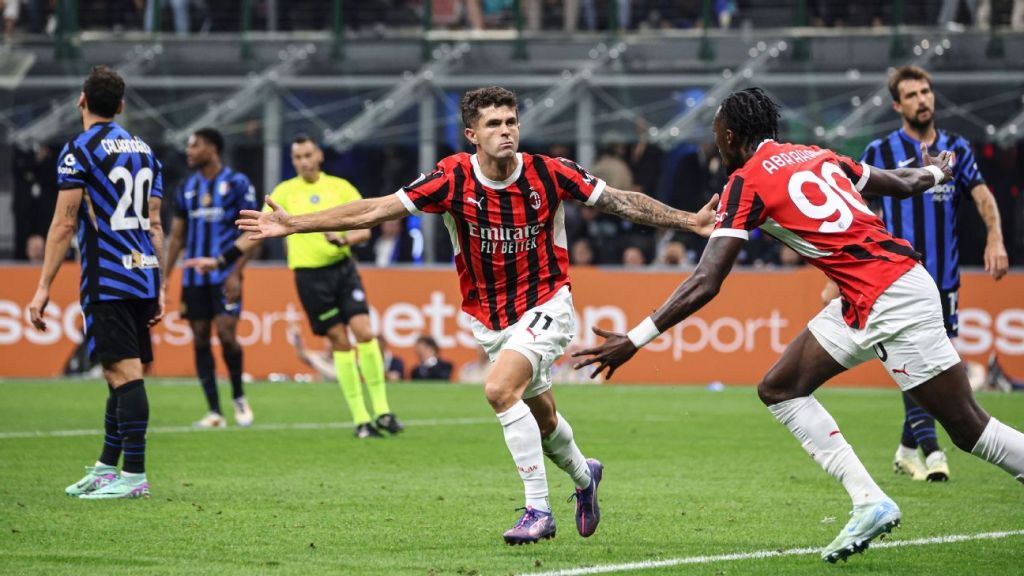
    Last season Milan struggled and as a result, the players form largely went with it. However, Pulisic still achieved several milestones. The main one being the first American to score in the Derby della Madonnina when he gave Milan the lead at the San Siro “away” to Inter. Milan went on to win the game and break the curse of 6 consecutive defeats against their city rivals.

    The goal was a perfect example of Pulisic’s energy and leadership, pressing Mkhitaryan in the midfield, running at the Inter back line who seemed to run away like scared sheep before passing the ball into the back of the net. It’s this kind of all action performance that earned him the nickname Captain America from the Curva Sud.

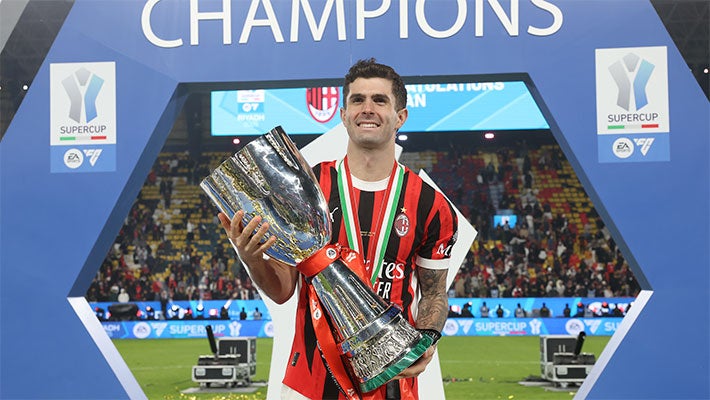
    Although the season was not a classic for Milan, he did also score in the Supercoppa Final victory over Inter and his 15 goals and 9 assists earned him a spot in the Serie A team of the season and he led the league in chance creation.

    Italy seems to have taken to the American from Hershey, with La Gazzetta commenting after one performance that, “He comes from Hershey, famous for the best chocolate in America. Yesterday, CP was pure sweetness too.”

    The Milan fans have taken him to heart too, his willingness to learn Italian and conduct interviews in Italian will always see you right in Italy. One fan even remarked, “For me, he’s Milan’s best player, and I also really like his attitude whenever I hear him speak.” and MilanTV commentator Mauro Suma frequently chants “U-S-A, U-S-A” after his goals!

    The pundits like him too, with popular and respected Tiago Leal saying, “For me, Pulisic can play on the right. He did it under Pioli, he is humble and he is a great professional, so he can play a lot of positions.” Fabio Caressa from Sky Sport Italia is also impressed. The esteemed journalist praised Pulisic as “the best signing of the entire summer transfer window,” highlighting his versatility and goal-scoring prowess.

    His importance to Milan was also underlined with Stefano Pioli tailoring tactics to leverage Pulisic’s defensive diligence, with the team encouraging opponents to play towards Pulisic’s flank, trusting his work rate in defence.

    The more attention that falls on Pulisic with these performances, the more chance there is he’ll be lured away from Milan and Italy, but for the time being he and his audience seem quite content to continue in each other’s company.