Category: History Lesson

A quick history lesson on Italian football from yesteryear.

  • Grande Torino: The Glory, The Tragedy, The Legacy

    Grande Torino: The Glory, The Tragedy, The Legacy

    In the grand tapestry of football history, few teams have left a mark as deep and as enduring as the Grande Torino. They were more than a club — they were an idea, a movement, and, tragically, a legend forged not only through triumph, but through heartbreak.

    A Team Reborn: Post-War Ambition

    Torino FC had tasted success before — winning their first Scudetto in 1928 — but it was in the 1940s, under the presidency of Ferruccio Novo, that the club’s destiny changed forever. Novo was not your typical football president – visionary and methodical, he approached the game with a modern sensibility. He studied the systems used in England and brought a scientific, professional approach to Torino.
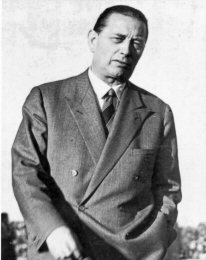
    Ferruccio Novo was the president of Torino during the Grande Torino era, when the team ruled Italian football for a decade
    Ferruccio Novo

    He appointed a backroom staff that included tactical specialists, fitness trainers, and scouts. Most crucially, he built a team not just of stars, but of perfectly complementary talents. Between 1942 and 1949, he assembled what would become the most dominant team in Italian history — Grande Torino.

    Building the Machine

    At the heart of it all was Valentino Mazzola, signed from Venezia in 1942. Mazzola was not only a footballer of rare technical skill and intelligence, he was also a natural leader — the type of captain who could inspire, intimidate, and elevate those around him. Whether playing as a mezzala or inside forward, his impact was immense.

    Mazzola’s iconic gesture — rolling up his sleeves during a match — became a symbol that the team was about to turn up the intensity. Fans knew what came next: movement, power and a storm of goals.

    Surrounding Mazzola was an ensemble cast of brilliant players:

    • Ezio Loik, his partner from Venezia, brought dynamism and strength in midfield.
    • Guglielmo Gabetto, a former Juventus striker, added flair and finishing.
    • Romeo Menti, Franco Ossola, and Pietro Ferraris contributed relentless pace and creativity on the flanks.
    • At the back, defenders like Aldo Ballarin, Mario Rigamonti, and the elegant Virgilio Maroso held firm.
    • And in goal, the reliable and acrobatic Valerio Bacigalupo.

    Each player had a specific role within a meticulously drilled system. The team played a WM formation with flexibility, pressing high, rotating positions, and attacking in waves. Their short passing, positional awareness, and relentless tempo overwhelmed opponents. They didn’t just win matches — they dictated the way football was played.
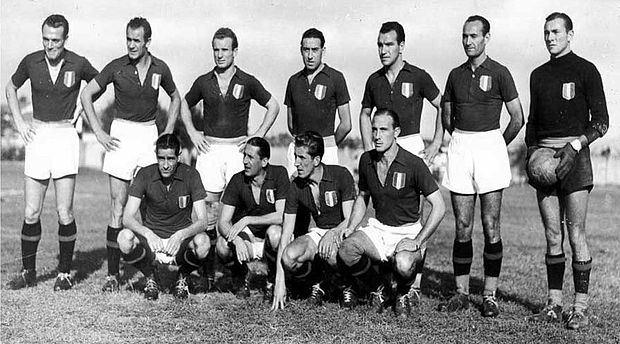
    Grande Torino before a match in 1946/47 season, Calcio legends
    The early representatives of Grande Torino

    An Era of Total Domination

    From 1943 to 1949, Torino won five consecutive Serie A titles (excluding the 1944 wartime championship, which was played under unique conditions). Their dominance bordered on the ridiculous:

    • In the 1947–48 season, they scored 125 goals in 40 matches.
    • They went unbeaten at home for nearly six years at the Stadio Filadelfia.
    • Their average margin of victory was often three or four goals.
    • In 1947, 10 of the 11 starters for Italy’s national team were Torino players.

    No club before or since has exerted such influence on the national side. Italy played like Torino. Their style became the blueprint for modern Italian football: disciplined yet daring, structured yet expressive.

    Grande Torino were admired, feared, and loved — not only in Turin, but across Italy. After years of fascism, war, and suffering, this team offered a vision of something pure, joyful, and aspirational.
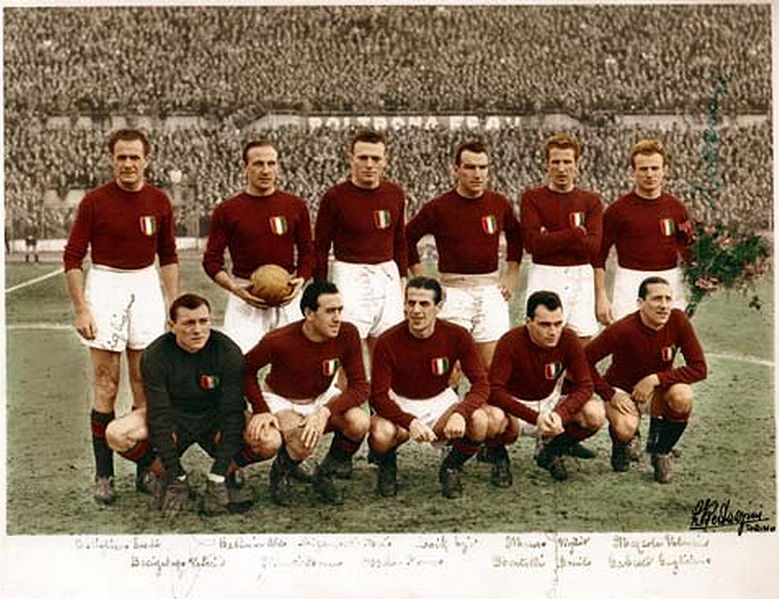
    Grande Torino in 1948-49 season, before tragedy would strike the team on the way back from a match in Portugal.
    Torino in 1948-49. before tragedy would strike the team

    Lisbon, Benfica, and the Final Flight

    In early May 1949, Grande Torino travelled to Lisbon to play a friendly match against Benfica, a testimonial for Portuguese captain Francisco Ferreira. Despite fatigue and injuries, the players insisted on going — honouring both friendship and the game they loved so much.

    They flew back home on May 4, 1949, aboard a Fiat G.212 aircraft. As the plane approached Turin, it encountered thick fog and poor visibility. The pilots, believing they were on the correct approach path, tragically miscalculated.

    At 5:05 PM, the aircraft crashed into the rear wall of the Basilica of Superga, perched on a hilltop just outside the city.

    All 31 passengers on board died instantly — including 18 players, all of the coaching staff, club officials, three journalists, and the flight crew.
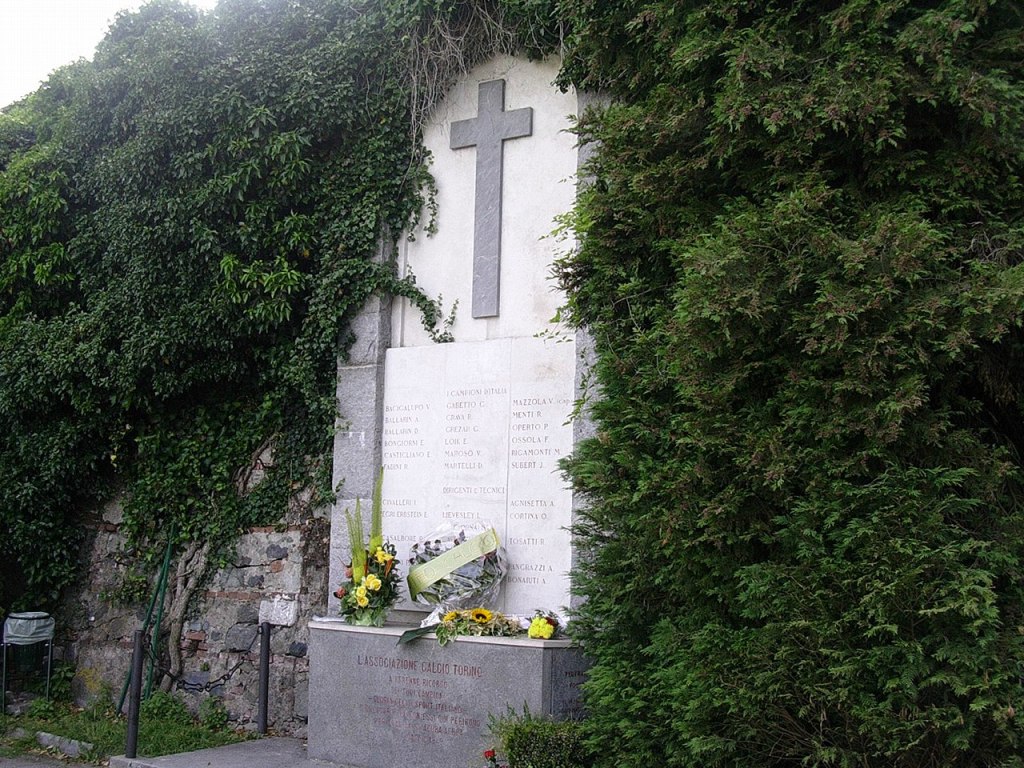
    The memorial to the Grande Torino team at Superga.
    The Memorial at Superga

    Italy Mourns

    The aftermath of the Superga air disaster was a national tragedy, over half a million people filled the streets of Turin for the funeral procession. Men wept openly, newspapers halted regular coverage, radio stations played only classical music. Even fierce rivals paid tribute – Juventus, Inter and Milan all stood united in mourning.

    Torino’s youth team, made up of reserves and Primavera players, completed the final four matches of the season. Out of respect, their opponents also fielded youth squads. Torino won the league and were awarded the title — their fifth consecutive Scudetto.

    A Legacy That Endures

    The loss of Grande Torino deeply affected Italian football. The national team, which had been built almost entirely around Torino’s players, suffered a sharp decline. When Italy travelled to Brazil for the 1950 World Cup, they did so by ship, so traumatised were they by the idea of flying.

    It would take decades for Torino to recover as a club. They would win a Scudetto again in 1976, and sporadically challenge for trophies but Grande Torino was unrepeatable.

    Yet their legacy remains immortal. Each year, on May 4, Torino players, staff, and supporters climb the hill to Superga Basilica. There, overlooking the city they once thrilled, they remember — not just the tragedy, but the glory.

    The plaque reads:
    “Gli eroi sono sempre immortali agli occhi di chi in essi crede.”
    “Heroes are always immortal in the eyes of those who believe in them.”

    Why Grande Torino Still Matters

    Grande Torino were not only the best football team of their era — they represented something greater. In a country emerging from dictatorship and war, they were symbols of unity, modernity, and belief. Their style of play laid the foundation for future generations. Their professionalism, spirit, and sacrifice continue to inspire.

    In the end, they were not defined by how their story ended — but by how brightly they shone while they lived.

  • The best Goalkeepers that Serie A has ever seen?

    The best Goalkeepers that Serie A has ever seen?

    Goalkeeper is probably, arguably the most important position on the pitch. And I know I’m biased in saying that, as it was my position when I still had hair and could get up off the floor after making a save. But in reality, if you don’t have a good goalkeeper you aren’t winning anything. Goalkeepers are often called mad, and you have to be to throw yourself at the feet of someone baring down on goal. For me, the annoying thing was that everyone on the pitch thought they were a keeper, they all had advice for you, despite never playing there themselves.

    Before this turns into a rant though, let’s get back on track. Italy has produced some truly magnificent goalkeepers, and Serie A has played host to some of the greatest of all time from around the World. So, who was the best? I’ve selected a few of my favourites, without ranking who was best out of them. In no particular order, here are my favourites…

    Gianluigi Buffon

    “Buffon is the best goalkeeper I’ve ever seen, the only one who was never afraid of anything.” – Fabio Capello

    Gianluigi Buffon playing in the Champions League for Juventus during his exceptional career
    Gianluigi Buffon has the most clean sheets in Serie A history

    Gianluigi Buffon was just 12 years old when he decided that he didn’t want to play in midfield anymore and became a goalkeeper. Five years later he was making his Parma debut against Milan and keeping a clean sheet.

    During his career Buffon would hold the World Record for most expensive goalkeeper (€52m) until recently, win 10 Serie A titles, 5 Coppa Italia, a World Cup and would be 3 times UEFA Goalkeeper of the Year. Comfortable in the air, with elite reflexes and great positional awareness, Buffon still holds the Serie A record for most clean sheets in Serie A with 296 and was once unbeaten in the goal for 974 consecutive minutes.

    Was there anyone better?

    Dino Zoff

    “If you ask me who was the greatest, I say Zoff. He was not flashy, but you knew the goal was safe with him.” – Gianni Rivera

    Dino Zoff playing for Juventus
    Dino Zoff made over 600 appearances in Serie A

    Staying on the Juve theme with one of the other great Italian goalkeepers. Zoff actually made over 300 appearances for Udinese, Mantova and Napoli before joining and defining Juve. He would win 6 Scudetti and 2 Coppa Italia along with the World Cup (the oldest player to do so), before going into management where he would lead Juventus to the UEFA Cup and Coppa Italia titles in 1990.

    He still holds the record for the longest consecutive run in Azzurri history without conceding, lasting 1,142 minutes in the early seventies. Zoff is the archetype of the classic Italian goalkeeper: composed, understated, and unbelievably reliable. Known for his leadership and calmness, he commanded his defence with supreme authority.

    Walter Zenga

    “Walter was a phenomenon – he could change the mood of a stadium with one save.” – Giuseppe Bergomi

    Walter Zenga had a flamboyant life off the field but was reliable on it
    Zenga conceded just twice in seven matches at Italia 90

    Walter Zenga was nicknamed Spiderman because of his agility and spectacular reflex saves. For three consecutive years, he was IFFHS World Goalkeeper of the Year. He played 328 times in Serie A and was a UEFA Cup winner with Inter and represented the Azzurri 58 times.

    Zenga combined flamboyance with athleticism. He was known for his dramatic saves and passion on the pitch. He was also renowned for his passion off the pitch, fathering 5 children over three marriages including two marriages to TV personalities. He has gone on to have a rather nomadic managerial career while still being a showbiz personality in Italy. Despite the off-field shenanigans, Zenga is remembered as an all time great of the game by Inter, Sampdoria and Azzurri fans alike.

    Angelo Peruzzi

    “He wasn’t just a wall — he was a mountain.” – Marcello Lippi

    Angleo Peruzzi was once banned for testing positive for a banned substance.
    Peruzzi won the Champions League while at Juventus

    In 478 appearances in Serie A, Peruzzi represented some of the biggest teams and most bitter rivals. He played for Roma and Lazio as well as both Juventus and Inter. To pull this off you need to be good, and Peruzzi was VERY good. He was short for a goalkeeper, under 6 foot, but that low centre of gravity gave him great reflexes and shot stopping skills.

    Peruzzi would win 3 Serie A titles, the Champions League, the UEFA Super Cup and the Intercontinental Cup during his career as well as 31 caps for Italy. He would also add a World Cup winners medal in 2006, despite never taking to the field. Peruzzi would retire from football in 2007.

    Sebastiano Rossi

    “He was always part of that Milan machine – ruthless, efficient, unbeatable.” – Arrigo Sacchi

    Sebastiano Rossi in goal for Milan towards the end of his career
    Sebastiano Rossi was part of the “Dream Team” of Milan in the 1990s

    Rossi joined his home town club Cesena at the age of 15 and was their first choice goalkeeper by the age of 22 after several loan spells. After his first season in Italy’s top flight, the giants of AC Milan came calling and after initially battling with Francesco Antonioli for the starting spot, he made it his own and would play over 340 games in Serie A, winning 5 Scudetti, the 1994 Champions League and UEFA Super Cup.

    He held the clean sheet record for 24 years until eventually losing it to Gianluigi Buffon. Rossi wasn’t considered the most stylish goalkeeper but was immensely effective in an all conquering side behind the legendary defence of Baresi, Maldini, Costacurta and Tassotti. Despite all this he was consistently overlooked by the Azzurri and never played for Italy.

    Gianluca Pagliuca

    “Pagliuca wasn’t afraid of anyone. He stared you down like he already knew you’d miss.” – Roberto Mancini

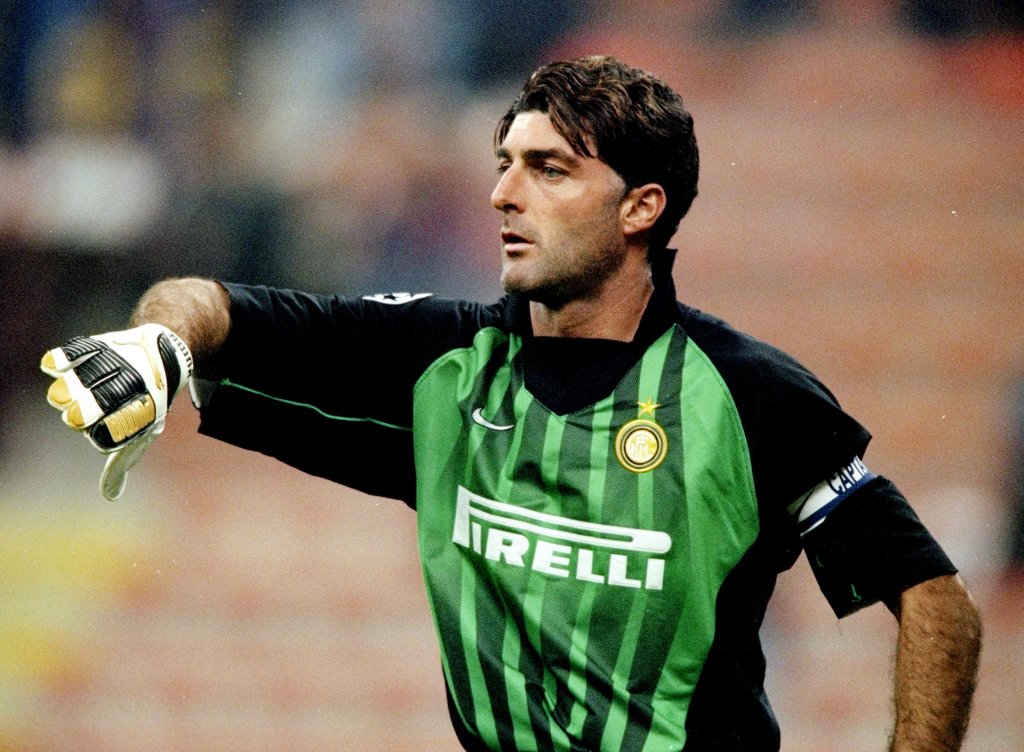
    Gianluca Pagliuca playing for Inter Milan during his time with the club
    Gianluca Pagliuca played nearly 600 times in Serie A

    One of the most consistent and agile Italian keepers of the 1990s, known for his intensity and acrobatics. Pagliuca played for the Sampdoria side that won the 1991 Scudetto and was playing in their narrow Champions League final defeat to Barcelona a year later.

    After seven years and 198 games for Sampdoria, Inter paid a World Record fee for a goalkeeper of just €7m to bring the Italian to their club. Rather remarkably, during his time at Inter he only won the UEFA Cup and nothing else. He was a beaten finalist in the 1994 World Cup as Italy lost on penalties to Brazil. Ironically, he held the record for some years of most penalties saved in Serie A with 24, until that was broken by Samir Handanovic.

    An Azzurri and Serie A legend, Pagliuca moved on from Inter to Bologna where he would spend seven seasons and play a massive 248 games before finishing his career with a season in Ascoli, retiring in 2007.

    Summary

    From the cat-like reflexes of Zenga to the steely composure of Zoff, and the longevity of Buffon to the penalty-saving prowess of Handanović, Serie A has long been a proving ground for the world’s greatest goalkeepers. These legends didn’t just stop shots—they shaped eras, lifted trophies, and became the last line of defence for some of Calcio’s most iconic sides. In a league famed for tactical discipline and defensive mastery, it’s no wonder that so many of the game’s finest stoppers have called Serie A home. As new stars emerge between the posts, their legacy serves as a benchmark—and an inspiration—for generations to come.

    Let me know your favourites on X @EnglishCalcio

  • Fallen Giants: Sampdoria’s Scudetto and Decline

    Fallen Giants: Sampdoria’s Scudetto and Decline

    In the summer of 1991, as the giants of Milan, Turin, and Naples counted their trophies, a club from the Ligurian coast ripped up the script. Sampdoria — a team built not on superstars, but on friendship, vision, and sheer defiance — stunned Italy by winning the Scudetto. Led by the fiery genius of Roberto Mancini, the lethal instincts of Gianluca Vialli, and the quiet charisma of manager Vujadin Boškov, they conquered a league at the height of its golden era. But just as quickly as they rose, Sampdoria began to fall. Within a decade, the dream unraveled — a tale of missed chances, lost leaders, and the harsh reality of modern football. This is the story of how a family-built dynasty captured the heart of Italian football… and how it slipped away.

    Traditionally, Genoa were always the more decorated club until this point, but in 1979 something happened in the city that would flip this on its head. Temporarily.

    Born in Rome just before the Second World War, eventually settling in Genoa in 1955, Paolo Mantovani became a shipping magnate over his lifetime and, although originally a Lazio sympathiser, he became a fan of Sampdoria and would purchase the club he grew to love on July 3rd 1979. Mantovani transformed Sampdoria over his stewardship from a yo-yo club in Serie B into a European and Italian powerhouse – briefly.

    Vujodin Boskov was manager of Sampdoria when they won the Scudetto in 1991
    Vujadin Boskov

    Mantovani planned to operate the club completely differently to our previous article’s subject – Parma. His plan was to build Sampdoria up into an irresistible force. He was quoted as saying, “I don’t buy champions, I build them”. The change in Sampdoria was accelerated by the 1986 appointment of Vujadin Boskov. The Serbian manager would bring tactical discipline and strong man management. The Serb employed a straightforward, compact, disciplined 4-4-2 system – with emphasis on wide play and a lethal strike duo,

    Vialli and Mancini celebrating a goal for Sampdoria
    Roberto Mancini and Gianluca Vialli celebrating together one of many times…

    That duo was already in place at the club when Boskov was appointed, with Roberto Mancini and Gianluca Vialli forming a deadly duo that would last until the summer of 2021 when Vialli was assistant to Mancini as Italy won the European Championships.

    Mancini started his career with Bologna before making the move that would make him. He joined Sampdoria in 1982 and through his time there, he would go on to make over 400 appearances and score 130+ goals. He formed a deadly duo with Vialli when he joined in 1984 from Cremonese. Vialli would stay for 8 seasons and contribute over 80 goals in this period.

    Those numbers might sound low, but for a club of Sampdoria’s stature, it was immense. The duo, nicknamed The Gemelli del Gol (the Goal Twins), did enough to fire Sampdoria to their first (and only) ever Scudetto. During that 1990/91 season, while it was still 2 points for a win and a 34 game season, Samp scored 57 goals on their way to securing the title, conceding only 24 goals on the way. During this season, they captured key wins like 2-0 away to Inter at the San Siro and 1-0 over Milan at home. The title was clinched on 19th May when they crushed Lecce 3-0.

    Sampdoria celebrating winning the Scudetto in 1991
    The players celebrate with the fans after winning the 1991 Scudetto

    Mancini and Vialli weren’t the only ones who were making a name for themselves in this team. A young goalkeeper by the name of Gianluca Pagliuca was impressing, on his way to becoming Italy’s number one. Attilio “Popeye” Lombardi was working away tirelessly on the wing and Pietro Vierchowod was a defensive rock known as Lo Zar.

    It wasn’t just a Scudetto season for Sampdoria though, they would see European success with a 2-0 victory in the European Cup Winners Cup over Anderlecht in Gothenburg – Samp’s first European trophy. They would have an opportunity to add another to the collection next season.

    During the 1991-92 season, Sampdoria would be the sole Italian representative in the European Cup – now the Champions League. Back in this era, only the champions of each nation made it into the cup. Sampdoria would open up with a two legged tie against Norwegian champions Rosenborg. They would be despatched easily with a 5-0 and 2-1 victory, making it 7-1 over the two legs.

    Round 2 proved slightly trickier for the Italian champions, scraping through against Kispest Honved of Hungary. Trailing 2-1 from the first leg, they inspired themselves in the return leg into a 3-1 victory, narrowly getting into the Group Stage after a 4-3 aggregate win thanks to two goals from Vialli.

    With the competition splitting into two groups of 4 for Round 3, effectively an 8 team Semi Final with the top team in each group making the final, Sampdoria were drawn with Red Star Belgrade, Anderlecht and Panathinaikos. Sampdoria progressed with relative ease, losing only once to Red Star, while winning 3 and drawing 2 matches. They topped the group 2 points ahead of Red Star and the only team in that group with a positive goal difference.

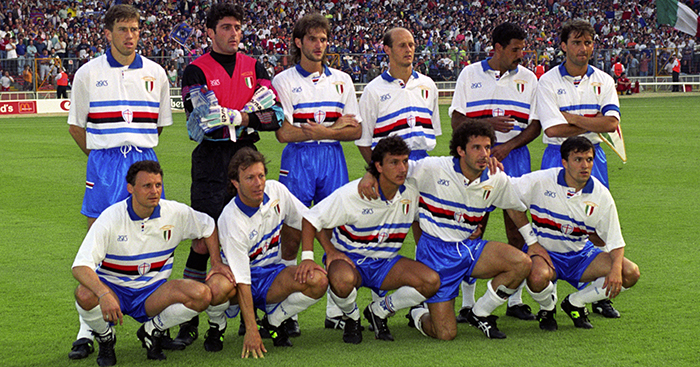
    Sampdoria line up before the 1992 European Cup final at Wembley against Barcelona.
    Sampdoria line up for the European Cup Final against Barcelona at Wembley

    It remains their only European Cup Final appearance to date. The other half of the draw was somewhat trickier, with Dinamo Kiev, Benfica, Sparta Prague and Barcelona competing to face Sampdoria in the final. It probably comes as no surprise that Barcelona would progress from this group and face off against Samp in the final at Wembley Stadium in London.

    The final at Wembley Stadium was the last to be held before the European Cup format was abolished and rebranded as the Champions League. Neither team had won the European Cup before so whoever would take away the trophy would become the 19th overall winner of the tournament.

    A Sampdoria team featuring Pagliuca, Mancini, Vialli, Bonetti, Lombardo and Vierchowod would face a Barcelona team stacked with names such as Zubizaretta, Koeman, Ferrer, Guardiola, Laudrup and Stoitchkov. The expectation was that Johan Cruyff’s superstars would crush Sampdoria and their constant overpunching. Things in football rarely turn out as expected though and at the end of 90 minutes, the scores were locked at 0-0.

    It would take something special to win this game, and unfortunately for Sampdoria it was provided by Ronald Koeman. In the 112th minute, he stepped up to lash in a spectacular and memorable free kick to break Italian hearts. Sampdoria and Mantovani had come so close to fulfilling the impossible dream, they’d got to the final hurdle and stumbled. A lot of eggs were put in this European basket and a 6th place Serie A finish meant the decline had started.
    Boskov had declared the European Cup final would be his last hurrah and he’d be moving on. He would briefly return to Sampdoria a few years later, but the magic had gone. Vialli was sold to Juventus that summer for a then World Record €12.5m and the team was weakening. Mancini would remain more loyal and stay until 1997 before moving on to Lazio.
    On 14th October 1993, Paolo Mantovani passed away at the age of 63 with lung cancer. Sampdoria mourned. His second child Enrico Mantovani would step into the role of President and vowed to continue his fathers legacy. However, during these years, fortunes at the club began to slip away. It’s hard to compete with the big superpower clubs just once, but to sustain it with a “family atmosphere” and hard work is damned near impossible. Enrico did recognise this and would add Jurgen Klinsmann, Giusseppe Signori and Vincenzo Montella to the ranks. They would win the Coppa Italia – their 4th – in 1994 while finishing third in the league under the enigmatic Sven Goran Eriksson.

    However, gradually, the core of the team was sold, Pagliuca went, as did Lombardo and Vierchowod and by 1997 Eriksson had gone to Lazio and taken Mancini with him. The club was gradually losing its identity, the management door was a revolving one and eventually, following a 2-2 draw at Bologna in 1999, Sampdoria were relegated to Serie B for the first time in 17 seasons. After the death of Paolo Mantovani the club appeared to gradually lose its direction, it became harder to compete with the other Northern powerhouse clubs like Juventus, Inter and Milan.

    Sampdoria were briefly relegated to Serie C this season
    Sampdoria were briefly relegated earlier this year

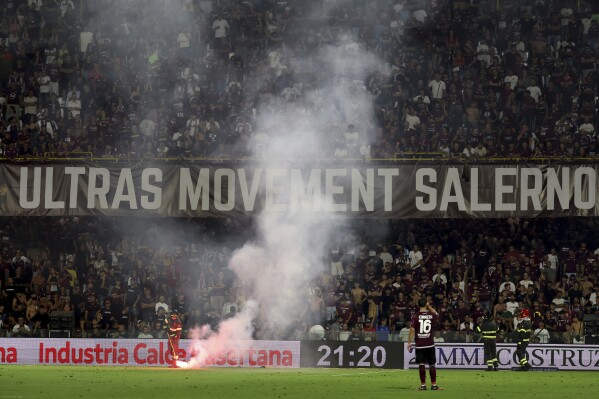
    Since then, Sampdoria have spent some time bouncing around between A and B, they did briefly return to Europe in 2010 but this soon collapsed after the sales of Cassano and Pazzini. The club has continued on its downward curve and this season were finally relegated to Serie C, before being given a slight reprieve. Thanks to the difficulties of Brescia, and their subsequent points deduction Samp got a second chance at survival with a relegation play off against Salernitana. They would win the tie, sort of, with the second leg being abandoned with them 4-0 up on aggregate thanks to protesting Salernitana fans. Hopefully this is used as a chance for Sampdoria to kick on and return to their former glory.

    Salernitana Ultras cause the abandonment of the play off against Sampdoria
    Before getting a reprieve from Salernitana and Brescia

    Wherever they are now, it’s hard to argue that Sampdoria’s Scudetto is one of the more romantic ones in Serie A. A true underdog story and a romantic notion that a team could be built rather than bought. Mancini and Vialli’s friendship is legendary in the sport and the Samp way was to mix grit and determination with style and flair, unique for a non-giant. Sampdoria’s fall serves as a cautionary tale of poor succession planning and the dangers of losing the visionaries within the club. But I like to think of their legacy as per Vialli’s words when talking about Sampdoria, “Winning with friends is worth more than winning alone”. And isn’t that what football’s about?

  • Parma Calcio: The Rise, The Glory, The Fall and The Phoenix

    Parma Calcio: The Rise, The Glory, The Fall and The Phoenix

    Cast your mind back to the 1990s (if you’re of age) and you’ll remember when Serie A was on top of the World. Calcio was King and the best players in the World were plying their trade in Italy. One team embodied it all, and it wasn’t one of the Northern Powerhouses. No, it was a provincial team from Emilia Romagna that caught fire, then burned out spectacularly.

    The sugar daddies of 90s Calcio have all but gone, only the Agnelli family remains at Juventus, but the big clubs were able to ride it out. Milan and Inter face challenges, but they had enough behind them to survive the end of the deep pocket era. For the provincial clubs, however, times have been a bit harder and when Parma went pop, the explosion was spectacular.

    They achieved their first ever promotion to Serie A in 1990 backed by the massive Parmalat dairy industry giant. Calisto Tanzi was the owner of both and he pumped money into the club to get it moving. Under the stewardship of Nevio Scala they won promotion to Serie A and immediately set about upsetting the apple cart.

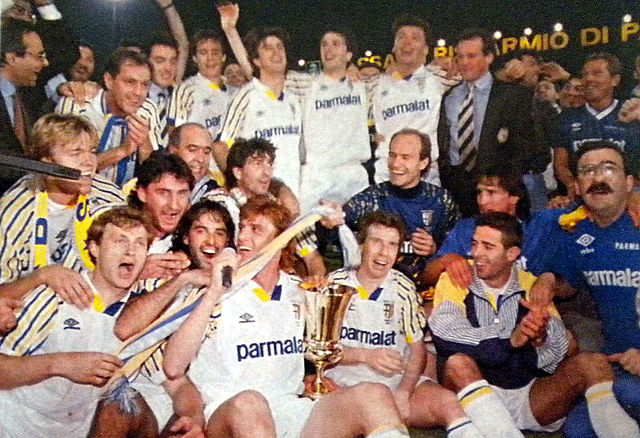
    Parma win the 1992 Coppa Italia
    Parma winning the 1992 Coppa Italia

    In that first season 1990-91, they signalled their intent with a stunning 2-0 victory over Juventus on their way to finishing 6th and qualifying for the UEFA Cup. Their first silverware followed a year later when they defeated Juventus 2-1 in the Coppa Italia final over two legs, securing their first ever major trophy while finishing 7th.

    Another trophy was collected in 1992 when they defeated Royal Antwerp 3-1 in the UEFA Cup Winners Cup final. Parma added the first of their superstars to their ranks by bringing in the great Faustino Asprilla from Atletico Nacional and finishing 3rd. Lorenzo Minotti summed up the feeling at the club around this time when he said, “We never felt like a small club – Scala gave us belief”.

    In the UEFA Super Cup that summer, they took on the Italian giants of Milan and beat them 2-1 on aggregate, before adding Gianfranco Zola to their ranks. They went on to another European final, the Cup Winners Cup again, losing to Arsenal 1-0 in a tight game.

    They finally bagged the big prize in 1995, winning the UEFA Cup by defeating Juventus in the final AGAIN… Dino Baggio scored in both legs as Parma won 2-1 on aggregate, securing their highest honour yet. This was the peak of Scala’s era, with the likes of Zola, Asprilla, Baggio and Benarrivo firing Parma to the big prize and a 3rd place finish in Serie A.

    The next season saw something of a transition season, as they finished trophyless and in 6th place, Scala would stand down at the end of the season and a certain Carlo Ancelotti would get his big chance to lead a Serie A team, being appointed from Regianna.

    Gianluigi Buffon made his Parma debut in 1995 and would go on to play for Italy and Juventus
    Gianluigi Buffon making his debut for Parma

    He immediately set about proving himself, by giving a young 17 year old goalkeeper his start in the game. I’m not sure whatever came of Gianluigi Buffon, but a quick Google confirms that Ancelotti made the right call. He also brought in a little known Argentinian striker for €4m from River Plate, Hernan Crespo would go on to be a huge success.

    Hernan Crespo was a €4m signing from River Plate and became a Calcio legend, scoring hundreds of goals for Parma, Milan, Inter and Lazio
    Hernan Crespo scored a few goals for Parma in his time…

    Parma finished second in Serie A that first season, just two points behind Juventus. Ancelotti was unable to repeat the feat next season and left after a 6th place finish and a UEFA Cup semi final defeat. His move to Juventus came that next summer and yet again, the Parma story involved a twist with Juventus.

    Alberto Malesani was the man chosen to replace him and he oversaw perhaps the greatest triumph and squad that Parma ever had. Parma finished 4th in Seria A in 1998-99 and won the Coppa Italia, Supercoppa Italia and the UEFA Cup again, with a 3-0 win over Marseille. The team contained household names such as Gianluigi Buffon, Lilian Thuram, Fabio Cannavaro, Hernan Crespo, Enrico Chiesa and Juan Veron. It’s no wonder then that Cannavaro was quoted as saying, “That team could beat anyone on their day – we weren’t afraid of anyone”.

    There’s no wonder when it looks like a Fantasy XI from early 00s Serie A!

    Parma in the 1999 UEFA Cup Final
    A ridiculous line up for any team

    The fall began soon after this. There was no league consistency, and despite another Coppa Italia triumph in 2001, Parma began to tail off. Crespo was sold to Lazio for around €56m, Buffon went to Juventus for a healthy €52m and Cannavaro moved to Inter. The exodus was swift and the reason soon became clear.

    We’ll drift now from football to business, because in 2003 the Parmalat scandal broke. Europe’s Enron hit.

    Calisto Tanzi had built Parmalat into a global dairy empire and used the money to buy Parma. To keep growing, Parmalat falsified accounts – inflating assets and hiding debts using offshore companies. By December 2003 a massive €14bn black hole had appeared and Europe’s biggest fraud case was confirmed.

    Parmalat’s collapse triggered lawsuits and wiped out thousands of investors worldwide. Parmalat was the main source of income for Parma, they owned them and sponsored them. Overnight, funds dried up, transfers and wages were halted. Unlike the big northern clubs, there was no fallback money for Parma. Tanzi would be convicted and sentenced in 2008, but the damage for Parma was done.

    In the words of Alberto Malesani, “Everything we had built vanished overnight”. The club would survive for around 10 years after this point, using loan signings and selling any promising talent and ownership would ping pong between small investors. Alessandro Lucarelli could have left at any point but didn’t, “I stayed because I’m a man of my word – Parma needed loyalty”.

    Eventually, in 2015, Parma were declared bankrupt with debts of over €200m. The club was wound up and relegated to Serie D. Surely this was the end?

    Not with Lucarelli around.

    The club was reformed as Parma Calcio 1913 and the phoenix rose from the flames. Three consecutive promotions followed and by 2018/19, they were back at the top table with the big boys. It hasn’t been all plain sailing since then, they were relegated again in 2021 and struggled with money.

    Kyle Krause took over at this point and stabilised the finances before a further promotion back to Serie A. Last season saw Parma struggle for a lot of the season before being saved after Christian Chivu took over. He’s gone now, but Parma have seen players and managers come and go before. They won’t be phased, in fact they’ll be buoyed by their spirit shown at the end of last season.

    Stadio Tardini is back in Serie A again
    Parma are back in Serie A, are they here to stay?

    It wasn’t just Parma have struggled since the gilded age of Italian football came to an end. The influx of money into England from TV deals saw the balance of power swing from Italy to England in the early 00s. The best players decided to head to England instead of Italy, pragmatism was needed and the sugar daddies that once bankrolled the greatest league in the world moved on.

    Stadium infrastructure in Italy lagged behind England, Germany and Spain too. Municipalities owned most of the stadiums and couldn’t afford to improve the facilities as the 90s drew to a close. Matchday revenues fell with the TV money. Scandals like Calciopoli followed and exposed systemic failures in Italian football governance.

    Parma’s fall mirrored the fall of Serie A’s dominance in a way. Clubs can’t match the spending of England and Spain, Juventus modernised as a club, no one else has really followed suit.

    Whatever happens in the future, Italy seems to have settled back into a rhythm. Clubs regularly make the latter stages of European competition again. Juventus and Inter both recently made 2 Champions League finals each, Atalanta won the Europa League, Inter lost a Europa League and Fiorentina played in two Conference League finals with Roma also winning one.

    Parma are back at the top table, the glory days are gone, but talk to anyone from Parma and there’ll be a glint in their eye as they talk about Crespo and Chiesa scoring in the UEFA Cup final against Marseille…

  • Legends of Calcio: Paolo Maldini

    A name that transcends rivalries. Universally admired by teammates, rivals, coaches and pundits. The embodiment of Italian defensive mastery. The art of defending, personified. One Club Man. Elegance, Intelligence, Loyalty. Is there a bigger legend of Calcio than Paolo Maldini?

    Born in 1968 in Milan, Maldini quickly rose through the ranks at AC Milan and would make his debut at the age of just 16 in 1985. By the time he retired in 2009 he had made over 900 appearances in all competitions for Milan, appeared in 7 major tournaments for Italy, won 7 Serie A titles and 5 Champions Leagues.

    The man who would be cited as inspiration by John Terry, Gerard Pique and Virgil Van Dijk. His career took him all around the World, collecting trophies. But he never left Milan and he never won a thing with Italy.

    A young Maldini making his debut.

    Hi father, Cesare Maldini was on the coaching staff in 1985 when he made his debut, and his son Daniel would begin his career at Milan with his Dad as Technical Director. He’s since moved on, as has Paolo, and Milan feels a bit emptier for it.

    Maldini would win his first Serie A title in 1988 as part of the irresistible pressing side of Arrigo Sacchi. He formed part of an indomitable back line with Baresi, Tassotti and Costacurta. His first European triumph wasn’t far behind when Milan dismantled Steaua Bucharest 4-0 in the final in 1989.

    Milan would win back to back European Cups, defeating Benfica 1-0 in the final in 1990 with a defensive masterclass from their famous quartet.

    The best was yet to come in Europe, however, and in 1994 Milan defeated the great Cruyff Barcelona 4-0 in the final, with Maldini putting on a clinic as a fill in centre back. Europe provided plenty of low moments too, though, with arguably the worst coming in 2005.

    Paolo scored the fasted ever final goal (at that point) when he put Milan 1-0 up against Liverpool in Istanbul. By half time it was 3-0 and their name was on the cup. Fate had other ideas, however, and Liverpool roared back in the second half, eventually winning on penalties after extra time.

    Despite the defeat, Maldini was praised for his leadership and sportsmanship that night in Istanbul. It would be avenged two years later though, when a 38 year old Maldini captained his side through a knee injury to a 2-1 victory over the same opponents.

    A much happier Paolo Maldini

    England provided another sweet Champions League moment for Maldini too, when he lifted his first one as captain in 2003. Not only did Milan defeat the old enemy Juventus, but they did so in Old Trafford, Manchester – birthplace of his father Cesare.

    Back home in Italy, Maldini collected trophies like they were prizes in a cereal box. By the time of the Juventus final in 2003, he had already won 6 of the 7 titles he would win. Milan also won a Coppa Italia title with him, as well as 5 Supercoppas.

    But it was internationally that Maldini was hardest done by. Making his debut against Yugoslavia in 1988, at just 19, he would play 126 games for the Azzurri across 7 tournaments but only collect runners up medals.

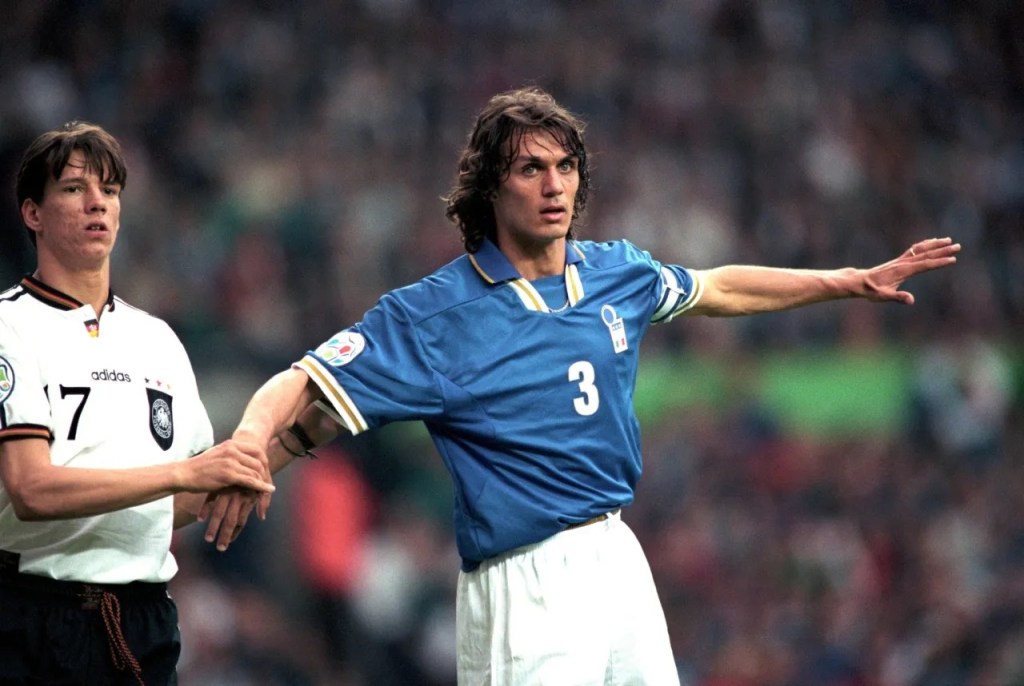
    Paolo Maldini in action at Euro 96

    The first of these came in the 1994 World Cup, when he was ever present in Italy’s run to the final. He captained the side for the first time too, after Franco Baresi was injured. However, three missed penalties in the final meant that Italy wouldn’t win the tournament and his medal would be silver.

    He would remain captain of Italy after the tournament and would miss the chance to lift a major honour again when in Euro 2000 in Holland and Belgium, Italy lost the final to France 2-1 after extra time.

    The absolute scandalous refereeing performance at the 2002 World Cup that saw Italy eliminated to South Korea in their home tournament eventually proved too much for Maldini and he announced his retirement from the international game to focus on Milan.

    It was a good decision, Maldini played a further 7 years for Milan, eventually hanging up his boots after 902 matches and 33 goals in all competitions. He even received his first ever Red Card in that final season.

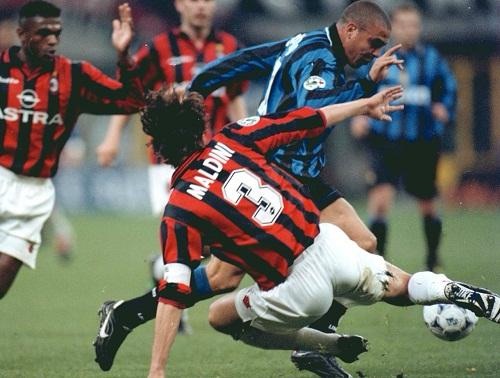
    The best were terrified of taking on Maldini

    Maldini was quoted as saying that, “If I have to make a tackle then I have already made a mistake”. He embodied the ideals of the perfect Italian defender with the way he read the game. His coolness under pressure, composure on the ball and a fabulous range of passing. He was uncompromising, tough, but fair and sporting.

    These were all traits he would take into his next role, as Technical Director of Milan. He had the role from 2018 until leaving in 2023 under something of a cloud after tensions with the club’s owners RedBird Capital. His exit has been viewed by some Milan fans as the moment when the team started to lose its identity.

    Maldini was widely regarded as one of the World’s greatest defenders of all time – known for his elegance, positional intelligence and loyalty. Inspiring a wealth of modern defenders, Thiago Silva (once of Milan) summed it up nicely with, “I dreamed of being a defender like Maldini”.

    And the truth is, there’s no one quite like Maldini…

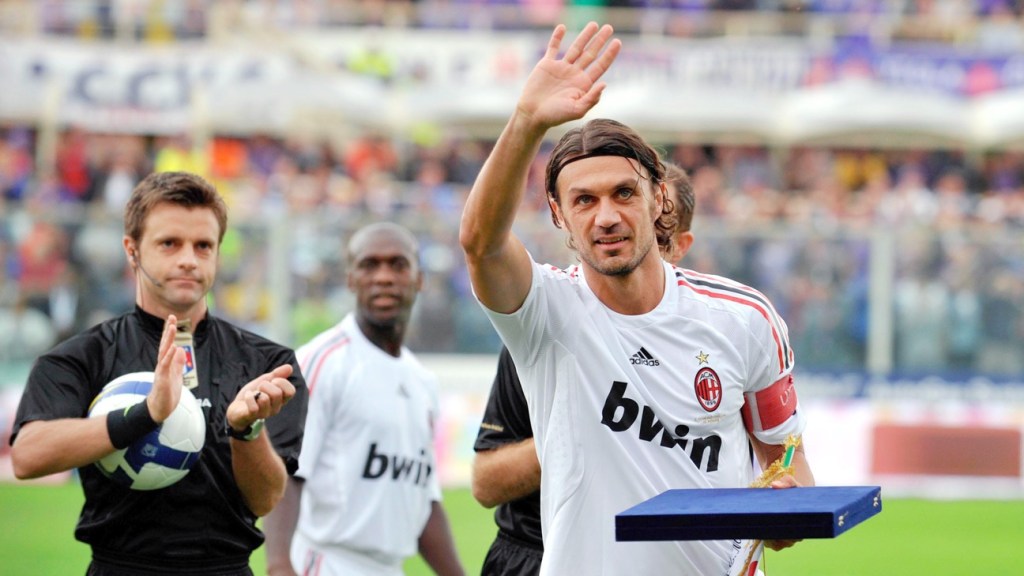
    Maldini bids farewell

  • Great Rivalries Explained: Derby D’Italia

    Great Rivalries Explained: Derby D’Italia

    There are only a few countries in the World that can rival the Italian passion for the beautiful game, and fewer that can match the passion that comes from her derbies. So when the two most successful teams in Italy come head to head for bragging rights, shit goes down…

    Juventus and Inter Milan isn’t a city rivalry like the Derby della Madonina, or the Derby della Capitale. The Derby D’Italia, as the name suggests, is a battle for Italy. Not a city. So what led to this being a game that would have Gianluigi Buffon say, “There are matches you play with pride, and then there’s Inter — you play those with your blood.”

    Both sides hold contrasting identities. Juventus, based in Turin, owned by the powerful Agnelli family (think Fiat) and linked traditionally with the business elites. And while Inter and their hedge fund manager owners are more lately considered business elites – historically the Milanese team was considered more cosmopolitan than business like.

    Inter’s foundation in 1907 after a split from AC Milan over the issue of foreign players led to Inter being considered a team of artists, poets and generally anti-establishment. This, therefore is a battle of contrasting styles, different cities and a battle for supremacy on the pitch – and off it.

    Some of the best players in the World have played in the Derby D'Italia through the years, including Alessandro Del Piero and Ronaldo.
    The best players in the World have played the Derby D’Italia

    Think Liverpool v Manchester United.

    And when you add up the trophy count, it’s easy to see why this rivalry was allowed to blossom. Constantly competing at the top for honours, Juventus have 36 titles (officially, but we’ll come back to that). Inter hold 20, but have the upper hand with 3 European Cups (Champions League) to Juve’s 2. Overall, the two teams hold 113 crowns, with Juve edging Inter 67-46.

    Titles ignited this rivalry into pure hatred during the 2006 season when Calciopoli exploded. Juventus (more specifically Luciano Moggi) were accused of manipulating referee appointments to favour certain clubs during the 2005 and 2006 seasons. Juventus would be relegated to Serie B and stripped of the 2006 title which was then handed to Inter who originally finished as runners up.

    It was Inter’s first title since 1989 and often referred to by Juventus fans as the cardboard title (scudetto di cartone) but as Marco Materazzi put it, “We took what they stole from us”. Inter were implicated in Calciopoli but never charged with anything which led to calls of hypocrisy from Juventus fans. There were calls of a witch hunt against Juventus, however, Inter fans point to one game in 1998 which they feel proves their point.

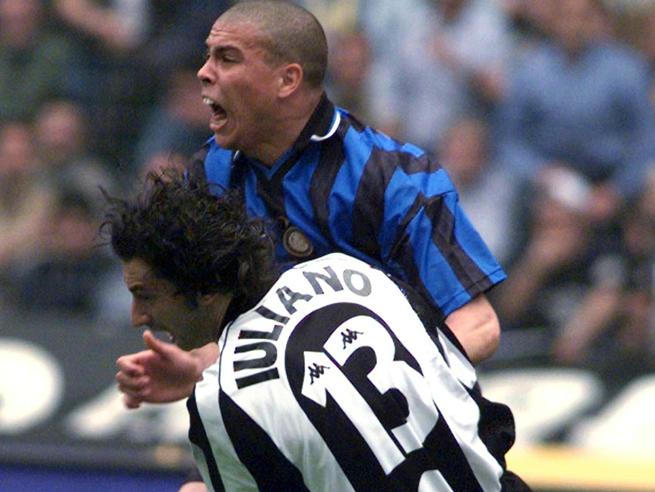
    With four games remaining in the season, Inter travelled to the Stadio delle Alpi for a showdown with league leaders Juventus, who sat one point ahead of them. Inter, without a scudetto in nearly a decade were loaded with stars including Ronaldo, Djorkaeff, Simeone and Zanetti. Juventus included in their squad Del Piero, Zidane, Davids and Deschamps. None of these players would be the star of the day, step forward referee Piero Ceccarini.

    Juventus took the lead in the first half with a really well taken goal by Del Piero (what else did you expect), before Inter piled on the pressure, with Ronaldo going close on several occasions. The game then settled into a rather scrappy second half, before the flashpoint.

    The controversial moment between Mark Iuliano and Ronaldo
    Iuliano was judged to have not fouled Ronaldo

    It all happened in 15 seconds really. Ronaldo entered the Juventus box and was blocked off from taking on a shot by Mark Iuliano. The Inter players looked round at the referee, expecting a whistle that never came. Cue pandemonium. Inter players reacted as you might expect, chasing the referee and waving their arms, while Davids brought the ball away and up the pitch. He passed to Zidane who beat two defenders and rolled the ball into Alessandro Del Piero. Taribo West came in from behind and pushed him in the back, Del Piero went down and Ceccarini blew for a spot kick.

    Few debate that West had fouled Del Piero, but Inter were incensed, seeing no difference between the foul on him and the challenge on Ronaldo less than a minute earlier. Inter lost their heads, surrounding the referee, shoving him, the Inter manager Simonini was sent off.

    The controversy didn’t stop there though, Del Piero actually missed the penalty. Inter, buoyed, went on the attack and had a goal ruled out for a Zamorano foul on the keeper. Juve celebrated, Inter fumed.

    The 1998 Derby D'Italia is among the most controversial in the history of this game. With Inter feeling they should've been awarded a penalty for a foul on Ronaldo
    Inter lose their heads.

    Pagliuca ended up in a scrap with Juventus fans and three days later in the Italian Parliament, Domenico Gramazio of the far-right National Alliance party had to be held back as he tried to confront footballer-turned-politician Massimo Mauro, who had won the title with Juventus in the 1980s before joining the Democratic Party.

    Inter fans refer to the game as the mother of Calciopoli and the season became known as the great robbery. The damage was done though, the Derby D’Italia which was once a great sporting spectacle was now an all out war. And it wouldn’t get any prettier.

    There’s much debate in Italy about the role of Ultras and that isn’t going away, but one thing you can usually guarantee is that they’ll light up an atmosphere, especially in a derby. It isn’t always in a positive way, however, and there have been numerous examples of this Derby boiling over off the pitch.

    One of the more famous examples comes from 2018 when Inter’s Curva Nord caused national outrage with a banner mocking the Heysel disaster from 1985. I won’t put here what the banner said, it’s reprehensible, you can Google it yourself if you want. Needless to say, it didn’t go down well and retribution was swift.

    Historically in Italy, especially around derbies, Ultras groups agree to pacts of non-aggression. Instead, hoping to protect the streets of their city from becoming a warzone and ensuring no innocent fans are swept up in the trouble. There is no such pact between the Juventus and Inter ultras. In fact, quite the opposite, they maintain a “guerra aperta” or “open warfare”.

    Perhaps Zlatan Ibrahimovic captured this the best, when he signed for Inter from Juventus in 2006, “When I signed for Inter, I knew I wasn’t just changing clubs — I was switching sides in a war.”

    Hopefully, I’ve managed to tread the area around some of the Derby’s thornier issues without upsetting too many people and if you’re still here we can debate some of the greatest matches.

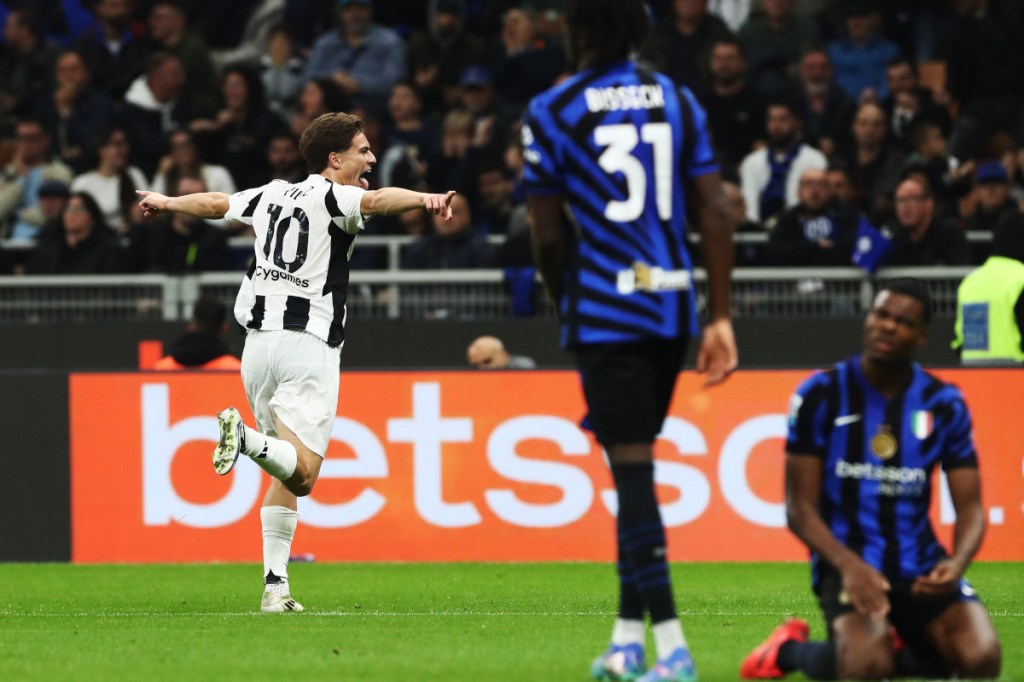
    Kenan Yildiz equalises for Juventus against Inter Milan in 2024
    Yildiz rescues Juventus in 2024

    I actually went to one last year, I was at the San Siro as Inter blew a 4-2 lead to draw the game 4-4 thanks to an inspired Kenan Yildiz who took it upon himself to rescue his side. In 2022, however, Inter did win a match 4-2, with goals in extra time from Ivan Perisic, one penalty and one absolute thunderbolt securing the Coppa Italia crown for Inter.

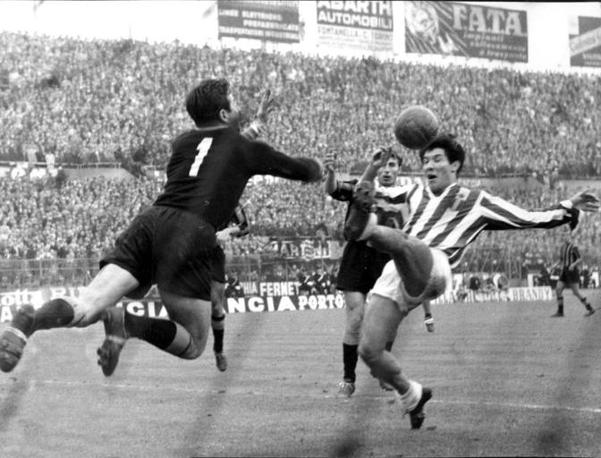
    In 1961, the biggest win in this fixture happened. In what was supposed to a title deciding fixture, crowds flocked to the Stadio Comunale in Turin to see the Bianconeri (hopefully) crowned champions. The game was clearly oversubscribed, with Juventus fans sat on the Inter bench and covering the running track, inches from the pitch.

    After 30 minutes, the referee called time on the game, the conditions were ridiculous. According the rules, Juventus (responsible for crowd control) should have forfeit the game 0-2 as the responsible party for the abandonment. Juventus appealed the decision to the CAF (Football Arbitration Court) which happened to have as its president… the Juventus president.

    Juventus beat Inter 9-1 in 1961 to break the record for highest score in this fixture.
    The 1961 clash between Juventus and Inter

    The 0-2 defeat was therefore subsequently overturned, and a replay ordered. A furious Inter Milan were deducted their (then) 2 points for the “win” and told to replay the game. This dropped them back below Juventus. Inter were furious and protested the decision, sending a youth team instead of their first team, subsequently losing 9-1. Juventus won that title and a pure hatred was born.

    The Derby D’Italia is Italy’s El Clasico. It’s the two most successful teams fighting it out for supremacy. It’s bragging rights until the next time. Since Calciopoli, the bitterness and hatred between the two sides has intensified and despite the league position, the games are always intense. Inter hate Juventus. And Juventus hate Inter more. As Claudio Marchisio put it, “We’re not just playing Inter — we’re defending who we are.”

    The fixture shows off the best and the worst of Italian football, and if you get the opportunity to go, you should. You just might enjoy yourself.

  • Serie A and Gaming: Adriano’s left foot and Piemonte Calcio

    Serie A is rightly embedded in football folklore and the Italian passion for the game doesn’t stop at the real life game. It extends to the virtual World too. Some of the great stories from old football video games stems back to Italian teams.

    And where else to start than with Adriano’s left foot in the incredible old versions of Pro Evolution Soccer (PES). On the PES5 and PES6 games this was one absolute beast. You could literally shoot from anywhere and it was a guaranteed goal, the Inter Milan and Brazil front man was repping 99 Shot Power for two editions.

    Some of those goals seem impossibly realistic but Adriano really did have this skill and power for a brief moment in his career. Unfortunately for the man Inter fans called “The Emperor” it never really worked out long term for him, but that’s not a story for today. The great man was such a cheat code that people would just refuse to play against Inter.

    I remember specifically in my evenings playing PES with friends that Inter wasn’t allowed. Just because of Adriano. However, as our Serie A gaming connection goes on, you’ll see that an overpowered Adriano wasn’t the only reason Serie A had a lasting impression on gaming.

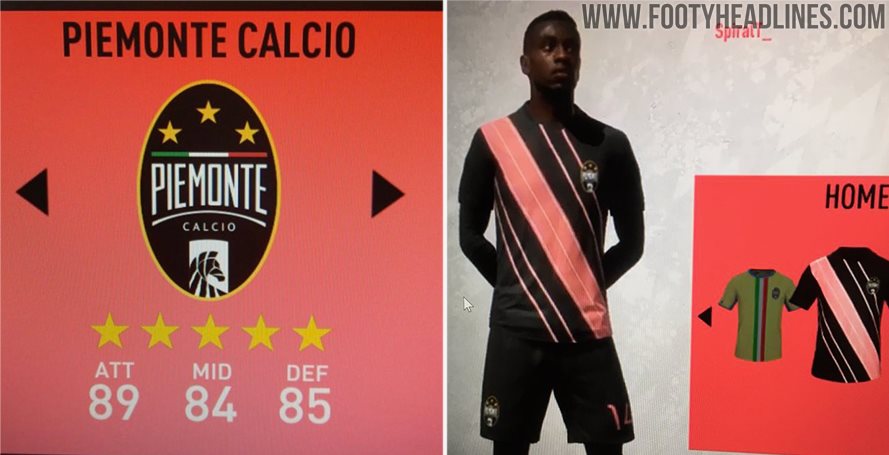
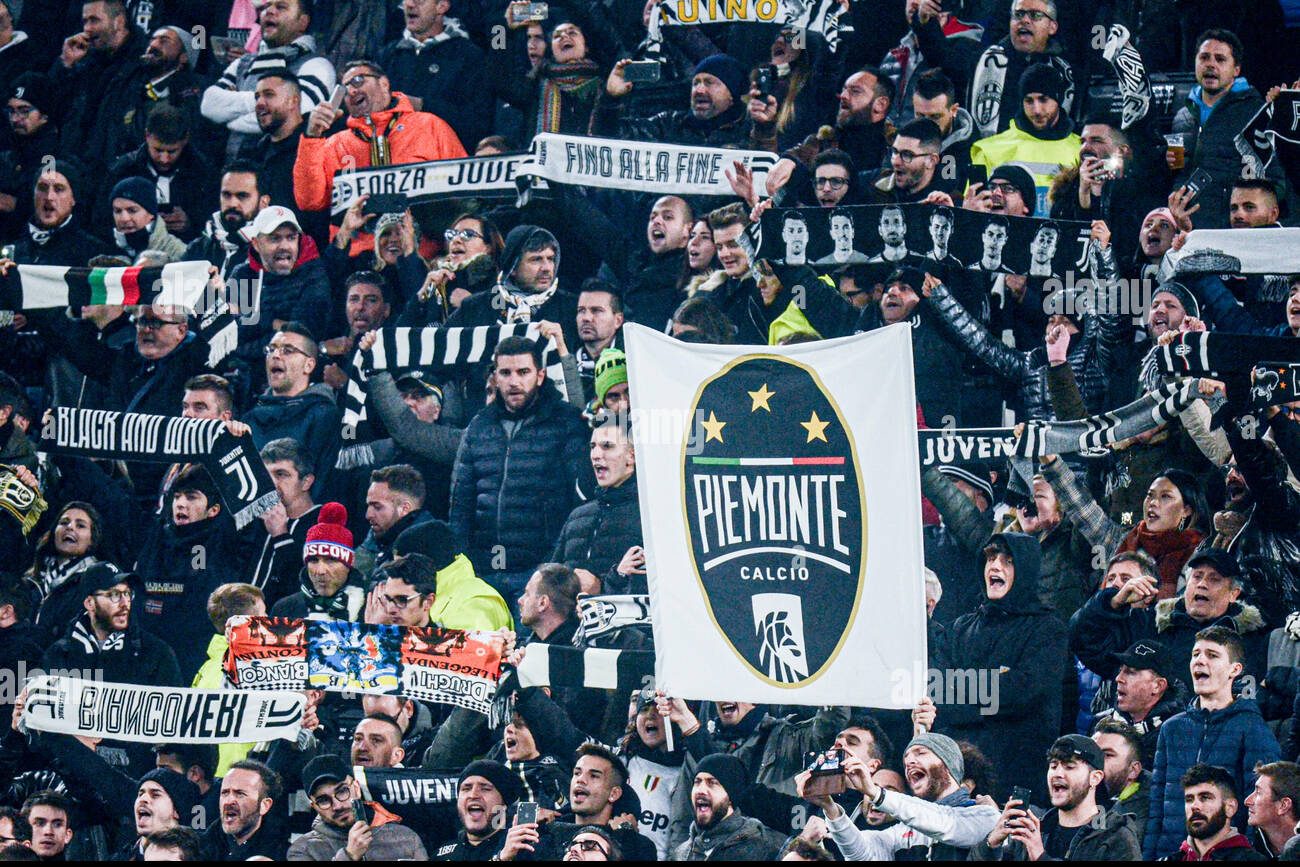
    In 2020, Juventus signed a big massive deal with Konami to be exclusively represented on PES and not on FIFA (now EA FC). After the 2019 game, Juventus was no more on FIFA. Instead, there was a bizarre Serie A team called Piemonte Calcio. The kits looked strangely like the Juve kit, and they had the same players, and the badge was similar, but it wasn’t Juventus.

    Piemonte Calcio in FIFA 20 pretending to be Juventus

    Unfortunately, to get really deep, this just showed how the business and commercial aspect of football was now creeping into the gaming world. Something that was supposed to be fun was now a victim of the men in suits wearing man bags. By 2023 they were back, but we’d lost the Milan based teams!

    Yes, that’s right, in their place was Milano Calcio and Milano FC. The badges made it clear that Calcio was Inter and FC were in fact, AC. Clear? Wait until you see the kit.

    The fake Milan and Inter kits on EA FC 25

    See the difference? I know it’s hard because they’re such good fakes… But if you look closely, you can see that they’ve completely and utterly bodged it. What on Earth is this supposed to be??? I mean, I’m not an idiot, I understand the concept of commercial licenses – it’s just a bit sad it’s crept into the supposed fun hobby of gaming.

    One way that fake and copied stuff was kept fun in gaming was in PES and the inventive names. Milan being called Rossoneri was less a kick in the teeth than Piemonte Calcio somehow. Although PES did refer to Juve as PM Black and White in one edition. What?

    My favourite will always be the Brazilian marauding full back that represented Milan and Roma. Remember him? Facu? There was also great fun with Tachicardi (Tacchinardi), Naldarinho (Ronaldinho) and heroic defending with Cannarobo (really need help with that one?).

    PES3 with Italy

    However, the likes of Lucatone started to disappear to be replaced with the real names from PES2010 onwards and the days of editing all the team names before playing were over. Palermo will always be SI Black Pink to me though…

    Adriano wasn’t the only overpowered Serie A gem in history though. Old FIFA gamers might remember the sheer ridiculousness of Gervinho’s pace while playing at Roma during FIFAs 13-15, or after 15 when Pogba had an obscene long shot, strength and 5* skills. Try tackling him on FIFA 16, bet you can’t.

    Even as recently as 2023, Victor Osimhen was the player Napoli would love him to be now. Insane skill and pace combo that meant he was damned near impossible to get the ball from. And don’t even get me started on Totti or Dida on old versions of PES.

    Gaming funnies like these often step over into real life, such is the bond with fans and their clubs that their virtual namesakes also take over our lives. Case in point was when Juventus fans were spotted at matches waving Piemonte Calcio flags. And if I ever have the pleasure of meeting Adriano one day, I’ll be sure to open with a PES related anecdote, not one of his actual career. Perhaps it’s best I never meet him.

    Juventus fans wave Piemonte Calcio flags at their matches

    I guess the beauty in this article is the acknowledgment that the gaming world has for the general chaos that is everyday Calcio. It’s been embraced by our favourite football games, whether you’re launching 40 yard screamers with Adriano or spending hours editing the clubs names and player names before actually playing a game.

    What are your favourite Serie A anecdotes from the world of gaming? Let me know in the comments below, or on X @EnglishCalcio.

  • The best ever kits from Serie A!!!

    New kits are being “dropped” every day at the moment by the sides who’ll make up Serie A this season. There’s the new home kit, the away kit, the third kit, the special celebration third kit, the European away kit and the goalkeeper kit and at over €100 a time, it’s clear why teams do this.

    And yet, what is wrong with them all? There’s very few I look at and think, “My word, take my money please”. As an Interista I’m very disappointed by this seasons crayon drawing away kit and the bizarre home stripes. Annoyingly, Milan’s away kit is a thing of beauty too.

    But there was a time when Serie A kits were true works of art that were reminiscent of the renaissance artists of yesteryear. There’s a reason you’re more likely to see a classic retro effort in the Curva than the latest “effort”.

    So what’s the best Italian kit of all time? I’ve made my choices, they’re below. Let me know what you think…

    Inter Milan – 1989/90

    I was always starting with Inter wasn’t I? This effort from the late 80s is a true masterpiece and puts the last few efforts to real shame. Inter finished third this season, but consistently win best kit compilations with this effort. Clean, simple and worn by the famous German trio of Brehme, Klinsmann and Matthaus it’s a lovely way to start…

    Inter Milan players Lothar Matthaus, Andreas Brehme and Jurgen Klinsmann model the classic 1989/90 Inter Milan kit.

    Juventus – 1995/96

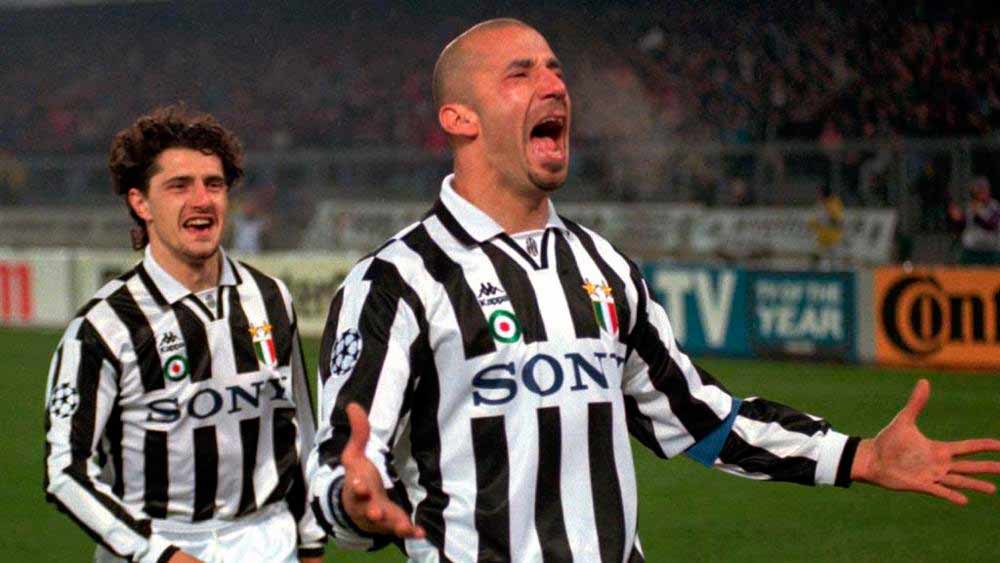
    My word, this is a pure classic! They should’ve stopped designing Juventus kits here and just used this one consistently. And not just because they won the European Cup for the first time in 11 years. The Kappa creation, with the thinner stripes than we see today was complimented by the Sony sponsorship. Everything about this shirt works, give me this every season please!

    Gianluca Vialli celebrates scoring on Juventus' way to winning the Champions League in 1996

    Genoa – 1991/92

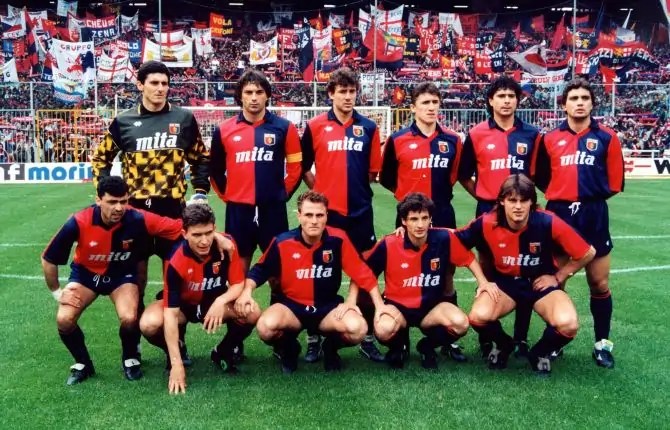
    Genoa barely avoided relegation in 1992, but they should have been awarded an extra 5 points for this shirt alone. They did, however, reach the UEFA Cup Semi Final, narrowly avoiding an all Italian final by missing out to eventual winners Ajax. Torino knocked out Real Madrid, but that achievement means nothing when Genoa were rocking this simple classic.

    Genoa lining up in 1991-92 season with one of the great classic Serie A kits

    Milan – 1988/89

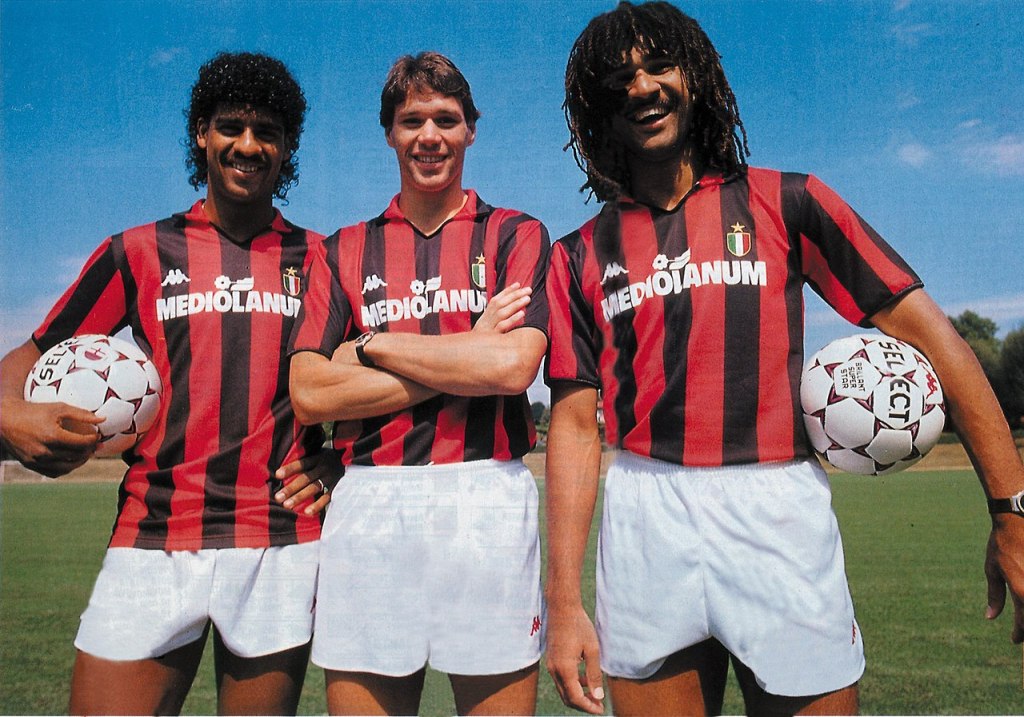
    Gullit. Van Basten. Rijkaard. Do you need any more than this? Ok fine, simple thin stripes, white shorts, total football – oh and a European Cup win. Just enjoy the kit.

    The Dutch trio of Rijkaard, Van Basten and Gullit modelling a fine Milan kit.

    Fiorentina – 1998/99

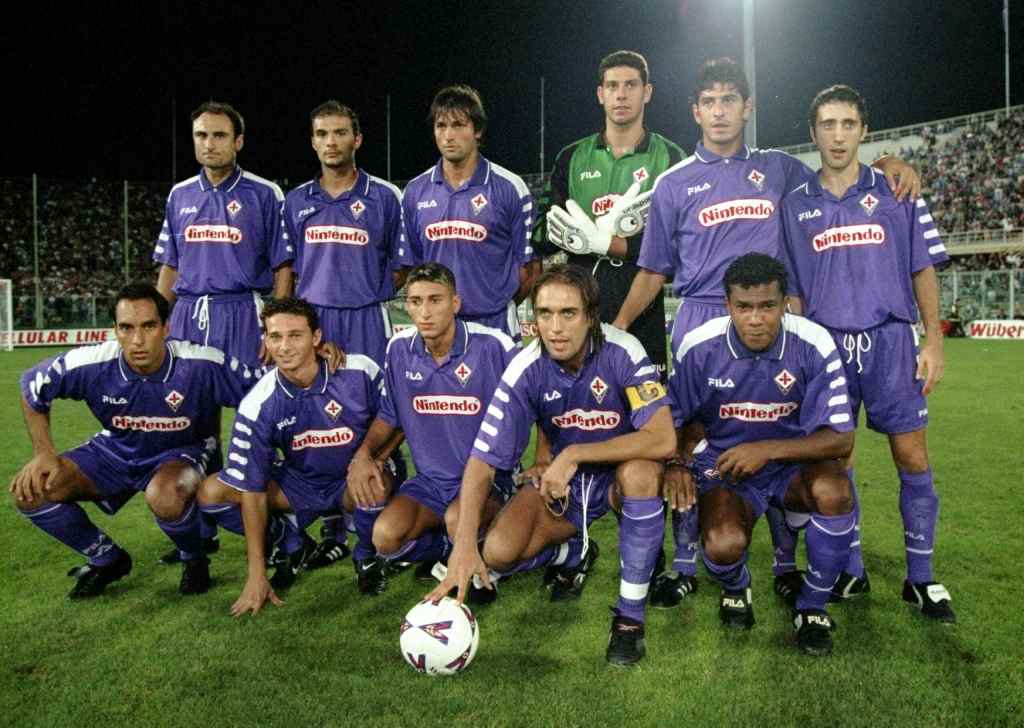
    This might be my favourite shirt of all time. Not just in Italy. You don’t see many purple shirts in football but this just works. The Nintendo sponsorship is pure classic and the fact that it’s synonymous with Batigol just completes it. Great kit – 12/10

    Easily one of the top ten football kits ever, Fiorentina in 1998-99. Batistuta.

    Perugia – 1999/00

    Ok stick with me here. The dragon detailing on this kit is a fine addition. But let’s be honest, this is a slightly more English looking design than you’d get in Italy, almost reminds me of Charlton Athletic in these times. But Nakata running around in this shirt bring back fond memories. The kit makes it for that alone.

    Perugia's anglophile kit

    Roma – 2000/01

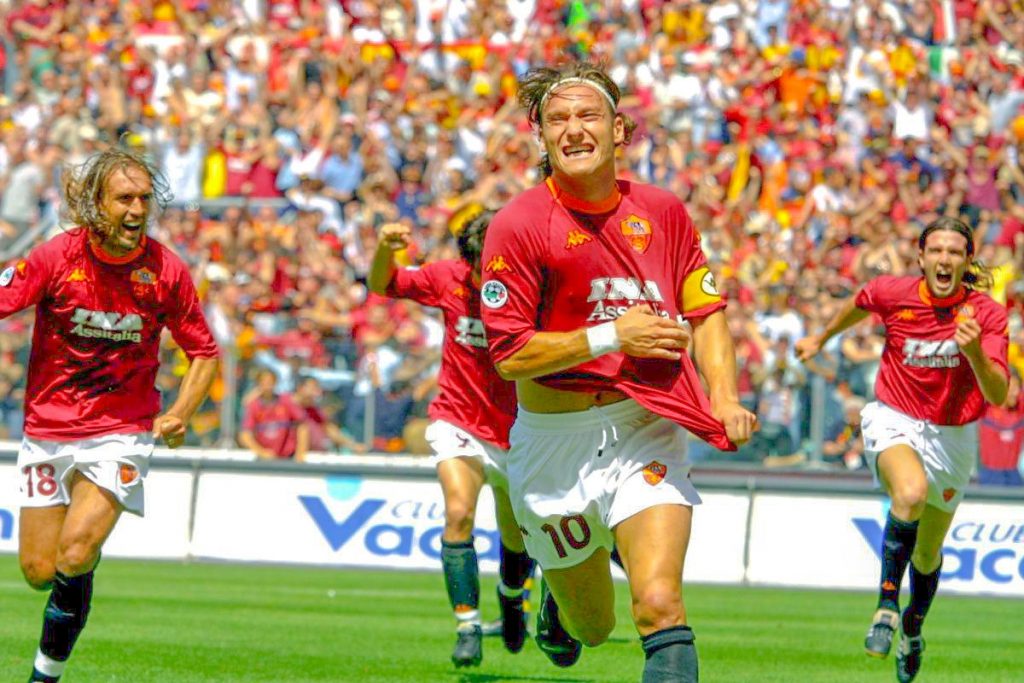
    Any Scudetto kit is special for the team who won it, but this is a really smart kit. The classic collar, the orange trim, the Scudetto season, Francesco Totti and the start of the skin tight shirt era all made by Kappa. Pure. Italian. Gold.

    Francesco Totti wins the Scudetto for Roma and celebrates in an all time great kit

    Napoli – 1986/87

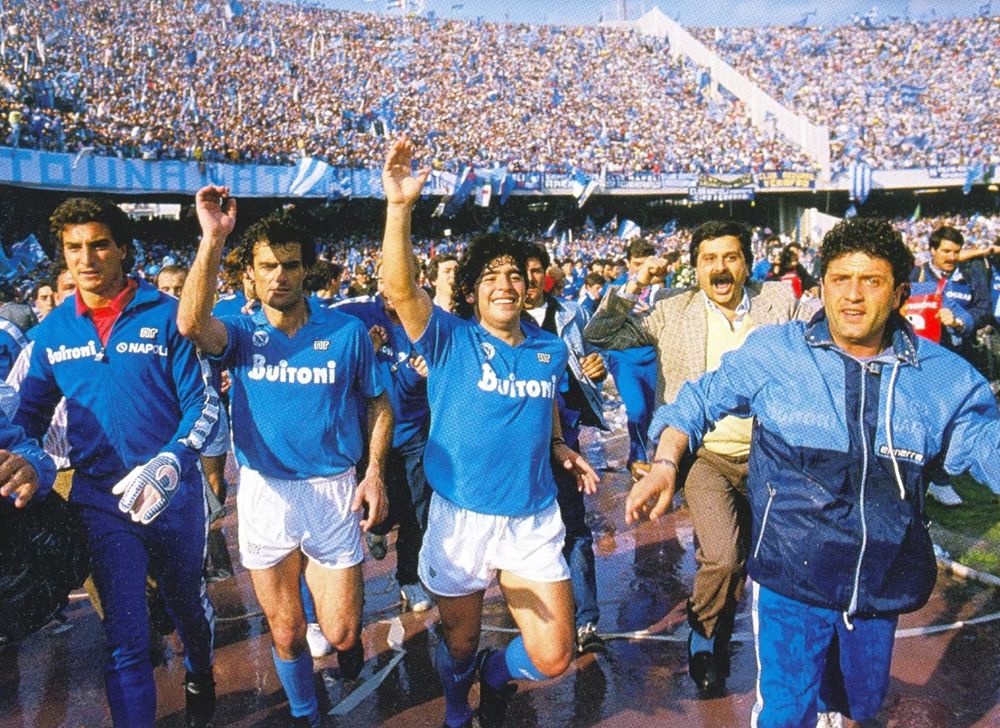
    Diego Maradona won Napoli’s first Scudetto in this kit. I’m not saying anything else because that’s enough reason why this kit is great nostalgia. The Mars kit might be the more well known, but come on, look at that kit.

    Diego Maradona celebrates Napoli's first Scudetto in a classic kit.

    Torino – 1948/49

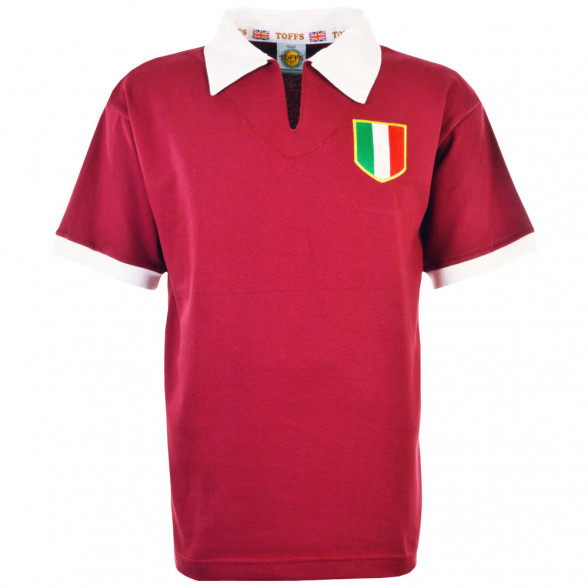
    One of the greatest tragedies in Italian sport, the end of Grande Torino. It’s something to read about separately, this is a kit post. And that great team was characterised by this absolutely clean classic shirt. One colour, no sponsor, Scudetto on the chest, white colour. Perfection.

    Torino's 1948/49 shirt is an all time classic.

    Lazio – 1999/00

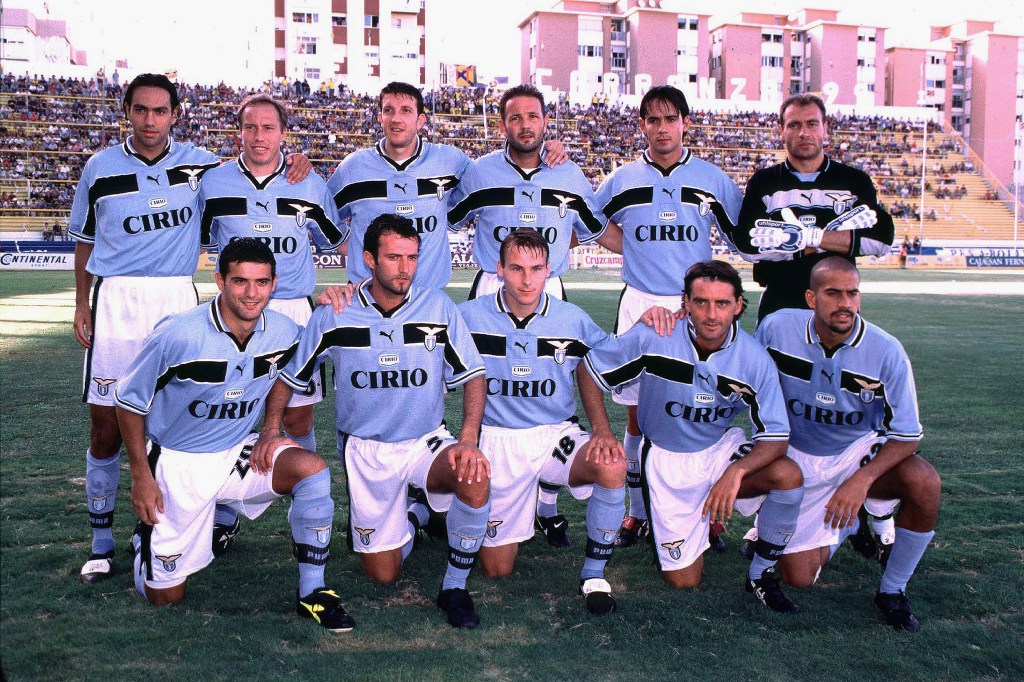
    Sven. Inzaghi. Salas. Scudetto. Lazio won the league with this kit, they also won the UEFA Super Cup and reached the Champions League Quarter Finals. Some utterly fantastic players wore this kit and the basic design along with classic Cirio sponsor make this an all time Serie A classic.

    Lazio would win best dressed in 1999/00 as well as their second ever Scudetto

    Honourable Mentions

    So there were some efforts that were fantastic but didn’t quite make it. Rounds of applause to Parma in 1999, Sampdoria in 1992, Bologna in 1997 and any 90s effort from Bari please.

    What do you think then? Are these the greatest kits of all time in Italy or have I missed anything? Let me know in the comments or comment on the X thread @EnglishCalcio.

  • Forgotten Giants: Vicenza – Calcio’s Forgotten Fairytale

    Forgotten Giants: Vicenza – Calcio’s Forgotten Fairytale

    In the late 1990s, a small club from the Veneto region etched its name into calcio folklore. They beat Napoli to lift the Coppa Italia. They almost knocked Chelsea out of Europe. And then… they disappeared.

    This is the story of L.R. Vicenza — a club that dreamed big, defied the odds, and left a legacy far greater than their trophy cabinet suggests.

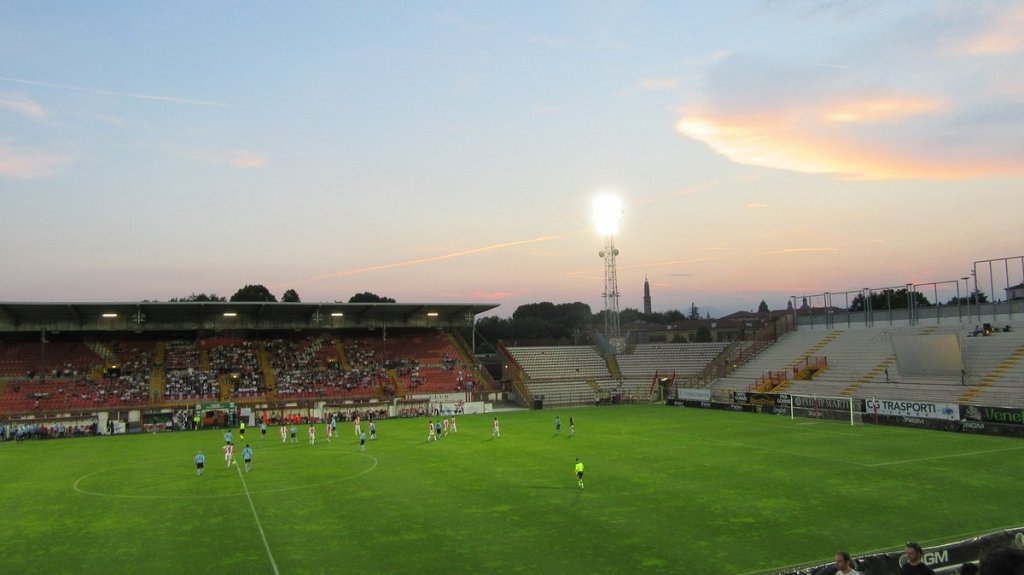
    Founded in 1902, L.R. Vicenza is one of Italy’s oldest clubs. Based in the historic city of Vicenza, they’ve always been seen as a classic “provinciale” — a small, local side often bouncing between Serie A and B. Their home, the Stadio Romeo Menti, holds just over 12,000 but has witnessed moments that rival even the grandest stages in Italian football.

    For decades, Vicenza quietly survived in the shadows of northern giants like Milan, Inter, and Juventus — until one unforgettable season changed everything.

    Vicenza's 1995 promotion side

    In 1995, under the tactical guidance of Francesco Guidolin, Vicenza were promoted to Serie A and quickly became Italy’s surprise package. They played compact, organized football with bursts of creativity, led by key figures such as Uruguayan striker and cult hero Marcelo Otero, the safe hands of Giorgio Sterchele and the attacking duo of Giovanni Cornacchini and Alessandro Iannuzzi.

    The next season, in 1996-97 they would embark on a magical run to the Coppa Italia final, beating the likes of Bologna and Genoa on the way to facing Napoli. Vicenza would lose the first leg at San Paolo 1-0, but at home three weeks later they completed a stunning turnaround in front of a raucous home crowd. Goals from Giovanni Cornacchini, Maurizio Rossi, and Alessandro Iannuzzi secured a 3–0 win after extra time — and with it, their first major trophy in 95 years of existence.

    Vicenza players parade the Coppa Italia trophy after their 3-1 aggregate win over Napoli in the 1997 final

    In the age of Batistuta, Baggio, and Del Piero, it was Vicenza that lifted silverware. A provincial club, built on heart and discipline, had conquered the cup.

    As Coppa Italia winners, Vicenza qualified for the 1997–98 UEFA Cup Winners’ Cup. And incredibly, they didn’t just make up the numbers — they lit up the continent.

    • Beat Shakhtar Donetsk and Roda JC to reach the semi-finals.
    • Drew English powerhouse Chelsea in the final four.

    In the first leg at the Stadio Menti, Pasquale Luiso scored the winner to give Vicenza a 1–0 lead. Chelsea, loaded with stars like Gianfranco Zola, Gustavo Poyet, and Mark Hughes, were stunned.

    Vicenza defeated Chelsea 1-0 in the first leg of the 1998 European Cup Winners Cup Semi Final.

    But at Stamford Bridge in the second leg, Vicenza’s European dream fell apart. Goals from Poyet, Zola, and Hughes sent Chelsea through 3–1 on aggregate. It was heartbreak — but Vicenza had shown Europe what they were capable of.

    Just one year later, however, in the 1998–99 season, Vicenza were relegated from Serie A.

    Key players left, financial difficulties crept in and over the next decade, the club bounced between Serie B and C, with ownership instability and budget issues mounting.

    The final blow came in 2018, when the club was declared bankrupt and lost its professional status. After over a century of history, Vicenza Calcio was no more.

    In the wake of the collapse, a new entity was formed: L.R. Vicenza Virtus, following a merger with nearby club Bassano Virtus. While technically a new club, it carries the same badge, colours, and loyal fanbase.

    Vicenza still play at the Stadio Romeo Menti today

    They returned to Serie B in 2020, and though they were relegated again in 2022, the passion remains.

    Stadio Romeo Menti still echoes with memories of Otero’s goals and that famous win over Napoli. And Vicenza’s story continues — not in the headlines, but in the hearts of calcio romantics everywhere.

    In an era before oil money and inflated sponsorships, clubs like Vicenza could still write fairy tales. With tactical discipline, local pride, and passionate fans, they showed that in Italian football, anything was possible.

    Today, we remember them not because they became a giant — but because, for one brief, beautiful moment, they stood toe-to-toe with giants and didn’t flinch.

    “Do you remember Vicenza’s fairytale run in the ‘90s? Should Serie A do more to protect its provincial clubs?”

    Drop your memories or thoughts in the comments below — or tag us on X @EnglishCalcio and Instagram @calcioenglish.

  • How England helped shape the Italian game…

    How England helped shape the Italian game…

    We English have a habit of laying claim things that aren’t ours. Like half the World at one point… But one thing we do have a pretty firm claim on is that we invented the beautiful game.

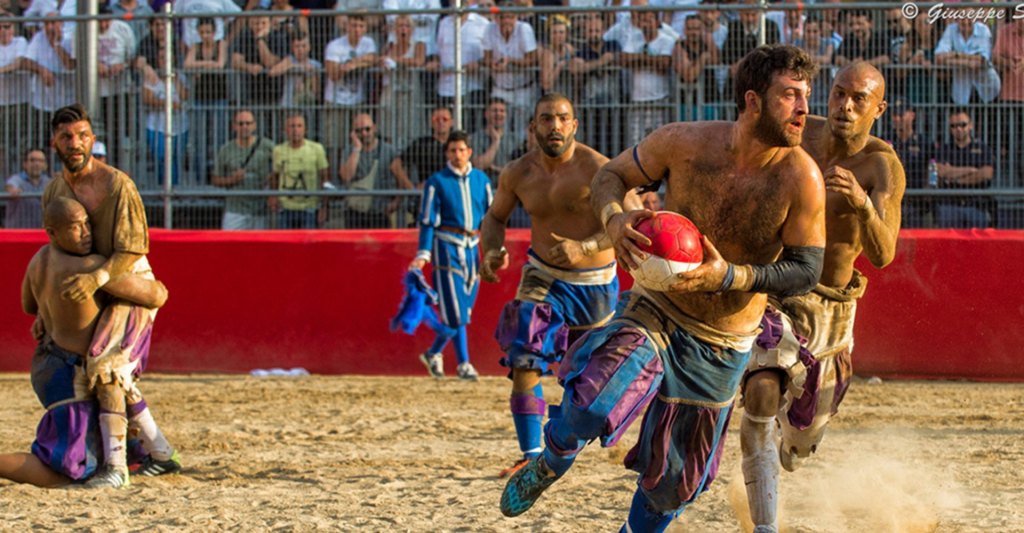
    In the 1920s and 30s Benito Mussolini would have Italians believe that Calcio descended from Calcio Storico Fiorentino, the medieval football of Florence. This game was mostly played by noblemen (including Popes) and dates back to 1530 where it was first referenced in Piazza Santa Croce. The game combined elements of football, rugby, wrestling and street fighting, which I guess is where the great Italian defenders of the 70s and 80s were drawing inspritation.

    Locals in Florence play a game of Calcio Storico Fiorentino.
    Calcio Storico Fiorentino in the modern day

    Benito Mussolini promoted the game as the “true origin” of Calcio in direct contrast to the foreign game of football. He used the game in fascist propaganda to reinforce the idea of Italy’s deep cultural and martial heritage, distancing itself from British influence. The game was even revived in the 1930s in Florence with choreographed pageantry to tie it in with Renaissance and Roman virtues.

    But Calcio does owe a lot to British football, including one of its biggest clubs and one of the most iconic kits in the game.

    James Richardson Spensley in Genoa

    Dr James Richardson Spensley was an English physician and football enthusiast who worked on boats that came through the port in Genoa. During his time in Italy, Dr James would organise football matches with local dockers and as a result, is largely considered to be the first person to bring football to the masses in Italy.

    James Richardson Spensley founded Genoa
    James Richardson Spensley – Apparently…

    By 1897 he had founded the Genoa Cricket and Football Club. Not only did he found the club, but he managed it, organised their games and was their goalkeeper. He helped to shape Genoa into the first dominant team of Italian football, winning the first championship in 1898, going on to win another 5 titles with him at the helm. He retired from playing when he was nearly 40 and would go on to manage the side for a few more years before his death in World War One at the Fortress of Mainz.

    Had it not been for the four clubs in Turin founded by Edoardo Bosio then Dr James would’ve founded the first club in Italy. The two of them are rightly considered as the Grandfathers of Italian football.

    Herbert Kilpin and the Milan cricket club

    129 Mansfield Road in Nottingham is an unassuming terraced property that could be any other in England. However, on the 24th January 1870 at this property, a man was born who would go on to shape Italian – and World – football for years to come.

    Herbert Kilpin was a lace maker who lived most of his life in Nottingham playing as a Midfielder and Defender for local part time teams. In 1891, he moved to Turin to work for Edoardo Bosio who was an Italian-Swiss textile merchant. Bosio had founded the first ever Italian side, Internazionale Torino, and Kilpin would represent the team in his time with Bosio.

    In 1898, however, while living in Milan with Samuel Richard Davies, Kilpin would found AC Milan, then known as the Milan Cricket and Football Club. To this day Milan still uses the English spelling of the city’s name to pay homage to their founder.

    He chose the famous red and black stripes after being quoted as saying, “We’re going to be a team of devils. Our colours will be red like fire and black to invoke fear in our opponents”.

    Herbert Kilpin, founder of Milan, in the first red and black that AC Milan ever wore.
    Herbert Kilpin striking fear into his opponents in Red and Black

    The first elected president of AC Milan was Alfred Edwards with Kilpin acting as player-manager. Milan were, unsurprisingly, immediately successful, winning the championship in 1901 in only their second season. Kilpin spent 9 years with the Milan side and won two more titles in 1906 and 1907.

    Herbert Kilpin died in Milan in 1916 aged 46, apparently due to his smoking and drinking habits – another English trait. Little was known, or acknowledged, of his influence over Milan’s early history until the 1990s when Luigi La Rocca tracked down Kilpin’s grave in the Municipal Cemetary in Milan. In 1999 the club paid for a new tombstone acknowledging his role in Milan’s history and in 2010 he was moved into the Famedio in the main building where Milan’s most illustrious personalities are interred.

    Curva Sud in Milan pay homage to Herbert Kilpin, the original founder of AC Milan
    The Curva Sud pay homage to their founder

    John Savage and the spare kits

    Nottingham’s influence over Calcio doesn’t finish there though, a few years later in 1903 an Englishman John Savage would help one of Italy’s most iconic clubs gain their iconic kit design.

    John Savage was a footballer who had played with Kilpin at Internazionale Torino before joining Juventus in 1900. He was the first foreign player to represent the Old Lady, who at the time wore pink shirts. Savage wasn’t impressed with the quality of them though and likened them to being similar to a “gang of war survivors”. Whatever that means.

    He wrote a letter to Nottingham based tailoring company Shaw and Shrewsbury requesting new kits and nearly a month later received a spare set of Notts County kits, in the famous black and white stripes.

    Juventus originally wore a pink kit until John Savage intervened and gave them their famous black and white stripes.
    Juventus in their new colours alongside some of the old kits

    At first, Juventus were not impressed with the change, Domenico Donna – a founder of Juventus – compared them to funeral attire. However, thanks to a remarkable upturn in form in the new kits, Donna labelled the kits as “a symbol of old fashioned Piedmontese elegance”.

    Juventus would keep the Notts County kits and the retain the black and white to this day, the link remained so close that when Juventus opened their new stadium in September 2011, Notts County were invited over to play in the first ever game here.

    John Savage would go on to referee the 1902 Italian Football Championship final between the other two English influenced clubs, AC Milan and Genoa.

    More general influences

    The Italian Football Federation (FIGC) was inspired by the structure of the English FA when it was formed in 1898. Not much of a surprise given the English influence of the game in those early years, rules and club structures were based on the English game and most of the clubs were started as cricket and football clubs.

    In fact, one of the Italian terms still used today, Il Mister, used to describe a coach is attributed to an affectionate term given to William Garbutt during his time managing Genoa between 1912-27. He won three championships with Genoa and introduced structured training and tactics to Italian football.

    Inter and Roma are two clubs that have had English ownership stakes or partnerships in the past and Serie A was brought into British homes in the 90s thanks to James Richardson and his Sunday show Football Italia on Channel 4. That programme, in fact, was responsible for this Calcio fan’s own obsession!

    Much like everything else though, England introduced the sport to Italy but Italy took it and ran with it, made it their own and subsequently has won 4 World Cups to England’s one. They even beat England in their own back yard in the Euro 2020 final after a penalty shootout to really assert their dominance over the English game.

    While English domestic football has surpassed Italian domestic football for quality and finances, Calcio had some great days in the 80s and 90s and Italian clubs still have joy against Premier League teams in England.

    England and Italy will always be inseparable for their love of the game and their passion for it, and we’ll always be linked thanks to those English pioneers back in the day.