
In the late 1990s, a small club from the Veneto region etched its name into calcio folklore. They beat Napoli to lift the Coppa Italia. They almost knocked Chelsea out of Europe. And then… they disappeared.
This is the story of L.R. Vicenza — a club that dreamed big, defied the odds, and left a legacy far greater than their trophy cabinet suggests.
Founded in 1902, L.R. Vicenza is one of Italy’s oldest clubs. Based in the historic city of Vicenza, they’ve always been seen as a classic “provinciale” — a small, local side often bouncing between Serie A and B. Their home, the Stadio Romeo Menti, holds just over 12,000 but has witnessed moments that rival even the grandest stages in Italian football.
For decades, Vicenza quietly survived in the shadows of northern giants like Milan, Inter, and Juventus — until one unforgettable season changed everything.

In 1995, under the tactical guidance of Francesco Guidolin, Vicenza were promoted to Serie A and quickly became Italy’s surprise package. They played compact, organized football with bursts of creativity, led by key figures such as Uruguayan striker and cult hero Marcelo Otero, the safe hands of Giorgio Sterchele and the attacking duo of Giovanni Cornacchini and Alessandro Iannuzzi.
The next season, in 1996-97 they would embark on a magical run to the Coppa Italia final, beating the likes of Bologna and Genoa on the way to facing Napoli. Vicenza would lose the first leg at San Paolo 1-0, but at home three weeks later they completed a stunning turnaround in front of a raucous home crowd. Goals from Giovanni Cornacchini, Maurizio Rossi, and Alessandro Iannuzzi secured a 3–0 win after extra time — and with it, their first major trophy in 95 years of existence.

In the age of Batistuta, Baggio, and Del Piero, it was Vicenza that lifted silverware. A provincial club, built on heart and discipline, had conquered the cup.
As Coppa Italia winners, Vicenza qualified for the 1997–98 UEFA Cup Winners’ Cup. And incredibly, they didn’t just make up the numbers — they lit up the continent.
- Beat Shakhtar Donetsk and Roda JC to reach the semi-finals.
- Drew English powerhouse Chelsea in the final four.
In the first leg at the Stadio Menti, Pasquale Luiso scored the winner to give Vicenza a 1–0 lead. Chelsea, loaded with stars like Gianfranco Zola, Gustavo Poyet, and Mark Hughes, were stunned.

But at Stamford Bridge in the second leg, Vicenza’s European dream fell apart. Goals from Poyet, Zola, and Hughes sent Chelsea through 3–1 on aggregate. It was heartbreak — but Vicenza had shown Europe what they were capable of.
Just one year later, however, in the 1998–99 season, Vicenza were relegated from Serie A.
Key players left, financial difficulties crept in and over the next decade, the club bounced between Serie B and C, with ownership instability and budget issues mounting.
The final blow came in 2018, when the club was declared bankrupt and lost its professional status. After over a century of history, Vicenza Calcio was no more.
In the wake of the collapse, a new entity was formed: L.R. Vicenza Virtus, following a merger with nearby club Bassano Virtus. While technically a new club, it carries the same badge, colours, and loyal fanbase.
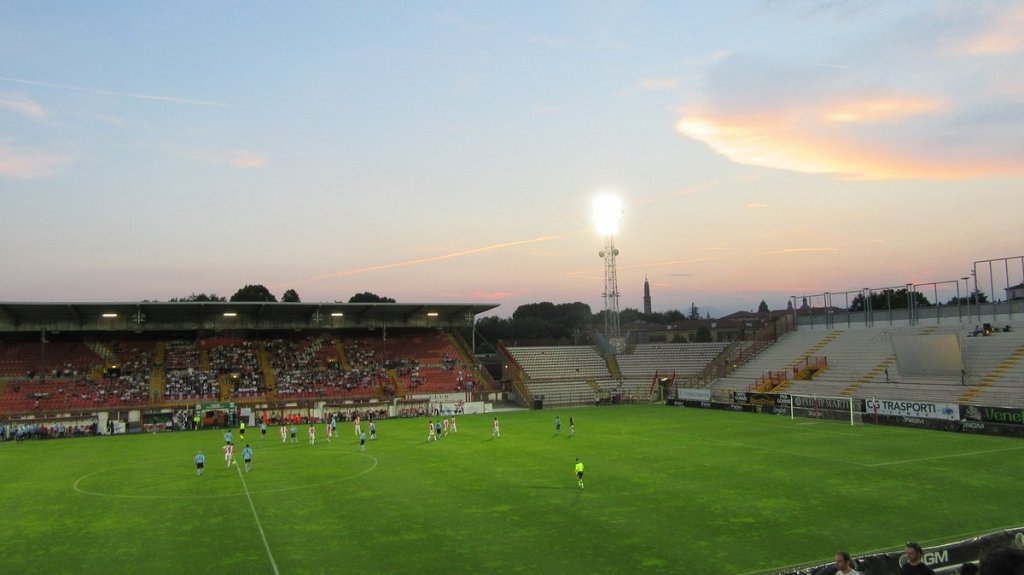
They returned to Serie B in 2020, and though they were relegated again in 2022, the passion remains.
Stadio Romeo Menti still echoes with memories of Otero’s goals and that famous win over Napoli. And Vicenza’s story continues — not in the headlines, but in the hearts of calcio romantics everywhere.
In an era before oil money and inflated sponsorships, clubs like Vicenza could still write fairy tales. With tactical discipline, local pride, and passionate fans, they showed that in Italian football, anything was possible.
Today, we remember them not because they became a giant — but because, for one brief, beautiful moment, they stood toe-to-toe with giants and didn’t flinch.
“Do you remember Vicenza’s fairytale run in the ‘90s? Should Serie A do more to protect its provincial clubs?”
Drop your memories or thoughts in the comments below — or tag us on X @EnglishCalcio and Instagram @calcioenglish.
 The Calcio Blog
Leave a comment